

During winter, rainy seasons, or periods of seasonal closure, golf courses often reduce the usage frequency of their golf cart fleets, leaving some carts parked for weeks or even months. Before taking carts out of service, it is essential to inspect batteries, tires, brakes, and cleanliness, and to assess the storage environment; otherwise, issues such as low battery levels, insufficient tire pressure, brake malfunctions, or electrical system failures may arise when operations resume.
The larger the fleet, the more time is required to address these issues systematically. Long-term storage should ideally be scheduled as a distinct fleet maintenance task.
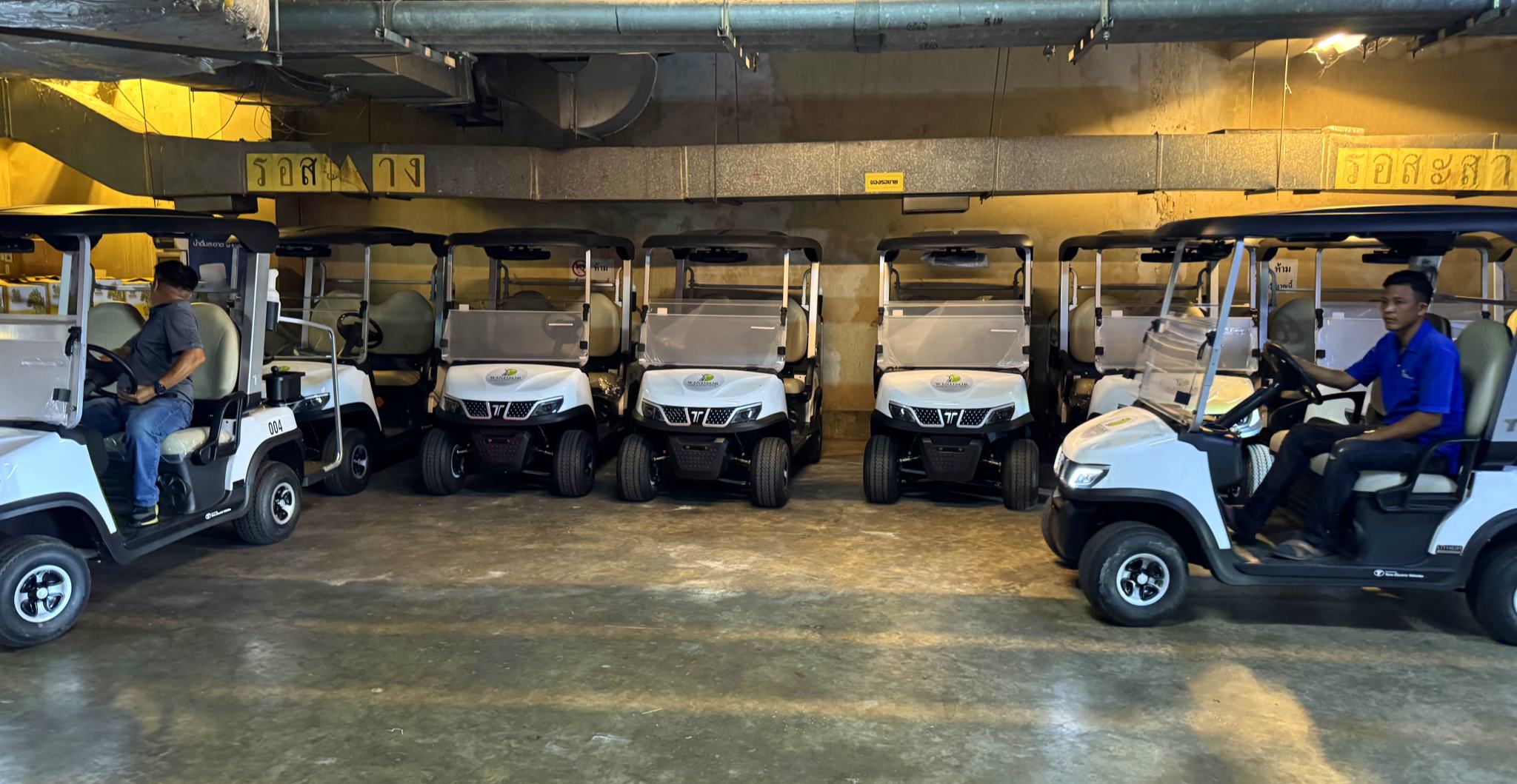
Clean Before Storage
Golf carts should be thoroughly cleaned before being returned to storage.
Grass clippings, dirt, fertilizer residue, and road salt can adhere to the chassis, wheel hubs, and body joints for extended periods. After washing, the cart—especially the chassis, battery area, and electrical connections—should be allowed to dry completely; carts should not be placed into long-term storage while retaining significant moisture.
Seats, storage compartments, cup holders, and golf bag areas should also be cleared out. Leaving food wrappers, beverage residue, or damp towels inside the cart for long periods can lead to unpleasant odors or mold growth.
If the carts are equipped with windshields, rain covers, ball washers, or other accessories, their mounting hardware and surface condition should be inspected before storage. This eliminates the need to check each cart for missing or damaged accessories when operations resume.
Battery Storage
Batteries require specific management during golf cart storage.
Storage requirements differ between lead-acid and lithium batteries. Lead-acid batteries typically require attention regarding electrolyte levels, terminal cleaning, and periodic maintenance charging.
For lithium golf carts, operations must adhere to the battery manufacturer’s specifications regarding storage State of Charge (SoC), temperature ranges, and charging methods. Batteries should be fully charged before long-term storage, with charge levels checked periodically throughout the storage period; in low-temperature environments, attention must be paid to cell temperature and charging limitations.
When establishing storage procedures, golf courses should directly adopt the official requirements provided by the battery manufacturer.
Check Tires and Brakes
Tires require attention when carts remain parked in the same spot for extended periods.
Before storage, inspect tire pressure, tread wear, and the tire surface for damage. Carts with significantly low tire pressure should not be placed directly into long-term storage. Tire pressure should be checked again when the carts are put back into service after several months. Parking areas should be kept level and dry; avoid parking carts on muddy ground or in areas with standing water for extended periods.
The braking system also requires inspection. Before putting the cart back into service, test the brakes, parking brake, and pedal feedback at low speeds. Address any issues such as rust, binding, or abnormal noises that may have developed during long-term storage.
Choose the Right Space
The environment within the cart barn directly impacts long-term storage.
Indoor areas should remain dry and free from prolonged exposure to high temperatures, high humidity, or heavy condensation. For courses located in coastal regions, cold-weather areas, or high-humidity zones, pay special attention to the environment surrounding metal components, electrical connections, and charging equipment.
When parking a large number of golf carts together, ensure access aisles are maintained. Staff must be able to reach the carts, batteries, and charging points; avoid packing dozens of carts so tightly to save space that inspection becomes impossible.
Charging facilities should also be included in the storage plan. Procedures regarding which carts remain connected, which are disconnected, and the frequency of inspections should follow the specific operational requirements for the cart and battery systems.
Keep a Storage Record
Golf courses can create a simple storage record for long-term parked carts, tracking details such as cart ID, storage entry date, battery State of Charge (SoC), tire pressure, identified issues, and the date of the last inspection.
For fleets equipped with a GPS fleet management system, certain cart statuses can be monitored centrally. Tara GPS supports features such as battery SoC monitoring, cart status tracking, fault code monitoring, and usage history; management teams can combine this data with on-site inspection records to manage the fleet effectively.
The data here is primarily used to detect anomalies. For instance, if a cart’s battery level drops at a significantly different rate compared to others stored at the same time, it warrants an early inspection.
Return to Service
Before the start of a new season, re-verify the battery SoC, tire pressure, brakes, steering, lights, and GPS equipment. Carts that pass inspection can be returned to the active fleet, while those with issues should be scheduled for separate repairs.
Tara offers golf cart fleet solutions tailored for golf courses, country clubs, and golf resorts. Our models utilize LiFePO4 lithium batteries and offer optional GPS fleet management systems. For courses with distinct seasonal operations, the Tara team provides cart configuration and maintenance support based on fleet size, usage cycles, and local climate conditions. Documenting the cart’s status before long-term parking and following the storage procedures specified by the cart and battery manufacturers enables the fleet to return to operation more quickly.
Post time: Aug-26-2026


