

For busy golf courses, enhancing fleet utilization is not merely a matter of increasing the number of carts; rather, it involves achieving an optimal operational model characterized by “high turnover, low idle time, and minimal downtime.” This is accomplished through the scientific planning of fleet size, the adoption of efficient lithium-ion battery technology, the introduction of intelligent dispatch systems, and the establishment of comprehensive maintenance protocols. Sound fleet utilization strategies not only elevate the customer experience but also significantly reduce the Total Cost of Ownership (TCO) over the long term, thereby boosting the course’s overall profitability.
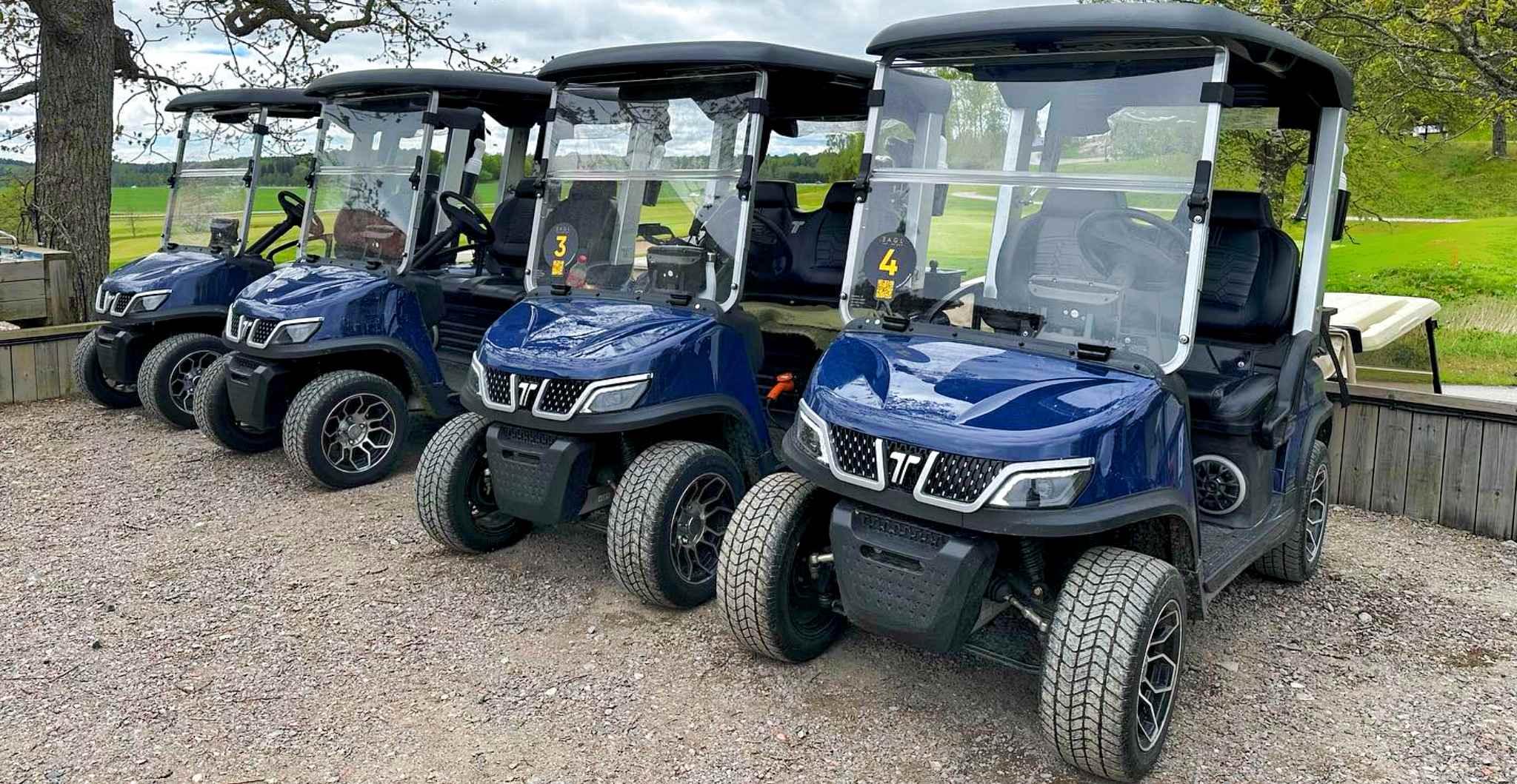
Scientific Planning of Fleet Size
When planning the size of their golf cart fleet, courses should comprehensively consider factors such as the type of course, average daily visitor volume, cart rental rates, frequency of tournaments, and seasonal demand fluctuations. Typically, the recommended fleet size is calculated to accommodate 65% to 85% of the maximum number of players teeing off simultaneously during peak hours.
Taking actual operations as an example: for a standard 18-hole private club that hosts an average of 180 to 220 players daily—with approximately 120 to 140 players on the course simultaneously during peak periods and a cart rental rate maintained between 75% and 85%—it is generally recommended to deploy a fleet of 70 to 90 two-seater carts. Additionally, an extra 5 to 10 four-seater carts should be allocated for VIP services, course management patrols, or other special requirements. For high-traffic resort-style courses with an average daily volume of 250 to 320 players, it is advisable to deploy 110 to 140 two-seater carts, while maintaining a reserve fleet of approximately 10% to 15% to handle peak seasons and unforeseen maintenance needs. Larger, comprehensive 36-hole facilities may require a fleet of 180 to 250 carts, utilizing a combination of zone-based management and GPS dispatch systems to ensure efficient operations.
In addition to standard passenger carts, it is recommended that courses acquire a certain number of utility vehicles, based on their specific operational needs, to facilitate daily course maintenance tasks.
Based on industry best practices, the ideal average fleet utilization rate should be maintained between 70% and 85%—potentially reaching over 90% during peak periods—while the long-term idle rate should be kept below 15% whenever possible.
Lithium Battery Technology
In the bustling environment of a golf course, golf cart utilization depends not only on the size of the fleet but, more importantly, on the number of service rounds each individual cart can complete per day. Traditional lead-acid battery models—plagued by long charging times, frequent maintenance requirements, and rapid performance degradation—often limit a golf cart’s capacity for high-frequency operation. In contrast, golf carts equipped with LiFePO4 (lithium iron phosphate) battery systems offer extended range, faster charging speeds, lower maintenance requirements, and a longer overall service life.
For instance, while a traditional lead-acid golf cart can typically complete only 1 to 1.5 service rounds efficiently per day, a sophisticated lithium-powered cart can support more than two rounds daily under reasonable operating conditions, thereby significantly boosting the revenue generated per cart. For golf courses, this translates to achieving higher operational efficiency with a smaller fleet—meaning fewer carts need to be purchased to deliver the same level of service capacity.
Leveraging over 20 years of experience in the electric golf cart industry, Tara’s mature LiFePO4 battery system empowers golf courses worldwide to significantly enhance their fleet’s continuous operational capabilities while simultaneously reducing long-term energy and maintenance costs.
Intelligent GPS Management Systems
As the demand for digitalized golf course operations continues to rise, GPS fleet management systems have emerged as a vital tool for maximizing fleet utilization. This is particularly true for large-scale or high-traffic courses, where issues such as uneven cart distribution, inefficient dispatching, and chaotic route management frequently hinder utilization rates.
Through a GPS system, course managers can monitor cart locations in real-time, optimize dispatch routes, establish “geofences” to protect sensitive areas, and utilize data analytics to identify congestion hotspots—thereby enabling more precise cart allocation and boosting overall operational efficiency. Some high-end golf courses that have implemented GPS management systems have successfully reduced their “deadhead” (empty-run) rates by 15% to 25%, while simultaneously improving dispatch efficiency by over 20%.
Tara offers an optional GPS course management system that not only facilitates the immediate optimization of current fleet dispatching but also lays a robust digital foundation for the development of future “smart golf courses.”
Preventive Maintenance
High-utilization operations demand that golf carts remain in a state of peak readiness; consequently, a robust preventive maintenance framework is absolutely critical. Compared to a reactive “repair-after-failure” approach, establishing a systematic maintenance schedule is far more effective at minimizing the risk of cart downtime and extending the overall service life of the fleet. We recommend that golf courses establish a tiered maintenance mechanism, comprising daily checks of battery status, tires, braking systems, and basic cleaning; weekly inspections of electrical control systems and component integrity; and quarterly diagnostics of battery health, software updates, and hydraulic system checks. Industry experience indicates that top-tier golf courses typically keep their fleet downtime rate below 5%.
Tara’s comprehensive global after-sales support system, spare parts supply network, and dealer service infrastructure enable golf courses to respond rapidly to maintenance needs, thereby minimizing the risk of operational interruptions.
Premium Features Enhance Rental Rates and User Experience
“Fleet Utilization” signifies not merely the “cart usage rate,” but—more importantly—the “user selection rate.” Premium golf cart configurations can significantly boost players’ willingness to rent and generate additional revenue for the golf course. Features such as luxury seating, built-in coolers, rain enclosures, golf bag racks and covers, Bluetooth audio systems, touchscreens, course map visualization, and CarPlay functionality elevate the overall golf course experience and help the facility cultivate a premium brand image.
Tara offers extensive customization options, enabling golf courses to tailor highly appealing fleet solutions that align with their specific operational positioning.
How to Choose the Right Golf Cart Fleet Supplier
For high-end golf courses, a supplier serves as more than just a product provider; they act as a long-term operational partner. An ideal supplier should possess international certifications (such as CE and ISO), mature lithium battery technology, global delivery capabilities, customization expertise, and comprehensive after-sales support.
The Advantages of Tara Golf Cart:
Over 20 years of industry experience
CE and ISO certified
Mature LiFePO4 lithium battery technology
Global delivery and distribution network
Dozens of successful case studies at golf courses worldwide
Competitive pricing structure
We have become a trusted professional partner for numerous golf courses and dealers across the globe.
FAQs
Q1: How can golf courses improve golf cart fleet utilization?
Fleet utilization can be significantly improved through rational fleet sizing, the adoption of lithium battery technology, the implementation of GPS-based dispatch systems, and the establishment of a preventive maintenance program.
Q2: Why are lithium golf carts better for busy golf courses?
Lithium golf carts offer extended range, faster charging speeds, and lower maintenance costs, making them ideally suited for high-frequency operational environments.
Q3: What role does GPS play in golf cart fleet management?
GPS systems enhance dispatch efficiency, optimize route management, and minimize resource waste, thereby directly and indirectly boosting a golf course’s profitability and customer satisfaction. As such, GPS serves as a vital tool for the intelligent operations of modern golf courses.
Q4: Why is supplier support important for fleet efficiency?
Comprehensive global after-sales service and spare parts support help minimize downtime, thereby ensuring the long-term stability and operational continuity of the golf course.
Conclusion
For busy golf courses, a truly efficient fleet utilization strategy involves maximizing asset efficiency through scientific fleet sizing, increased cart turnover rates, intelligent management systems, and robust long-term maintenance protocols. In today’s golf industry, a fleet of golf carts is no longer merely an operational tool; it has become a critical component that directly impacts a course’s revenue, customer satisfaction, and brand competitiveness.
As a brand distinguished by its mature technology, global service capabilities, and specialized solutions, Tara remains committed to assisting golf course operators in achieving more efficient and sustainable fleet management.
Post time: Apr-30-2026


