

A golf course has diverse vehicle requirements on a daily basis. Players need to move between holes; members and visitors require transport between the clubhouse and practice areas; the grounds crew needs to haul tools and materials; and maintenance staff must frequently travel between various work zones. Consequently, golf course vehicles have evolved into specialized categories based on these distinct functions.
Tara Golf Carts offers electric golf carts and utility vehicles tailored to these daily operations, allowing courses to assemble a complete fleet based on their specific needs. Tara’s official website currently categorizes “Fleet Golf Carts” and “Electric Utility Vehicles” as distinct product lines for professional golf courses.
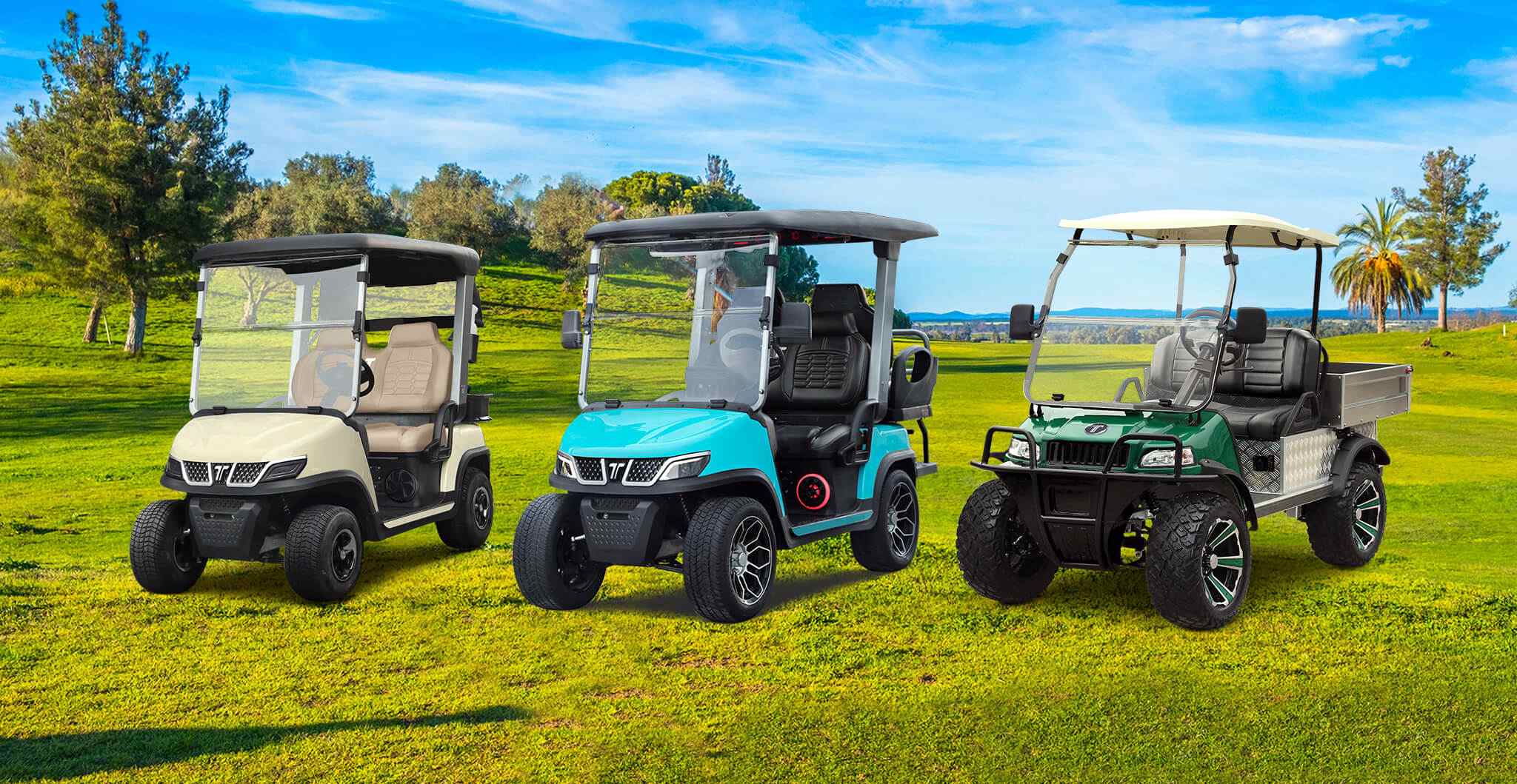
Player Transport
Two-seater electric golf carts are among the most common vehicles found on a course.
The “Spirit Pro” is designed for standard player transport, while the “Spirit Plus” offers enhanced features such as a touchscreen display. The “Harmony” model includes a caddie stand platform, making it ideal for clubs that utilize caddie services. Tara also offers the “Roadster 2+2,” a four-seater model suitable for transporting larger groups and hosting members.
Since these vehicles are subject to frequent, long-term use, components such as golf bag racks, seats, windshields, tires, and charging systems are critical elements of daily operations.
Member Hospitality
Golf course vehicles are also essential for short-distance shuttling between the clubhouse, parking lot, driving range, and the first tee.
Four-seater models facilitate internal transport for members, visitors, and tournament staff. The “Roadster 2+2″ features a four-seat layout and offers options such as luxury seating.
Resort-style courses can also configure their fleet size based on the layout of hotels, villas, restaurants, and event areas.
Course Maintenance
The transport tasks handled by the maintenance department differ significantly from those involving player transport.
The “Turfman 700″ is equipped with a cargo box for transporting tools, equipment, and maintenance materials. The “Turfman 700 EEC” model is available with EEC certification for the European market, allowing for use on public roads where local regulations permit.
A recent fleet acquisition by Utsikten Golfpark in Norway included both the “Spirit Plus” and the “Turfman 700.” The “Spirit Plus” is used for player transport and rentals, while the “Turfman 700″ handles course maintenance and facility operations.
Fleet Management
As the number of vehicles grows, golf course vehicles require systematic numbering, charging, inspection, and maintenance. Tara’s optional GPS Fleet Management System supports features such as real-time tracking, geofencing, battery State of Charge (SoC) monitoring, speed tracking, fault code reporting, usage history, and “Pace of Play” monitoring. The GPS tracker module is also compatible with vehicles from various brands.
This data can be integrated with vehicle inspection records to schedule charging, maintenance, and fleet deployment. Tara’s recently released fleet management guidelines also recommend recording vehicle ID numbers, battery status, tire pressure, faults, and inspection dates.
Tara Vehicle Lineup
Tara Electric Vehicles boasts over twenty years of experience in the design, manufacturing, and sales of golf carts. The official website currently offers two-seater and four-seater fleet golf carts as well as utility vehicles, with options for configurations tailored to specific course requirements.
Tara golf carts can be configured for various roles, including player transport, member hospitality, caddie services, and course maintenance. For courses upgrading their fleets, this diverse vehicle lineup allows for effective handling of various daily operational tasks.
FAQs
What vehicles are used on a golf course?
Common golf course vehicles include two-seater golf carts, four-seater hospitality carts, caddie carts, and golf utility vehicles. Large courses may also utilize vehicles for maintenance, patrols, and material transport.
What is the best vehicle for golf course maintenance?
Maintenance tasks typically require a golf utility vehicle equipped with a cargo bed. Vehicle selection should be based on factors such as the quantity of tools, weight of materials, road conditions, and daily operating hours.
Are electric vehicles suitable for golf courses?
They are ideal for courses with reliable charging infrastructure. Electric golf carts operate quietly, and lithium-battery models eliminate the need for the water-refilling maintenance required by traditional lead-acid batteries.
How many golf course vehicles does a golf course need?
There is no fixed number. Fleet size generally depends on the size of the course, daily rounds played, cart rental demand, member hospitality needs, and the scope of maintenance work.
What does a golf cart fleet include?
A golf cart fleet can include two-seater carts, four-seater models, caddie carts, and utility vehicles. Different vehicles serve different functions, and the specific composition depends on the course’s operational model.
Post time: Sep-17-2026


