

For many golf courses, owning a completely uniform new fleet is impractical. Influenced by budgets, procurement cycles, cart lifespans, and operational needs, many courses operate in a mixed-fleet state for extended periods—using golf carts of different years, models, and even brands simultaneously.
A mixed fleet doesn’t necessarily mean chaotic management. In fact, many established courses use strategic planning to assign different tasks to old and new carts, reducing investment pressure while maintaining stable operations.
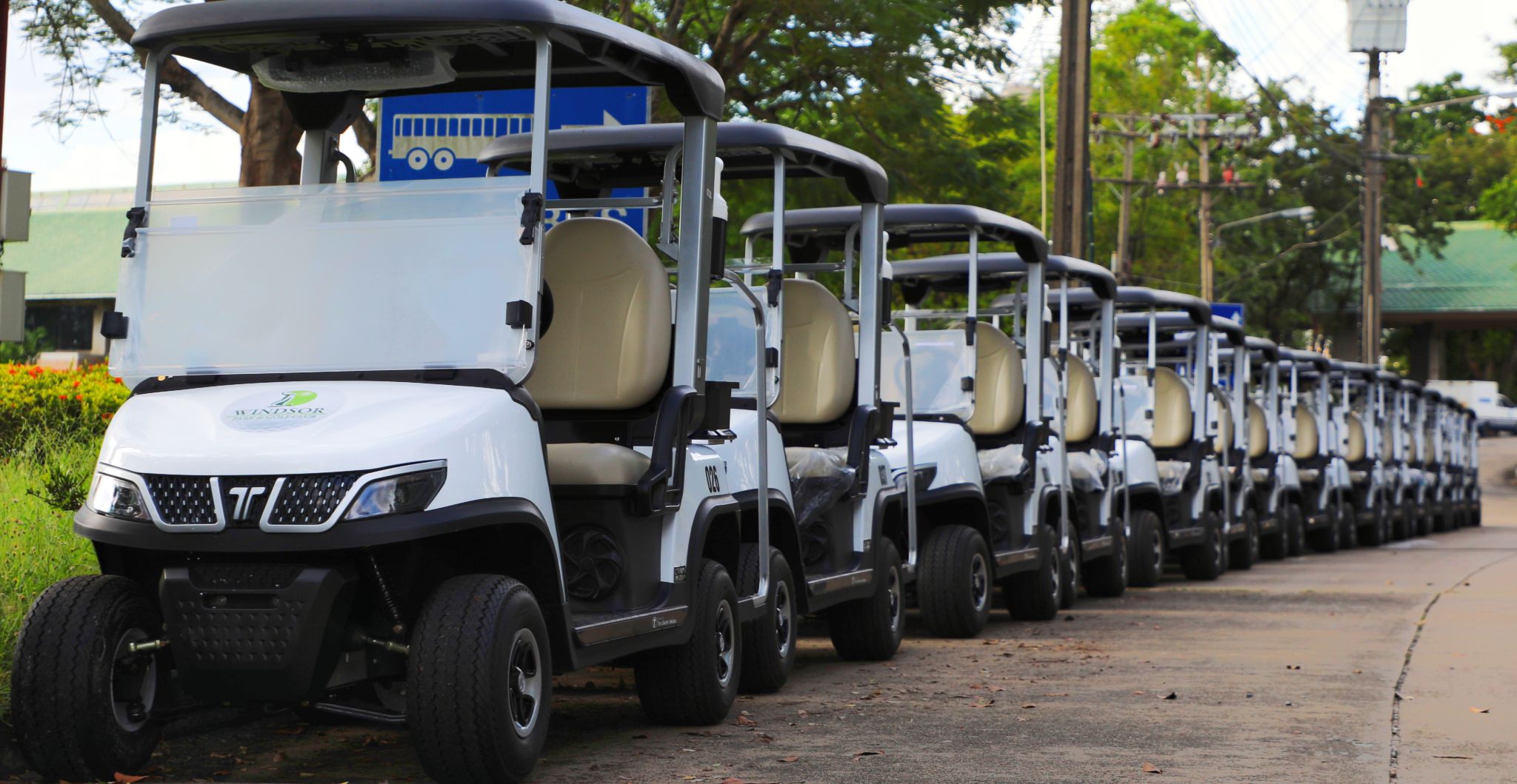
Why Mixed Fleets Happen
The reasons for adopting a mixed-fleet approach are usually quite practical.
Some courses don’t replace all their carts at once but rather purchase them in batches according to their annual budget. For example, an 18-hole course with 100 carts might replace 20-30 carts annually, completing the overall upgrade over several years.
Additionally, course expansion, the addition of new activity areas, or increased tournament demands can also lead to continuous changes in the number and type of carts. Some courses purchase standard golf cart service memberships and also allocate additional utility carts for maintenance, transportation, and logistics.
Therefore, a mixed fleet is more of an operational phase.
The Real Challenges
The biggest problem in managing a mixed fleet isn’t the number of carts, but the complexity.
Different carts may have:
Different battery systems and charging methods;
Different maintenance cycles;
Different parts requirements;
Different lifespans.
These differences increase the workload of the maintenance team.
For example, a course operating both lead-acid battery carts and LiFePO4 Lithium Golf Carts requires different maintenance methods. Older carts may require more routine checks, while newer carts require more attention to battery status and system diagnostics.
Without unified management, a course can easily end up with some carts overused while others remain idle for extended periods.
Smart Fleet Allocation
The key to managing a mixed fleet is not keeping all carts completely identical, but maximizing the value of each cart.
Many courses allocate carts based on their condition:
New carts:
For members’ days;
For high-end tournaments;
For VIP services.
Older carts:
Routine daily operations;
Employee use;
Short-distance transport.
Utility carts:
Venue maintenance;
Food and beverage delivery;
Facility management.
This approach extends cart lifespan while avoiding inconsistent user experiences caused by randomly mixing old and new carts.
Standardize Management
While carts may differ, management processes should be standardized as much as possible.
Golf courses typically establish unified Fleet Management standards, including:
Regular inspections;
Usage records;
Battery status tracking;
Maintenance history management.
Standardized management helps the operations team quickly determine which carts require maintenance and which remain in service.
For courses planning to gradually upgrade their fleets, reducing the number of cart types purchased in the future is equally important. Too many cart types increase long-term maintenance costs.
Data Makes It Easier
In the past, course managers relied primarily on manual records to assess cart status.
Today, more and more courses are using GPS Fleet Management Systems to improve fleet management efficiency.
Tara’s GPS Fleet Management System supports cross-brand compatibility, enabling courses to uniformly view cart locations, Battery SoCs, operational logs, and fault information.
Through Geofence Management, administrators can set zone rules; Usage History and operational data provide insights into actual cart usage, helping to optimize scheduling.
For courses with mixed fleets, this data reduces management blind spots, ensuring more efficient use of both new and old carts.
Planning the Next Step
Mixed Fleet management is often an essential stage in a course’s fleet upgrade process.
Excellent fleet management is not simply about “replacing everything at once,” but about improving cart utilization, reducing maintenance burdens, and providing a basis for future procurement within existing conditions.
Tara has long served golf courses, private clubs, and dealerships worldwide, providing Golf Cart Fleet Solutions covering 2-seater and 4-seater models. With over 20 years of industry experience, mature LiFePO4 Battery Technology, global delivery capabilities, and a comprehensive after-sales system, Tara helps courses achieve more efficient fleet management at different stages of development.
Whether the stadium is undergoing phased renovations or managing multi-brand carts, a clear Fleet Strategy is the foundation for maintaining long-term operational efficiency.
Post time: Jul-15-2026


