

In golf course operations, pace of play has become a core indicator influencing member satisfaction, course turnover, and operational revenue. More and more course managers are realizing that the golf cart fleet is not just a means of transportation within the course, but also directly impacts player movement efficiency, hole turnover speed, and overall operational rhythm. Through scientific fleet configuration, intelligent GPS management, stable lithium battery systems, and reasonable cart scheduling, high-end courses can effectively improve pace of play, enhancing the overall member experience and operational efficiency.
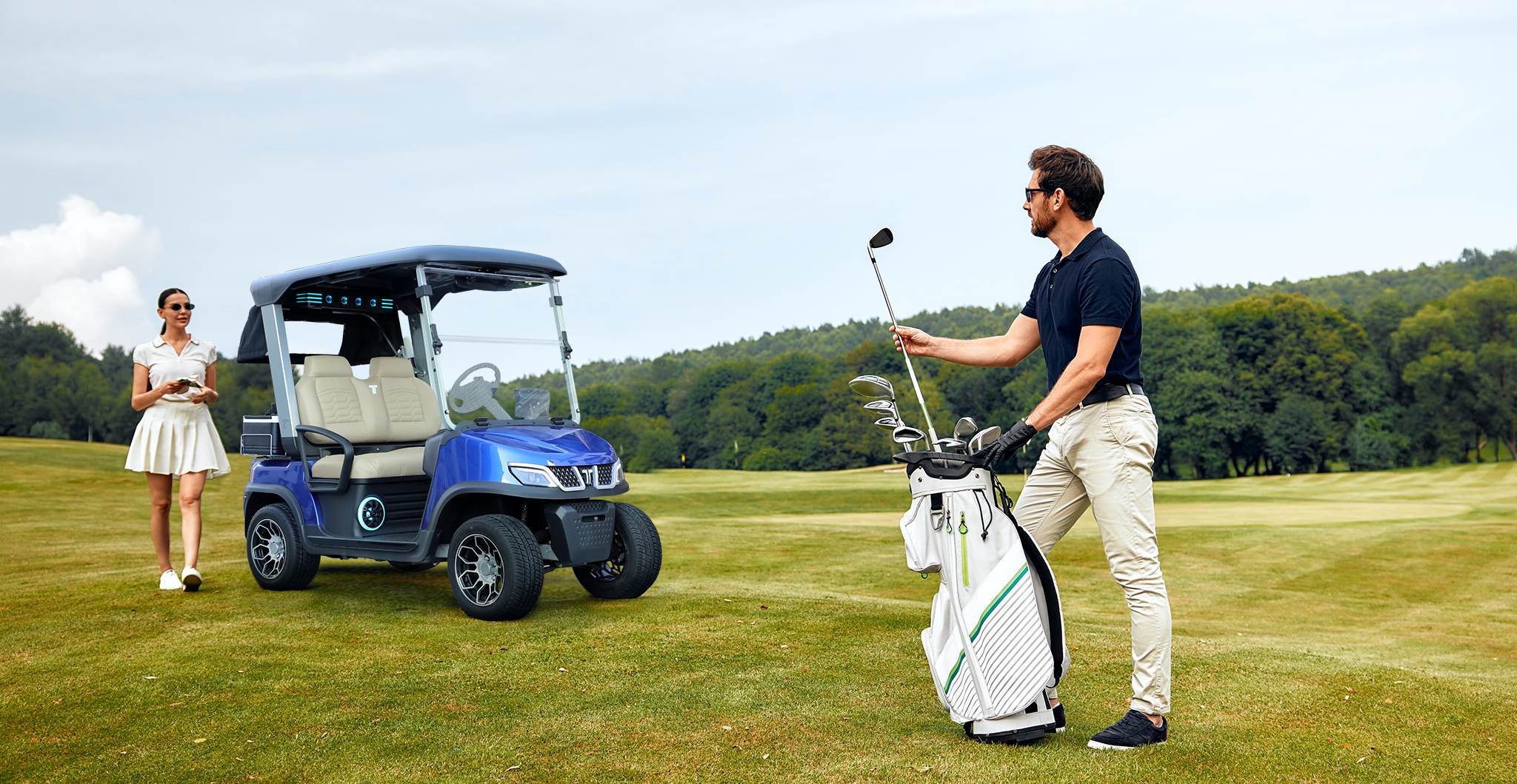
The Significance of Pace of Play for Golf Courses
For high-end golf courses and private clubs, pace of play is no longer simply about “playing faster.” It directly relates to:
Player Satisfaction
Tee Time Turnover Efficiency
Maximum Course Capacity
Member Renewal Rate
Overall Course Operational Revenue
Based on global golf industry trends, more and more courses are improving their on-course operational rhythm by optimizing their golf cart fleet. In fact, a well-designed, efficiently managed, and advanced fleet of golf carts can significantly reduce player wait times, improve turnover efficiency, and help the course establish a more professional operating system.
Why is Pace of Play Increasingly Important?
In the past, golf courses focused more on site maintenance and tournament operations. Today, members and visitors are rapidly increasing their demands for “overall experience efficiency.”
Especially in high-end private clubs and resort courses, the following issues are receiving increasing attention:
Excessive Tee-off Wait Times
Hole Congestion
Inconsistent Pace Between Different Groups
Chaotic Cart Scheduling During Peak Hours
Insufficient Cart Range Leading to Mid-round Changes
These issues not only affect the player experience but also directly reduce the course’s daily capacity.
For example, on a standard 18-hole course, if the average round time per group of players increases from 4 hours and 15 minutes to 4 hours and 45 minutes, then tee time scheduling during peak hours will be significantly limited, impacting the course’s operating revenue in the long run.
Therefore, modern course management increasingly emphasizes:
“Stable, continuous, and controllable” Pace of Play management.
Golf carts, particularly the fleet, are a crucial but often underestimated component.
Cart Performance Directly Impacts Pace of Play
Many courses focus on cart price during the procurement phase, neglecting the impact of consistent cart performance on operational rhythm.
In fact, the following issues directly slow down pace of play:
Unstable Power Output
Battery Range Degradation
Insufficient Uphill Performance
Slow Acceleration
Frequent Breakdowns
Especially on courses with significant terrain variations, a noticeable drop in cart power directly impacts players’ efficiency in moving between holes.
Compared to traditional lead-acid or older gasoline-powered carts, modern electric golf carts using LiFePO4 lithium battery systems offer:
More Stable Power Output
Longer Range
Less Performance Degradation
A Quieter and Smoother Driving Experience
Tara golf carts utilize mature LiFePO4 lithium battery technology, maintaining stable performance even in high-frequency operating environments, helping courses maintain a more consistent operational rhythm.
For high-traffic courses, this stability directly impacts the efficiency of daily cart scheduling.
Appropriate Fleet Size Affects Course Turnover Capacity
Insufficient fleet size is a common cause of slow pace of play.
For example: An 18-hole private club that hosts an average of 220 players daily with a rental rate of approximately 80% is prone to the following problems during peak hours if it only has 60 golf carts:
Players Waiting for Carts
Subsequent Tee Time Delays
Disorganized Scheduling
Typically, a more reasonable configuration for such courses would be:
75 to 90 Two-seater Golf Carts
5 to 10 Spare or Four-seater Carts
Large 36-hole courses often require zoned scheduling and a backup cart rotation system.
High-end courses typically maintain Fleet Utilization between 70% and 85% to balance peak operations with backup capacity.
Tara supports flexible configurations of two-seater and four-seater carts and offers customized fleet solutions, helping different types of courses establish more efficient operating systems.
GPS Fleet Management Systems are Changing Pace of Play
With the development of digital golf courses, GPS golf cart systems have gradually become an important operational tool for high-end courses.
In the past, course management relied heavily on human experience. Now, intelligent cart management systems help operations teams optimize cart scheduling and player movement in real time.
Modern GPS systems typically include:
Real-time Cart Location and Status
Hole Traffic Analysis
Geofencing
Path Restrictions and Speed Control
Schedule Data Analysis
For example, during peak hours, if a hole becomes congested, managers can quickly identify the problem area using the GPS system and adjust cart flow routes.
Some courses, after introducing intelligent cart management, have reduced peak wait times by more than 15% and improved overall round pace by more than 10%.
Tara offers optional GPS golf course management systems, providing long-term support for future smart operation upgrades at golf courses.
Cart Comfort Also Affects Pace of Play
Many courses easily overlook the fact that using uncomfortable carts can slow down the pace of the game.
For example:
Inefficient Storage Space
Incomplete Functionality
Significant Passenger Fatigue
Unsmooth Driving Experience
These problems not only negatively impact the player’s experience but also continuously reduce their mobility.
Therefore, more and more high-end courses are focusing on:
Ergonomic Seating
More Rational Functional Area Layout
Touchscreen and Entertainment Functions
A More Stable and Smooth Driving Experience
Tara golf carts are designed with the needs of the golfing environment in mind, using high-end features and user-friendly interactive design to help courses improve overall operational efficiency.
Golf Courses Increasingly Emphasize “Overall Operational Rhythm”
Today, competition among high-end golf courses is no longer just about turf quality or clubhouse facilities, but about overall operational efficiency.
Pace of Play not only affects the player experience but also the course’s profitability. A faster and more stable round rhythm means:
Higher Tee Time Utilization
Higher Member Satisfaction
Lower Risk of Operational Chaos
Stronger Tournament Hosting Capacity
Conclusion
In today’s golf course operation system, the impact of Golf Cart Fleet on Pace of Play is constantly expanding. From cart performance and fleet size to GPS intelligent dispatching and member experience, golf cart fleets have become a crucial factor determining the operational efficiency of a golf course.
For courses aiming to improve member satisfaction, optimize operational rhythm, and build long-term competitiveness, constructing an efficient, stable, and intelligent golf cart fleet has become an important direction for future development.
With over 20 years of industry experience, mature LiFePO4 lithium battery technology, global delivery and after-sales capabilities, and GPS intelligent solutions, Tara is helping a growing number of golf courses around the world establish more efficient and modern fleet operation systems.
Post time: May-15-2026


