

The key to a stable golf fleet isn’t the number of vehicles, but how many are available for use on time each day. Courses need to consider tee times, membership numbers, tournament schedules, charging cycles, and the proportion of spare vehicles. Too few vehicles will affect turnover, while too many will increase procurement, storage, and maintenance costs. Therefore, fleet management should focus on availability, not simply expanding scale.
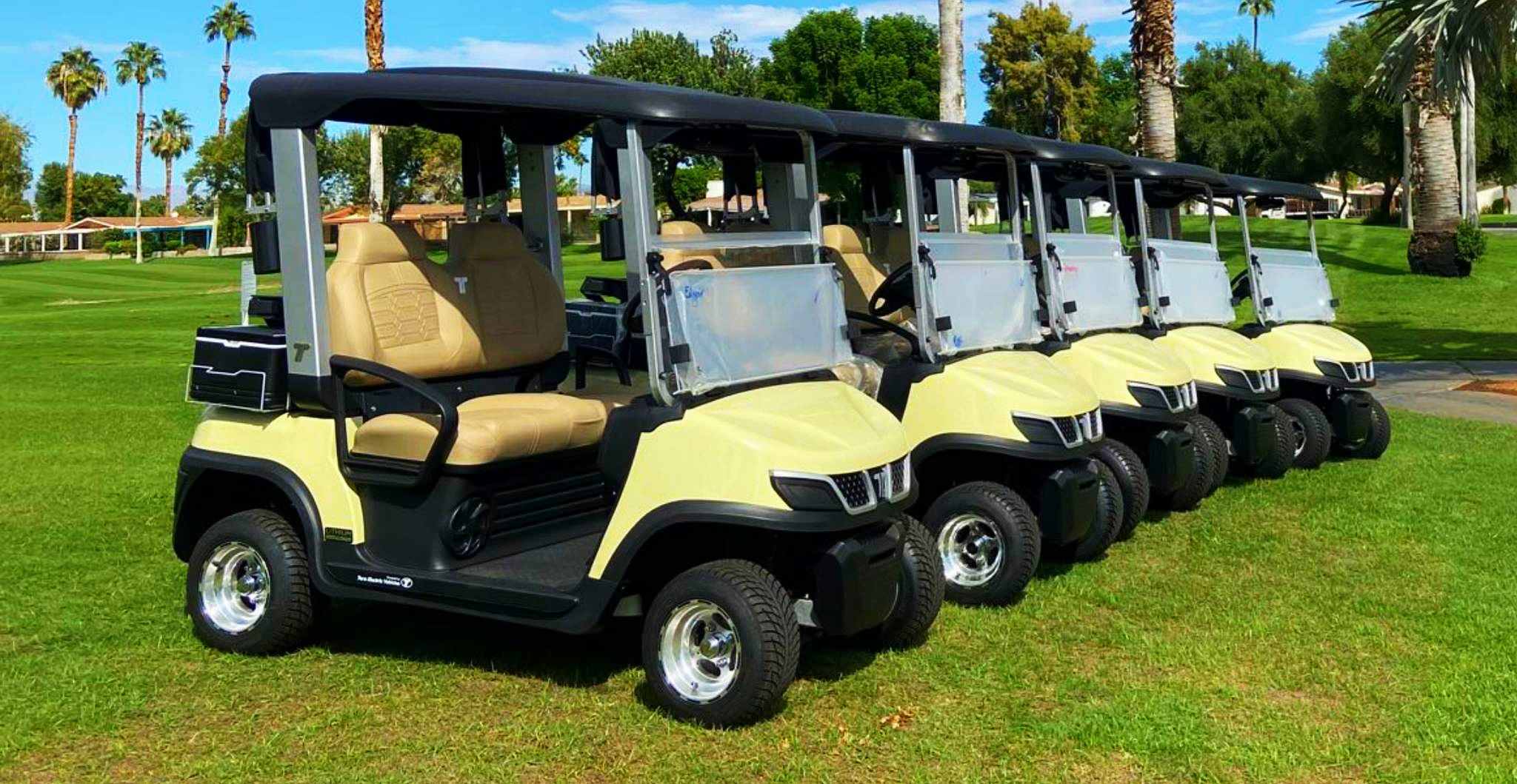
Calculate Available Vehicles First
When planning a golf fleet, courses should first calculate the average daily rounds and peak times during peak seasons, and then reserve spare vehicles for charging, maintenance, and temporary breakdowns.
Two-seater electric golf cars typically handle the main on-course tasks, four-seater models can be used for member reception, course patrols, and tournament services, and utility vehicles are responsible for transporting tools, materials, and maintenance equipment. Clearly defining the roles of different vehicle types prevents the fleet from having some types of vehicles idle while others are in short supply.
Control Downtime
Fleet costs don’t just come from the purchase price of the vehicles. Battery maintenance, tires, braking systems, parts supply, and repair response all affect long-term expenses.
Using Lithium Golf Carts can reduce routine maintenance such as water replenishment and shorten charging wait times, but battery capacity still needs to be determined based on slope, daily mileage, and usage frequency.
Tara Electric Vehicles has over 20 years of experience in electric vehicle and lithium battery technology. Tara unifies battery, controller, and vehicle platform matching to help Tara Golf Carts maintain stable performance during high-frequency operation. Courses should also establish regular inspection records to address tire wear, braking abnormalities, and charging issues early, preventing minor problems from escalating into prolonged downtime.
Data-Driven Scheduling
When there are dozens or hundreds of golf carts, manual recording becomes insufficient to accurately assess usage.
Golf Cart GPS displays vehicle location, battery status, speed, fault codes, and usage history, and supports geofencing, remote locking, and Pace of Play monitoring.
Tara’s GPS solution also helps managers view vehicle utilization and identify vehicles that are long-term idle or overused. Data cannot replace daily inspections, but it allows for more accurate scheduling and maintenance arrangements.
Tara Fleet Solutions
Tara Golf Carts offers two-seater vehicles such as the Harmony, Spirit Pro, and Spirit Plus, as well as four-seater vehicles like the Roadster 2+2 and Explorer 2+2, and the Turfman series of utility vehicles. Courses can combine vehicles according to their course, hospitality, and maintenance needs, rather than relying on a single vehicle type.
In addition to complete vehicles, Tara Electric Vehicles also provides lithium battery systems, GPS fleet management, technical training, and after-sales support. For courses planning to upgrade their golf fleets, vehicle compatibility, continuous vehicle availability, and the stability of subsequent services should all be considered in the procurement decision.
FAQs
How many vehicles should a golf fleet have?
There is no fixed number. Courses should calculate based on average daily rounds, peak hours, number of operating days, and the proportion of spare vehicles, not just the number of holes.
What is the best vehicle mix for a golf fleet?
Most courses primarily use two-seater vehicles, supplemented by a small number of four-seater vehicles and utility vehicles. The specific ratio depends on hospitality, tournament, and maintenance needs.
How does Golf Cart GPS help fleet management?
Golf Cart GPS provides vehicle location, battery monitoring, geofencing, usage records, and Pace of Play data, helping courses optimize scheduling and maintenance.
Why choose Tara Golf Carts for fleet use?
Tara Golf Carts offer a variety of course models, proven lithium-ion battery technology, and optional GPS management solutions, with ongoing technical and after-sales support from Tara Electric Vehicles.
Post time: Aug-03-2026


