

Tournaments, Corporate Golf Days, and Club Championships often involve a large number of carts used in a short period. Players need golf carts, and tournament staff, course marshals, referees, photography teams, and logistics personnel need to move between different areas. Food and beverage supplies, tournament materials, and equipment transport also require additional carts.
If carts are not assigned roles in advance, problems such as duplicate use, last-minute cart reassignments, and insufficient spare carts can easily arise on tournament day. Fleet arrangements should be finalized before the start of the tournament and confirmed along with the tournament schedule.
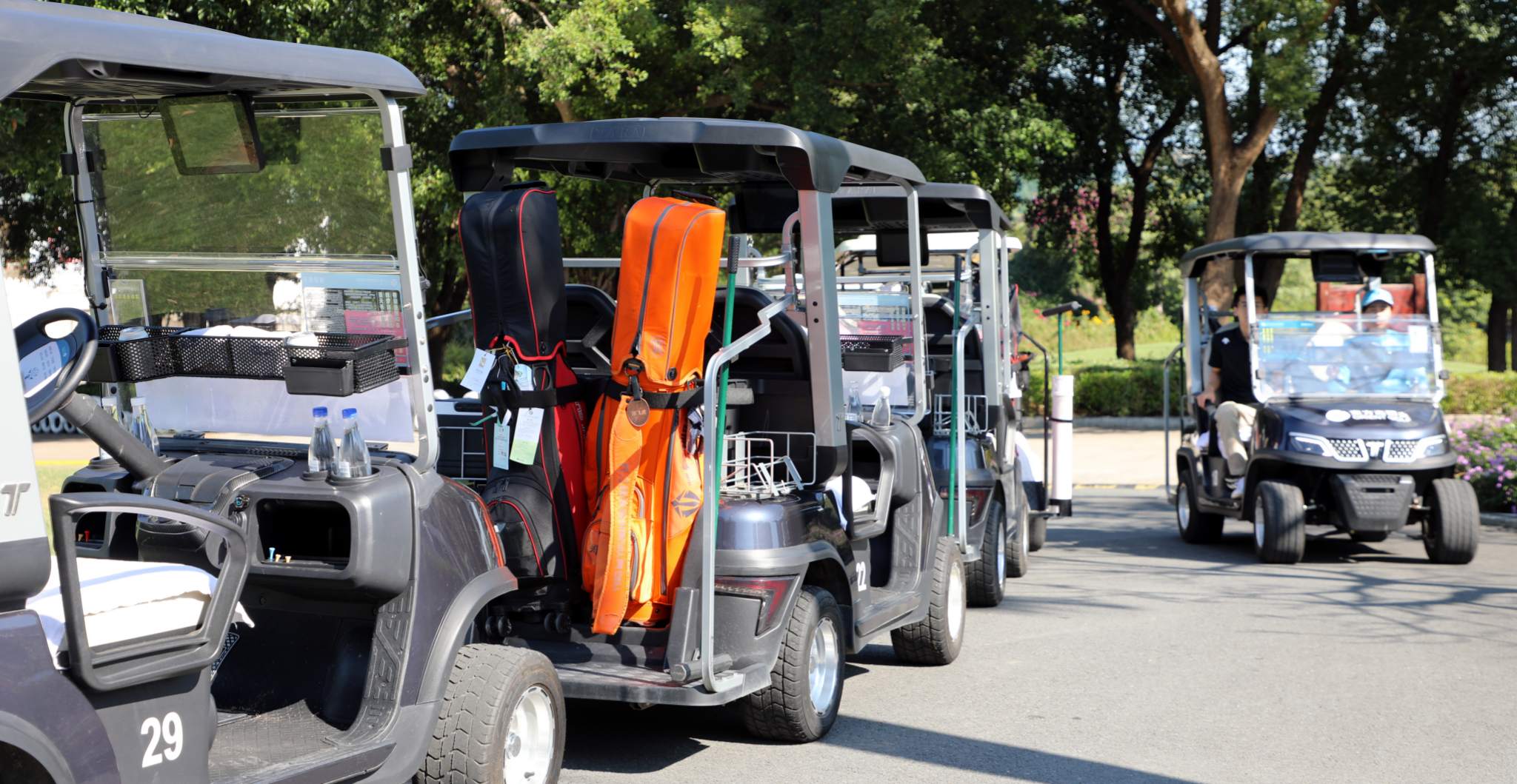
Fleet Roles
Player carts can be uniformly numbered and parked in a central location for easy retrieval and collection. Tournament staff carts should be assigned separately to avoid being temporarily reassigned to other personnel. Utility carts are suitable for transporting beverages, equipment, signage, and other materials.
Tara’s Spirit Golf Cart can be used for player and tournament reception, while Turfman Utility carts are suitable for material transport, on-site supplies, and logistics patrols. For courses that frequently host tournaments, having both types of carts on hand facilitates daily scheduling.
Reserve Carts
Reserve Carts ready for immediate use should be prepared in advance for tournament days.
Spare cars need to be charged, have tires checked, be basically cleaned, and have their functionality verified, and should be individually marked. If a car is taken out of service due to tire, battery, or other issues, staff can directly replace it without readjustment.
The number of spare carts should be determined based on the tournament size, the age of the existing cars, and other operational arrangements for the day. If the tournament coincides with regular Tee Time, separate calculations should be made for member cars and tournament cars to avoid sharing the same batch of spare cars between the two areas.
Battery Check
Shotgun Starts will result in a large number of golf cars departing at similar times. Tournament staff carts also typically travel frequently, with some carts needing to make multiple trips within the course.
Pre-tournament checks should record the Battery SoC of each car to ensure it can cover the expected usage time for the day. carts with low battery can be reassigned for short-distance work, while carts with sufficient battery power should be prioritized for players and staff requiring continuous patrols.
Tara Golf Carts utilize LiFePO4 Lithium Batteries and can be used with the Tara GPS Fleet Management System to monitor Battery SoCs. Managers can monitor the fleet’s battery status remotely, reducing the likelihood of carts running out of power during tournaments.
GPS Dispatch
Once carts enter the course, dispatching becomes significantly more complex. One cart might be parked at the 5th hole, another at Halfway House, and a backup cart near the Clubhouse. Staff must verify the location of each cart individually by phone or in person, which is time-consuming.
The Tara GPS system supports Real-time Cart Tracking, allowing managers to directly view cart locations and assign the nearest cart for handling based on actual needs.
Geofence Management and Zone Rules are also suitable for tournament scenarios. Rules can be pre-set for temporary closures, green perimeters, repair areas, or designated tournament routes. When route modifications are needed, notifications can be sent to carts via in-cart messaging.
GPS’s role in tournaments primarily lies in dispatching and execution. Staff can quickly locate carts, and drivers receive timely notifications of on-site rules.
Return Flow
After an event, a large number of carts will return to Cart Barn within a short period. Without pre-planned return procedures, parking, cleaning, charging, and maintenance checks can easily become chaotic.
Different return locations can be set up based on cart purpose. Player carts should be grouped together in the cleaning and charging area, while staff carts should be returned separately after their tasks are completed. carts with issues should proceed directly to the inspection area.
If the venue is still open the following day, carts scheduled for use the next day should be prioritized. carts that have not been fully charged or have malfunctions should be removed from the available fleet in advance to avoid scheduling problems the next morning.
Review the Fleet
After an event, the fleet can be reviewed based on Usage History, Battery SoC, cart return times, and actual spare cart usage.
If staff carts are insufficient for multiple events, additional dedicated utility carts can be added; if a large number of spare carts are not used for an extended period, the number of spare carts can be adjusted; if some carts consistently perform high-frequency tasks, their daily usage frequency can be reallocated.
These records help the golf course develop a more accurate Tournament Fleet Plan, allowing for direct reference to cart allocation for subsequent events.
Tara offers Golf Cart Fleet Solutions for Golf Courses, Country Clubs, and Golf Resorts, including player passenger carts such as the Spirit, Turfman Utility carts, LiFePO4 lithium battery systems, and optional GPS fleet management functionality. When a course plans to add golf carts, adjust its existing fleet structure, or upgrade its GPS management, it can confirm specific configuration options with the Tara team based on the event size, cart purpose, and existing fleet situation.
Post time: Aug-12-2026


