

A golf cart fleet must accommodate daily tee times, weekend peak periods, member tournaments, and ad-hoc events, while also allowing for vehicle turnover to handle charging, cleaning, and maintenance. Fleet size directly impacts a course’s capacity to host players and influences costs related to parking, charging, and maintenance.
When planning a fleet, courses can determine the appropriate size by considering peak demand, the ratio of backup vehicles, vehicle roles, and turnover rates.
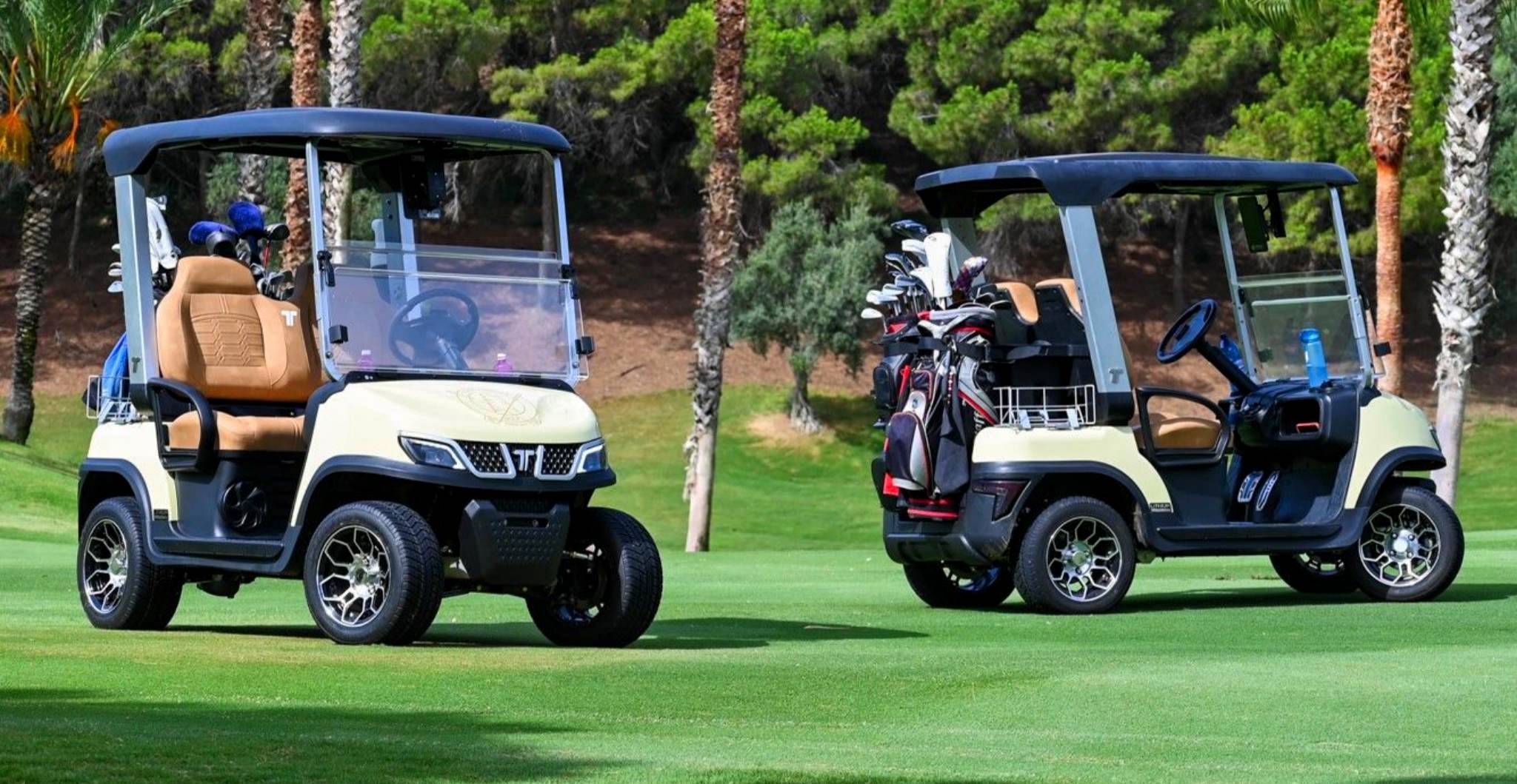
Fleet Size
Fleet size calculations can begin with peak-period requirements.
Courses should track the number of groups on the course simultaneously, the golf cart utilization rate, and the approximate duration a cart is occupied during an 18-hole round. If there is a concentrated wave of early tee times, dozens of carts may be out on the course for an extended period; therefore, the total number of rounds played in a day does not necessarily reflect actual vehicle demand.
Courses should also analyze data for weekends, peak seasons, and member days separately to avoid configuring the fleet based solely on standard weekday operations.
Backup Vehicles
Golf carts may be taken out of service daily for charging, tire inspections, brake maintenance, or unexpected breakdowns.
Consequently, a golf cart fleet usually requires a certain number of backup vehicles. The specific ratio can be determined based on fleet size, vehicle age, and historical maintenance records.
As the fleet ages, the need for backup vehicles may increase. Continuously tracking vehicle availability helps determine the optimal timing for the next procurement cycle.
Tournament and Event Needs
Tournaments and corporate events often create short-term spikes in vehicle demand.
“Shotgun starts” require a large number of carts to depart simultaneously, and additional vehicles may be needed for tournament staff, referees, and catering or operations teams. Courses should factor major annual events into their fleet planning to ensure existing inventory can meet these demands.
For infrequent large-scale events, needs can be addressed through strategic vehicle scheduling or by temporarily adding extra carts.
Vehicle Roles
A golf cart fleet typically comprises a variety of vehicle types.
The Tara Spirit Pro and Spirit Plus are suitable for standard two-person rounds; the Harmony features a caddie stand platform, making it ideal for caddie services; the Roadster 2+2 and Explorer 2+2 offer four-seat configurations; and the Turfman series handles the transport of tools, equipment, and maintenance materials. Once the intended use of the vehicle models is clearly defined, processes for dispatch, cleaning, and maintenance become easier to standardize.
Charging and Dispatch
When electric golf carts return to the garage en masse, distinct peak periods for charging occur.
Before purchasing a new fleet, it is essential to verify parking space availability, the number of chargers, and on-site power supply capacity. Tara Electric Vehicles utilizes LiFePO4 battery technology, which eliminates maintenance tasks such as watering required by traditional lead-acid batteries.
For larger fleets, GPS systems can be installed to monitor vehicle location, battery State of Charge (SoC), and usage history, thereby facilitating daily dispatch operations.
Tara Fleets
Tara Golf Carts has participated in numerous large-scale golf cart fleet projects.
Doha Golf Club in Qatar operates a fleet of 120 Tara carts managed via GPS, while Windsor Park & Golf Club in Thailand has introduced 300 Tara carts. Tailored fleet solutions are required for projects of varying scales, taking into account factors such as course visitor volume, tournament schedules, and operational methods.
Tara offers two-seater, four-seater, caddie, and utility vehicle models, enabling the fleet to cover diverse roles ranging from player transport and member hospitality to course maintenance.
FAQs
How many golf carts does a golf course need?
There is no standard number. Golf courses should calculate the required fleet size based on factors such as peak group volume, cart utilization rates, vehicle turnaround times, tournament requirements, and the need for backup units.
What is a fleet of golf carts?
A golf cart fleet refers to a group of carts operated and managed centrally, typically used for player transport, member hospitality, tournament operations, and internal course transportation.
How do golf courses manage golf cart fleets?
Common management tasks include vehicle numbering, daily inspections, cleaning, charging, maintenance, and dispatching. Large fleets may also utilize GPS systems to track location, battery levels, and usage history.
Does a golf cart fleet need spare carts?
Generally, yes. Spare vehicles ensure continued operations while other carts are charging, undergoing maintenance, or temporarily out of service.
Does Tara supply golf cart fleets?
Yes. Tara Golf Carts offers two-seater, four-seater, caddie, and Turfman utility vehicle models, allowing for fleet configurations tailored to the specific scale of the golf course.
Post time: Oct-12-2026


