

Electric golf carts have become essential vehicles for the daily operations of golf courses. From transporting players and their golf bags to maintaining turf and delivering supplies, various roles require vehicles with specific passenger capacities, storage space, and functional configurations. These electric vehicles generally fall into two categories—passenger golf carts and utility vehicles—which together handle the daily transport requirements of a golf course.
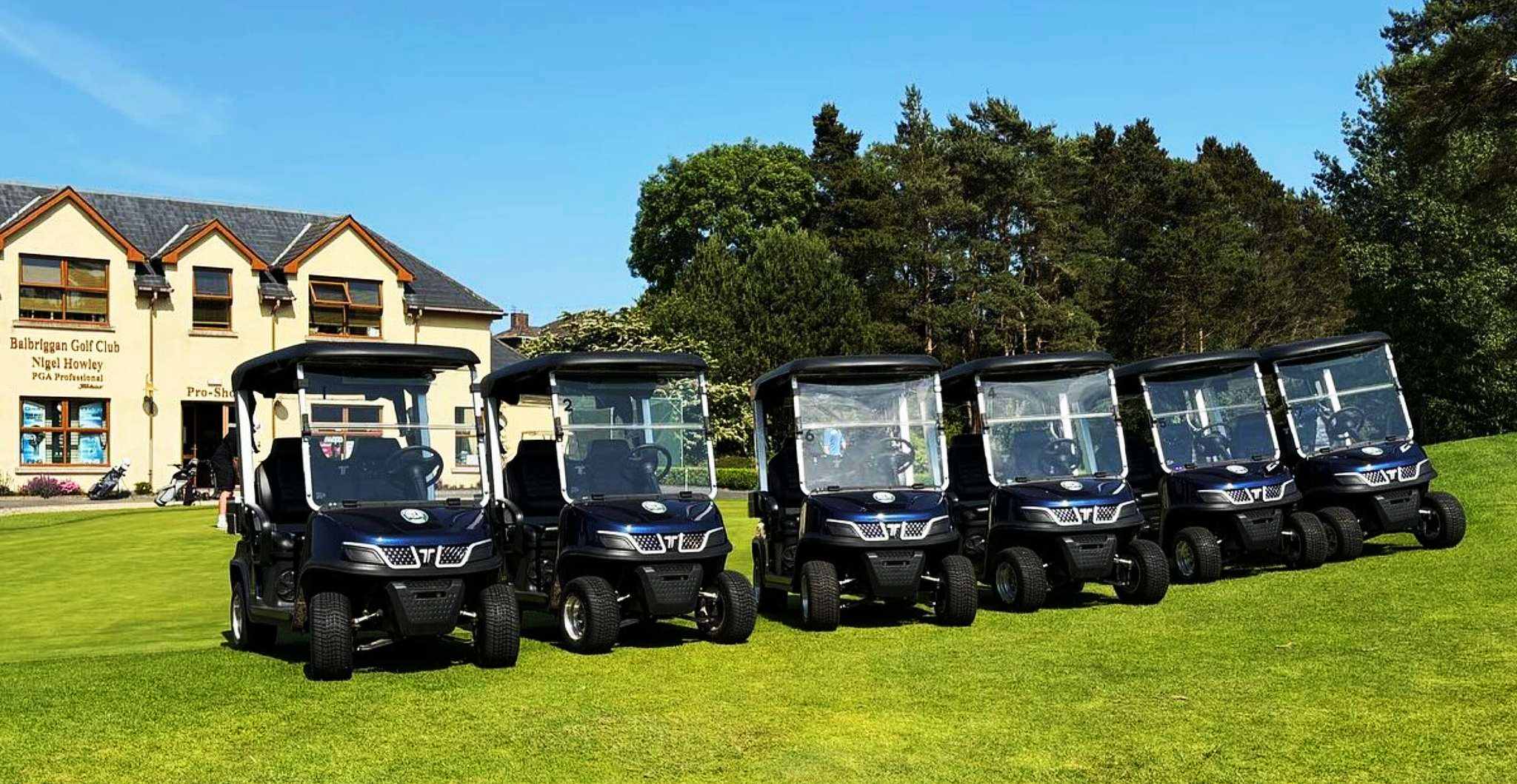
Types of Electric Golf Carts
Passenger golf carts are primarily used to transport players, club members, and guests. Two-seater models are suited for standard rounds of golf, while four-seater models are often used for larger groups, club hospitality services, and transportation within resort grounds.
Golf courses also deploy specialized models tailored to specific operational tasks. For instance, carts equipped with rear platforms allow caddies to carry equipment, while models featuring dedicated cargo beds enable staff to transport tools and daily supplies. These specialized vehicles address a wide range of logistical needs across the golf course.
Utility Vehicle Applications
Electric utility vehicles are primarily designed for golf course operations and maintenance teams. Turf maintenance staff use them to transport tools, fertilizers, equipment, and other supplies, while engineering and logistics personnel rely on them to travel between different areas of the course.
The “Tara Turfman” series—including the Turfman 450, 700, 700 EEC, and 1000—is designed for various on-site transport and work-related tasks. The “Keeper” model, featuring a two-seater configuration and a separate cargo bed, is well-suited for routine maintenance work and the transport of small loads.
By using passenger carts and utility vehicles in tandem—separating player transport from logistical operations—golf courses can minimize conflicts between operational traffic and the movement of players.
Lithium Battery Technology
LiFePO4 (lithium iron phosphate) batteries are now widely used in electric golf carts. Compared to traditional lead-acid batteries, LiFePO4 batteries do not require the periodic addition of electrolyte, making daily battery maintenance much simpler.
The “State of Charge” (SoC) of the battery is a critical piece of information for effective fleet management. Managers can monitor battery levels and the operational status of vehicles equipped with the GPS Fleet Management system, providing essential data for daily fleet dispatching and charging management.
Tara electric golf carts are available with lithium-ion battery configurations; specific battery options vary depending on the model and configuration.
GPS Fleet Management
Large golf courses often operate a substantial number of electric vehicles for various purposes. The GPS Fleet Management System provides a centralized view of fleet operations, allowing managers to track vehicle locations and usage.
Tara’s GPS Fleet Management system supports features such as real-time tracking, geofencing, zone-based rules, hole-location management, and remote vehicle immobilization. The system also displays battery State of Charge (SoC), vehicle speed, fault codes, and usage history. Course managers can use this operational data to monitor fleet distribution and manage vehicles that stray outside designated areas.
Additionally, the system supports in-vehicle messaging, food and beverage ordering, and on-screen advertising, providing golf courses with tools for operational services and member engagement.
Tara Electric Golf Cart Range
Tara offers a range of electric golf carts and utility vehicles designed for golf courses, covering needs such as transporting players, carrying caddie equipment, logistics, and course maintenance.
Two-seater models include the Harmony, Spirit Pro, and Spirit Plus; four-seater models include the Roadster 2+2 and Explorer 2+2. The Harmony features a caddie-gear platform and aluminum handrails, while the “Keeper” model includes a dedicated cargo bed for transporting course staff and supplies.
The Tara Utility Vehicle series includes the Turfman 450, Turfman 700, Turfman 700 EEC, and Turfman 1000. Golf courses can select a mix of passenger carts and utility vehicles to build an electric fleet tailored to their daily operational requirements.
With over 20 years of experience in the electric golf cart industry, Tara’s products are used at renowned golf courses worldwide. The company also offers vehicle customization and GPS fleet management solutions.
FAQs
1. What are electric golf carts used for?
Electric golf carts are primarily used for transporting players, carrying golf bags, hosting members, and facilitating travel within the golf course grounds. Electric utility vehicles are used for transporting tools, equipment, and supplies.
2. What is the difference between an electric golf cart and a utility vehicle?
Electric golf carts are primarily designed for transporting passengers and typically feature a two-seater or four-seater configuration. Utility vehicles are mainly used for on-site operations and cargo transport, and are generally equipped with a dedicated cargo bed or load-carrying space.
3. Are lithium battery golf carts suitable for daily golf course operations?
Yes, they are. LiFePO4 lithium batteries do not require regular watering—unlike traditional lead-acid batteries—making them well-suited for golf course fleets that see daily use and require centralized management.
4. Can electric golf carts be equipped with GPS fleet management?
Yes. Tara GPS Fleet Management supports features such as real-time tracking, geofencing, battery SoC (State of Charge) monitoring, speed display, fault code reporting, and remote vehicle locking.
5. Does Tara offer both passenger golf carts and utility vehicles?
Yes. Tara offers two-seater and four-seater electric golf carts, as well as the “Turfman” series of utility vehicles and the “Keeper” model (which features a separate cargo bed), covering both passenger transport and daily operational needs on the golf course.
Post time: Nov-20-2026


