

When purchasing a Golf Cart For Purchase, first determine the vehicle’s actual usage environment. Golf courses, resorts, private communities, and personal recreational use all have different requirements regarding seating capacity, battery, vehicle configuration, and after-sales service. Commercial courses also need to consider daily rounds, vehicle turnover, charging locations, spare vehicles, and maintenance schedules.
Usage Scenarios
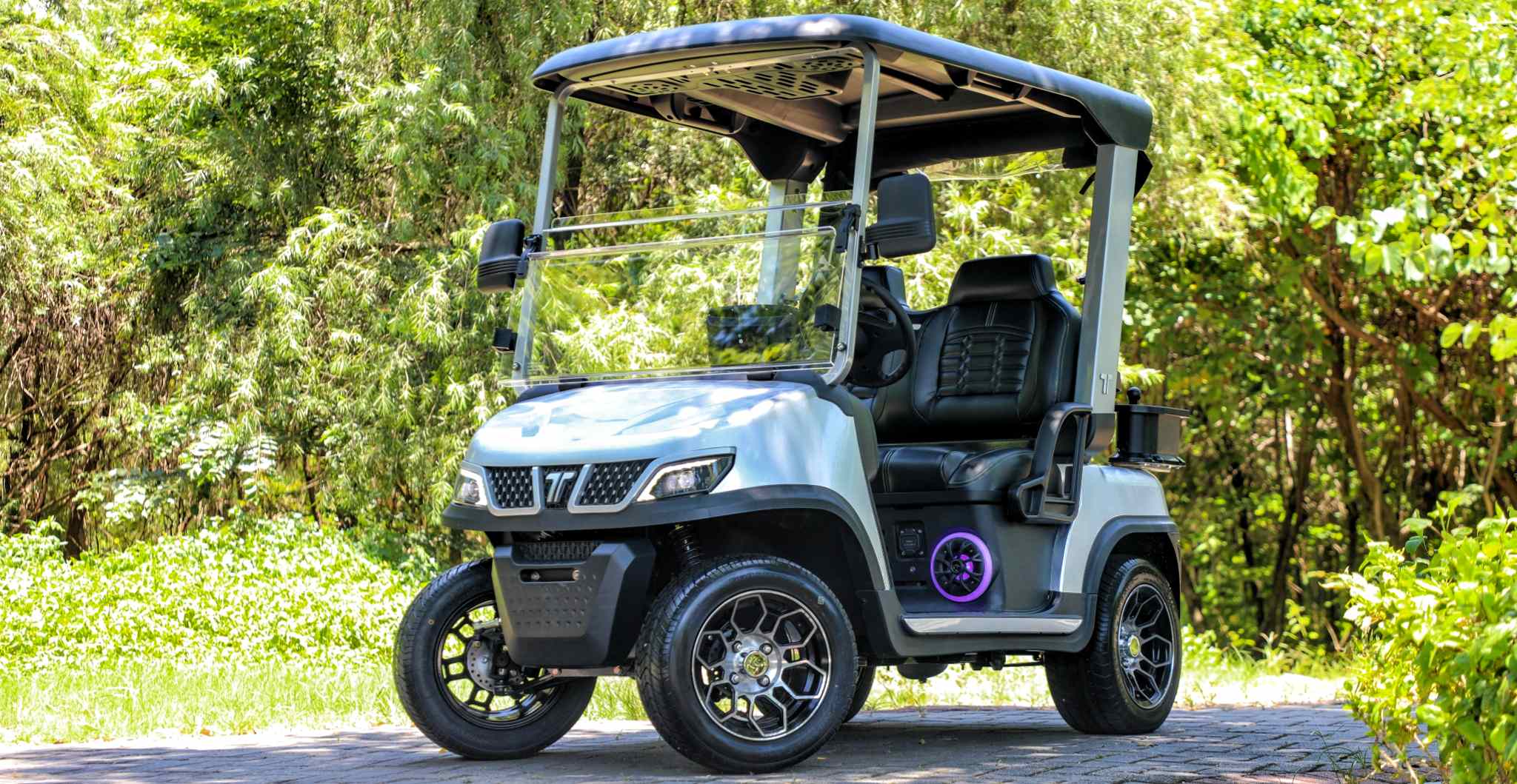
For two players playing daily, a 2-seater Golf Cart is typically chosen. This compact model is suitable for cart paths and clubhouse parking areas, and also facilitates the course’s scheduling of vehicles according to tee times.
For member reception, event staff movement, or short-distance transport of multiple people, a 4-seater Golf Cart may be considered. For turf maintenance, tool transport, and material handling, a Golf Utility Vehicle with a cargo bed is suitable.
Tara Golf Carts offers two-seater models such as the Spirit Pro, Spirit Plus, and Harmony, as well as the Roadster 2+2, Explorer 2+2, and Turfman series to meet various needs.
Choosing a Powertrain
When purchasing a Golf Cart, you need to confirm whether the vehicle is electric or gasoline-powered.
Electric Golf Carts operate with low noise and require no maintenance such as engine oil, spark plugs, or fuel system repairs, making them suitable for golf courses and clubs with designated charging areas. Gasoline-powered vehicles require regular engine maintenance, as well as arrangements for fuel storage and refueling.
Many commercial courses now use electric teams, allowing for scheduled charging at night or during off-peak hours.
Checking Battery Configuration
Battery specifications directly affect the vehicle’s daily operating capabilities.
Lithium Golf Carts do not require the water replenishment maintenance of traditional lead-acid batteries, and their battery management system monitors charge and discharge status. When purchasing, confirm battery capacity, BMS, charger specifications, warranty coverage, and local operating temperatures.
For courses with steep slopes or high daily play, sufficient battery capacity needs to be considered. Actual range is also affected by load, tires, speed, and ambient temperature.
Tara Electric Vehicles’ golf course models use lithium-ion batteries and are equipped with motors, controllers, and battery systems tailored to the specific model.
Calculating Fleet Size
When purchasing Golf Carts in bulk, it’s essential to first calculate the number of vehicles in use during peak periods.
If a course schedules a large number of tee times daily, charging vehicles, maintenance vehicles, and spare vehicles must also be included in the calculation. Temporary needs during tournaments should also be incorporated into the fleet planning in advance.
Standard player cars can form the core of the Golf Cart Fleet, supplemented by a small number of four-seater vehicles, caddie vehicles, and utility vehicles. Different vehicle types have fixed roles, making scheduling easier for management.
Checking After-Sales Conditions
Before deciding to buy Golf Carts, it’s crucial to confirm parts supply, technical support, battery service, maintenance training, and troubleshooting methods.
Commercial fleets are typically used continuously for many years. The availability of commonly used parts locally, how to handle battery problems, and the availability of remote diagnostics by technicians should all be included in the purchase evaluation.
Tara Golf Carts offers lithium-ion battery models, GPS Fleet Management, and technical support to the course market. Courses can also configure Golf Cart GPS according to their specific needs for vehicle location, battery status, geofencing, and fleet operation records.
Tara Vehicle Selection
If you’re looking for a golf cart for purchase, you can directly filter Tara models based on your intended use.
The Spirit Pro is suitable for standard course fleets; the Spirit Plus offers more features and is ideal for clubs that prioritize member comfort; the Harmony comes with a caddie stand for caddie services. The Roadster 2+2 and Explorer 2+2 are suitable for multi-person mobility, while the Turfman series handles maintenance and material transport.
Tara Electric Vehicles allows you to combine different models into a complete fleet and add GPS management solutions depending on the size of your course.
FAQs
How much does a golf cart cost?
The price of a new golf cart varies considerably, ranging from several thousand to tens of thousands of US dollars. The number of seats, battery type, brand, vehicle configuration, and accessories all affect the final price. Commercial courses typically use project-based pricing for bulk purchases, which needs to be confirmed based on quantity and configuration. Contact TARA GOLF CART for a course fleet quote.
Is it better to buy an electric or gas golf cart?
Both power sources have their applicable scenarios. Golf courses with fixed charging facilities often use electric golf carts; courses lacking centralized charging infrastructure may continue to use gasoline-powered vehicles.
Is a lithium golf cart worth buying?
For frequently used electric teams, lithium golf carts can reduce battery maintenance such as water replenishment. When purchasing, it’s still necessary to check battery capacity, BMS, warranty, and replacement costs.
Is it better to buy a new or used golf cart?
New carts usually come with a full warranty and standardized configuration. Used carts are cheaper to buy, but it’s necessary to check battery health, controller, charger, frame, tires, and maintenance history.
What should I look for when buying a golf cart?
First, determine the intended use and number of seats, then check the power source, battery, brakes, tires, charger, warranty, and after-sales service. For bulk purchases by golf courses, also calculate the number of vehicles in the fleet, spare vehicles, and charging facilities.
Post time: Aug-20-2026


