

When a golf course purchases a fleet, attention often goes to battery capacity, seating, range, and onboard technology. The chassis deserves equal consideration. It carries the vehicle’s major assemblies and remains exposed to moisture, irrigation water, wet grass, cleaning, and changing weather throughout its service life.
For fleet buyers, chassis material affects corrosion resistance, vehicle weight, and long-term upkeep. Tara offers selected golf cart configurations with an aluminum chassis and aluminum support components for golf course operations.
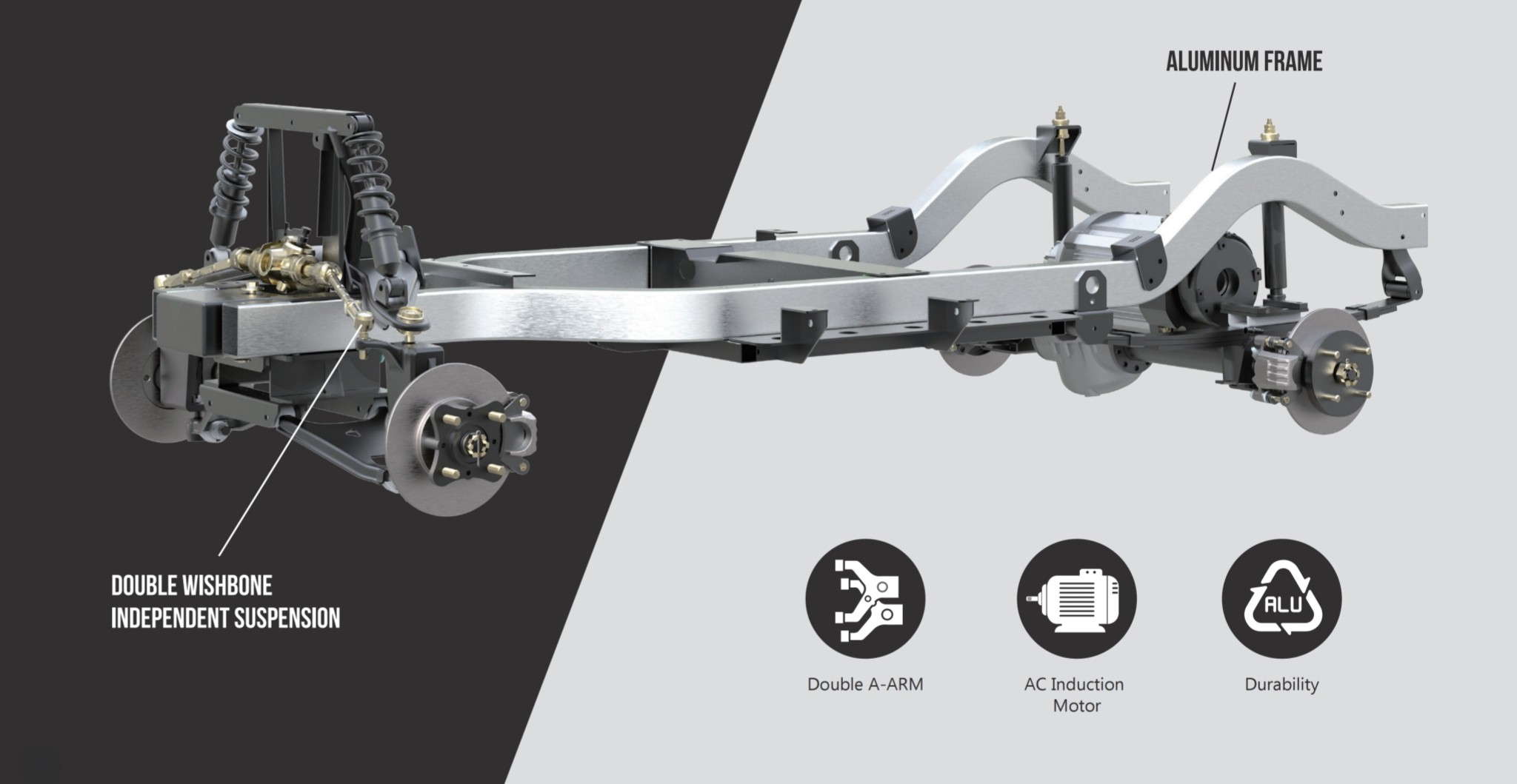
What the Chassis Does
The chassis supports the motor, battery, suspension, body, and seating. Related structural supports carry components such as the front assembly and canopy. Their design affects vehicle weight, stiffness, and durability.
Golf carts face frequent water exposure from dew, irrigation, rain, wet turf, and routine washing. Coastal courses may also experience salt-laden air. These conditions make corrosion protection an important fleet consideration.
Steel and Hot-Dip Galvanized Steel
Steel is widely used in vehicle structures because of its strength, rigidity, and established fabrication methods. Its main vulnerability outdoors is corrosion. Unprotected steel can rust when moisture and oxygen reach the surface. Paint or powder coating provides a protective barrier, so damaged coatings and exposed areas need attention.
Hot-dip galvanized steel adds a zinc coating. The coating provides a physical barrier, while zinc also corrodes preferentially to help protect exposed steel around small areas of damage. Properly galvanized steel can offer durable corrosion protection. Its service life depends on coating thickness and the environment.
Galvanizing is a proven solution when correctly specified. The underlying structure, however, remains steel. The zinc coating does not change steel’s density, so the frame retains the weight characteristics of steel.
Why Aluminum Is a Strong Option
Aluminum has approximately one-third the density of steel by volume. With suitable alloy selection and structural design, aluminum sections can reduce chassis weight while meeting the loads expected in vehicle operation. Actual weight savings depend on alloy, section shape, wall thickness, and construction.
Aluminum also forms a thin protective oxide layer when exposed to air. This layer helps resist further corrosion and prevents the red rust associated with ordinary steel. For courses with regular irrigation, wet grass, rainfall, or coastal exposure, corrosion-resistant chassis and support components can help reduce concerns about rust-related deterioration.
Lower structural weight can benefit vehicle operation. It contributes to lower overall vehicle mass, which can help maneuverability and reduce the energy needed for acceleration and climbing. The effect on driving range depends on the complete vehicle, including its battery, motor, tires, load, terrain, and driving pattern.
Why It Matters to Golf Course Operators
Golf carts often remain outdoors between rounds and may be washed frequently. Corrosion around structural members, joints, and mounting points can create inspection and repair work. A corrosion-resistant chassis helps protect a part of the vehicle that is difficult and costly to replace.
Weight also matters across a fleet. Each cart carries its battery, passengers, golf bags, and accessories. Reducing structural mass gives more flexibility when balancing passenger capacity, battery size, and vehicle performance.
For courses near the coast or in regions with long wet seasons, aluminum chassis and supports can be particularly relevant. Proper joint design is still essential: contact between dissimilar metals in the presence of moisture can cause galvanic corrosion.
Tara’s Aluminum Chassis and Support Structure
Tara’s fleet materials identify an aluminum chassis, aluminum frame, and aluminum canopy supports. The fleet specification also lists a rust-resistant aluminum chassis, aluminum front support, and aluminum canopy support.
These components serve different structural roles. The chassis forms the vehicle’s main foundation, while the front and canopy supports carry their respective assemblies with less added weight.
The aluminum chassis and lithium battery combination as a lightweight setup designed for nimble handling on the course. For golf course operators, this approach combines reduced structural mass with corrosion resistance in key vehicle components.
Choosing the Right Chassis Material
Steel, hot-dip galvanized steel, and aluminum each have valid applications. Galvanized steel provides a durable zinc coating, while aluminum offers lower material density and natural corrosion resistance.
For courses dealing with wet conditions, frequent cleaning, or coastal exposure, Tara’s aluminum chassis and support configurations offer practical advantages in weight and corrosion resistance. These features can help create a fleet suited to demanding outdoor use.
Post time: Nov-11-2026


