

The terms “UK Golf Cart” and “Golf Buggy” generally refer to the same type of low-speed golf vehicle; however, “Golf Buggy” is the more common term in the UK and Europe, whereas “Golf Cart” is predominantly used in North America and international trade.
When selecting vehicles for UK golf courses, the first step is to distinguish between two types of usage: operation solely within private grounds (such as golf courses or resorts) versus the need to access public roads. Different use cases entail different regulatory requirements.
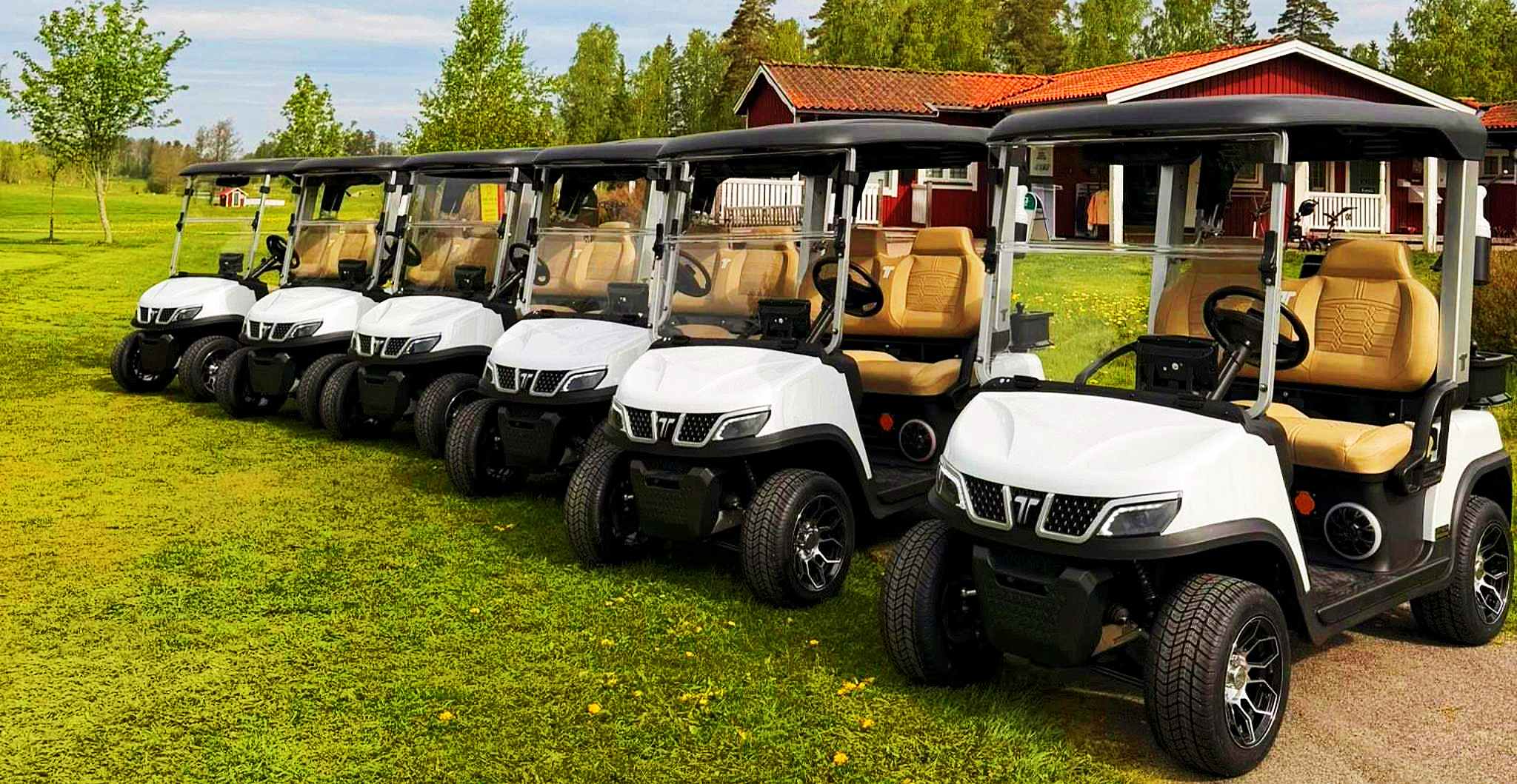
On-Course Use
For vehicles used within the golf course itself, priorities should include reliability, battery performance, seating configuration, and ease of routine maintenance.
Two-seater electric golf carts are suitable for standard play, while four-seater models accommodate member hospitality and group transport; utility vehicles are better suited for maintenance tasks and the transport of tools and materials.
Tara Golf Carts currently offers two-seater, four-seater, and utility models, incorporating lithium-ion battery systems and optional GPS fleet management into their golf course solutions.
Public Roads
Standard golf carts cannot be driven on UK public roads simply because they are “low-speed” vehicles.
In England, Scotland, and Wales, vehicles intended for road use may be subject to requirements such as vehicle type approval, DVLA registration, insurance, and vehicle tax, depending on the vehicle category and certification status. The UK government mandates that vehicles meet specific registration and insurance requirements before road use; new models may also require GB Type Approval.
Therefore, when purchasing a road-legal golf cart in the UK, one should verify directly with the supplier that the vehicle has obtained the necessary certifications for UK road regulations, rather than assuming “road legality” based solely on the presence of lights, mirrors, or seatbelts.
Lithium Battery Options
Lithium-powered golf carts are generally better suited for golf course operations in the UK. Lithium models do not require routine water refilling—reducing the maintenance associated with traditional lead-acid batteries—and facilitate centralized fleet charging management.
However, given the UK’s cold winters, buyers should verify specifications regarding low-temperature charging, storage requirements, and Battery Management System (BMS) protection strategies. Tara Golf Carts offers battery heating options to ensure reliable operation in cold weather. Battery capacity should be determined based on factors such as course terrain (gradients), daily round volume, and vehicle utilization rates.
GPS Management
GPS technology offers significant value for UK golf courses operating large golf cart fleets. Tara’s Golf Cart GPS system offers real-time vehicle tracking, geofencing, battery SoC (State of Charge) monitoring, speed data, fault code reporting, route history, and “Pace of Play” management. Courses can use geofencing to restrict vehicle access to areas such as the immediate vicinity of greens, maintenance zones, or temporarily closed sections of the course.
Tara in the UK Market
Tara Electric Vehicles offers a range of electric golf carts designed for various seating capacities and applications. Models officially marketed in the UK include 2-seater, 4-seater, and 6-seater configurations, with options for lithium-ion batteries and custom specifications.
For golf course procurement managers sourcing carts in the UK, Tara’s advantage lies in its ability to provide a comprehensive package—including the vehicles themselves, lithium battery systems, GPS fleet management solutions, and various customization options. For projects requiring use on public roads, local UK requirements regarding vehicle certification, registration, and insurance should be verified individually prior to ordering.
FAQs
Are golf carts road legal in the UK?
Some models are, but standard golf course carts cannot automatically be considered road-legal. Use on public roads may involve requirements such as type approval, registration, insurance, and vehicle tax.
Do you need a driving licence for a golf cart in the UK?
If the vehicle is used as a motor vehicle on public roads, the driving qualification required depends on the vehicle’s classification. Before purchasing a road-legal model, you should confirm its registration category and the corresponding driving licence requirements.
Does a golf cart need insurance in the UK?
If the vehicle is used on public roads, UK vehicle registration guidelines mandate that it must be insured. For operation solely on private property, coverage should be determined based on site rules and commercial insurance arrangements.
What is a golf cart called in the UK?
“Golf buggy” is the term more commonly used in the UK, though “golf cart” and “golf car” are also widely understood.
Are electric golf carts suitable for UK golf courses?
Yes, they are suitable. Electric golf carts operate quietly, making them ideal for the golf course environment, and lithium batteries require less maintenance than traditional lead-acid batteries. Specific configurations should be selected based on factors such as terrain, usage intensity, and charging infrastructure.
Post time: Aug-11-2026


