

Golf carts have become one of the most common modes of transportation on golf courses, resorts, or enclosed areas. Whether you’re new to golf or looking for safer and more efficient vehicle use, understanding how to drive a golf cart is essential. Proper driving not only enhances the driving experience but also extends the vehicle’s lifespan and ensures the safety of pedestrians and equipment.
As a manufacturer specializing in electric golf carts and utility vehicles, Tara has accumulated extensive real-world application experience in multiple markets worldwide. This article will systematically explain the key points of driving a golf cart, from basic operations to real-world scenarios.
Basic Structure and Driving Logic of a Golf Cart
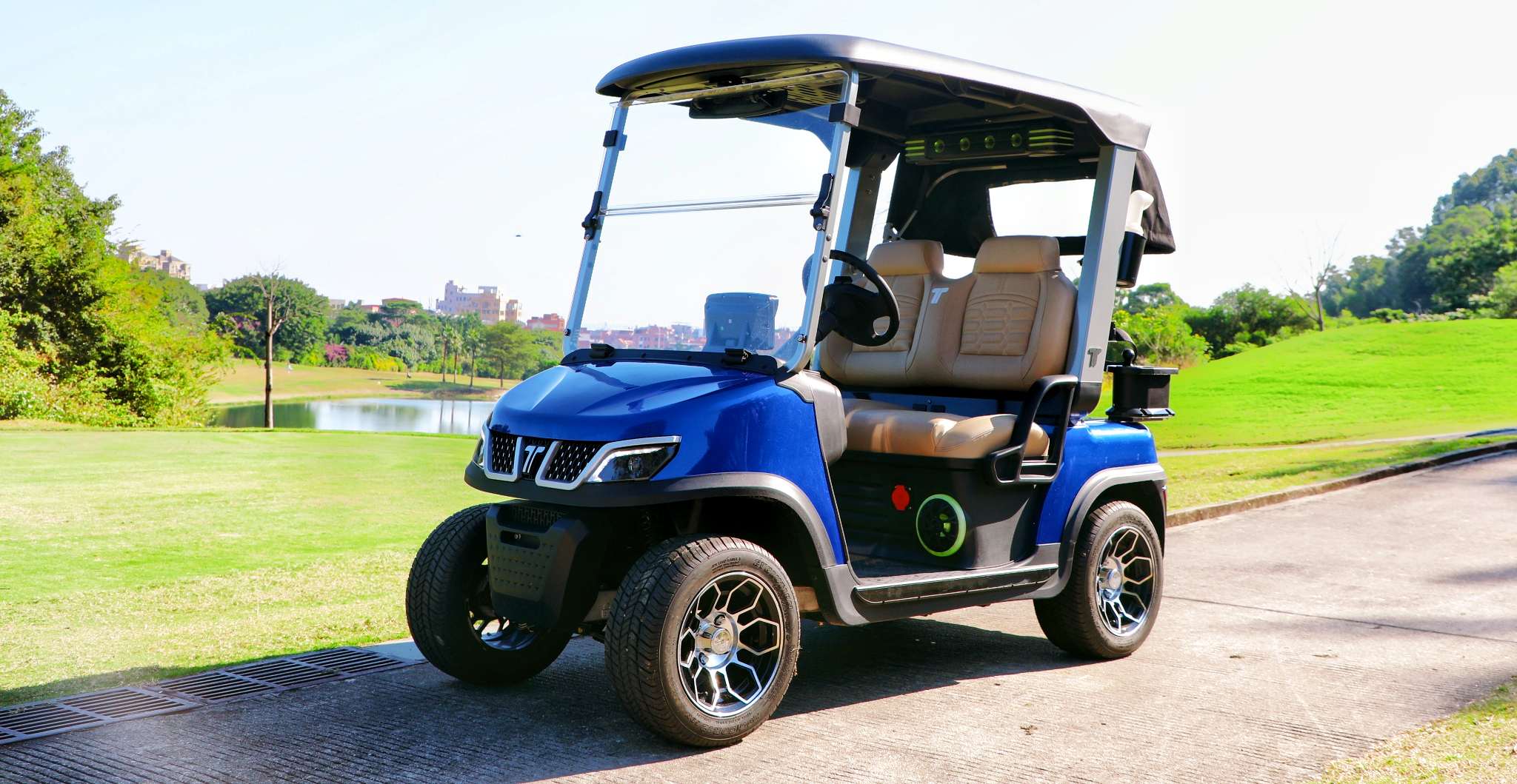
Before learning how to drive a golf cart, it’s essential to understand the vehicle’s basic structure. Most modern golf carts, especially electric golf carts, are motor-driven, with a relatively simple structure and intuitive operation.
Common control components include a steering wheel, accelerator pedal, brake pedal, forward/reverse selector, and parking brake. Compared to traditional cars, golf carts lack complex transmission systems but require a higher level of driving smoothness, especially on lawns and narrow roads.
Key Pre-Drive Checks
Many safety issues stem not from driving itself, but from neglecting to perform checks. Mastering the correct “How To Drive a Golf Cart” begins with proper pre-drive preparation.
First, check that the battery is fully charged; this is fundamental for all electric golf carts. Second, check the tires, ensuring proper tire pressure and no noticeable wear. Next, check that the brakes are responsive and that the steering wheel is not unusually loose. For utility vehicles used for maintenance and transportation, also ensure the cargo bed is secure and the load is appropriate.
Starting the Vehicle and Basic Driving Operations
When starting the vehicle, always ensure the forward/reverse gear is correctly engaged. Many beginners overlook this, leading to misoperation at startup.
Gently pressing the accelerator pedal to allow for a smooth start is a core principle of electric vehicle driving. Golf carts are not suitable for rapid acceleration, especially on grass or slippery surfaces. Slow down in advance when turning and maintain a steady speed through curves; this not only improves comfort but also helps protect the grass.
Driving Techniques for Different Road Conditions
Golf courses are not entirely flat. Understanding “How To Drive a Golf Cart” also requires mastering how to handle different terrains.
When going uphill, maintain a continuous and stable power output, avoiding sudden stops. When going downhill, slow down in advance and use braking to control speed, rather than relying entirely on inertia. When encountering narrow fairways or pedestrian areas, proactively slow down and yield; these are basic operating guidelines for golf course vehicles.
Precautions for Carrying Passengers and Cargo
Golf carts are designed for multiple purposes, including carrying passengers, maintenance, and transportation. When learning “How To Drive a Golf Cart,” it is essential to understand the vehicle’s rated load.
When fully loaded with passengers, the vehicle’s braking distance increases significantly; allow for more safety space. For utility vehicles, cargo should be evenly distributed to avoid shifting the center of gravity. Overloading not only affects handling but can also cause long-term damage to the frame and battery system.
Common Driving Mistakes and Safety Reminders
In actual use, some seemingly harmless habits often hide risks. Examples of misunderstandings regarding “How To Drive a Golf Cart” include high-speed cornering, hovering one foot on the accelerator pedal, and driving on surfaces not designed for it.
Furthermore, golf carts are not recreational vehicles; drifting, sudden braking, or racing are prohibited. Such actions not only violate course regulations but can also cause equipment damage and personal injury.
FAQs
1. Do you need a license to drive a golf cart?
In most golf courses and enclosed areas, a driver’s license is generally not required to drive a golf cart. However, on public roads or in certain countries and regions, local regulations may apply, so it’s advisable to check beforehand.
2. How fast can a golf cart go?
Standard electric golf carts are typically designed for speeds of around 20–25 km/h, with the exact speed depending on the motor configuration and usage scenario. Courses usually impose speed limits.
3. Is it hard to learn how to drive a golf cart?
Overall, it’s not difficult. Once you understand the basic operations and safety rules, most people can master “How To Drive a Golf Cart” in a short time, but good driving habits need to be developed gradually through practice.
4. Can golf carts be used for maintenance work?
Yes. Many courses and resorts use Electric Utility Vehicles for lawn maintenance, equipment transport, and logistical support, operating in much the same way as regular golf carts.
Driving Habits Determine the Vehicle User Experience
Truly understanding “How To Drive a Golf Cart” is more than just knowing how to pedal and turn the steering wheel; it’s about developing a comprehensive respect for the course, the vehicle, and others. Smooth driving, proper load control, and regular checks—these seemingly simple habits significantly improve vehicle reliability and lifespan.
Tara focuses on providing stable and efficient Electric Golf Cart and Utility Vehicle solutions for golf courses, with all products designed around real-world usage scenarios. Good driving habits are key to maximizing the value of these vehicles.
Post time: Feb-04-2026


