

Golf course buggies are frequently used vehicles in the daily operation of a golf course, primarily for transporting players and their bags. When purchasing, you need to consider the number of seats, power source, battery, fleet management, and after-sales service. For commercial courses, a single vehicle may be used multiple times a day, so reliability and turnaround efficiency are more important.
Two-Seater vs. Four-Seater
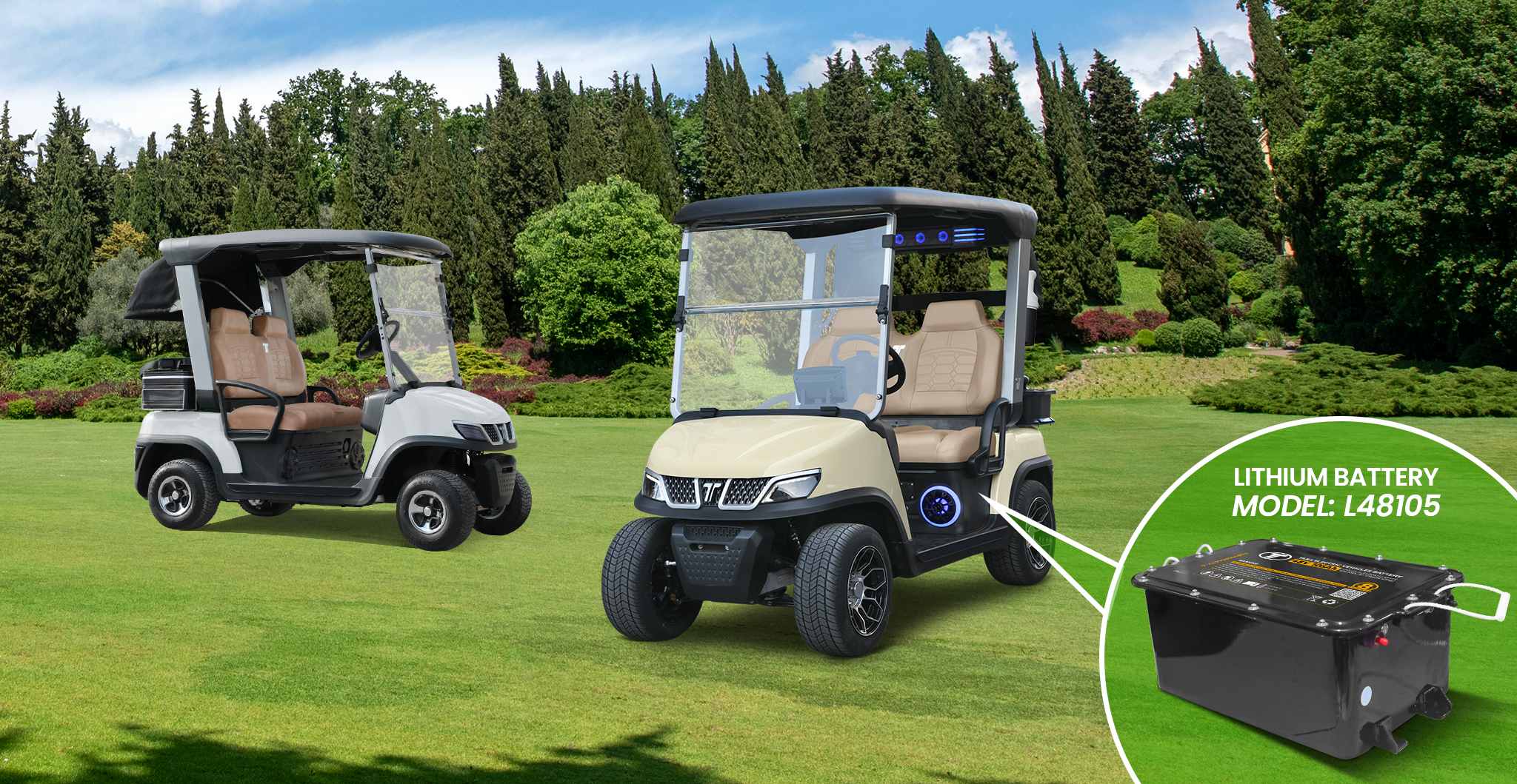
Standard courses typically use 2-seater golf carts. Two players share one car, the compact size makes it easy for the course to manage golf cart fleets. Tara’s Harmony, Spirit Pro, and Spirit Plus are all two-seater models, with the Harmony featuring a caddie stand, suitable for clubs providing caddie services.
Four-Seater golf carts are more suitable for member reception, event staff, and short-distance movement of multiple people. Models like the Tara Roadster 2+2 and Explorer 2+2 can supplement two-seater fleets, preventing all vehicles from performing the same tasks.
Lithium-ion Battery Power
For golf course buggies used on courses, quiet electric drive systems are more suitable. Electric golf carts have no engine idling noise and require relatively less mechanical maintenance.
Tara Golf Carts’ course vehicles use lithium-ion batteries. Compared to traditional lead-acid batteries, lithium-ion batteries do not require daily water replenishment, and fleet charging and maintenance are easier to manage centrally.
The specific battery capacity still depends on the slope, daily rounds, load, and charging time. When choosing a lithium-ion golf cart, it is not recommended to only look at the advertised range.
Course Configuration
A practical golf course buggy should be configured for an 18-hole usage scenario. Bag racks, storage space, windshield, rain gear, and beverage storage are usually more important than entertainment features.
If the course also undertakes maintenance work, a golf utility vehicle can be added. The Tara Turfman series features a cargo bed design, which is more suitable for transporting tools, equipment, and supplies. This reduces the need for ordinary golf carts to be used for cargo transport for extended periods.
GPS Management
As the fleet size increases, Golf Cart GPS can help managers view vehicle location, usage status, and operation records.
Tara offers two solutions: a touchscreen GPS Fleet Management System and a GPS Tracker Module, supporting real-time location tracking, geofencing, and other fleet management functions. Geofencing also helps courses manage areas around the greens, pit lanes, and other restricted vehicle access areas.
For fleets of dozens or even hundreds of Golf Course Buggy vehicles, the value of GPS lies primarily in dispatching, turf protection, and vehicle utilization.
Tara Course Solutions
Tara Electric Vehicles offers two-seater, four-seater, and utility models. Tara Golf Carts can also be combined with lithium-ion battery systems and GPS management solutions to form a complete course fleet.
When purchasing Golf Course Buggy vehicles, it’s advisable to first determine the daily rounds, caddie services, reception needs, and maintenance tasks, and then decide on the quantity of each type of vehicle. This configuration approach better suits actual operations.
FAQs
What is a Golf Course Buggy?
A Golf Course Buggy is a low-speed vehicle used on a golf course, primarily for transporting players and golf bags. Depending on the vehicle type, it can also perform reception or course maintenance tasks.
Is an electric golf buggy better than a gas buggy?
Electric golf carts have lower operating costs, are quieter, and require less mechanical maintenance. The main advantage of gasoline-powered vehicles is faster refueling; the specific choice still depends on operating conditions.
How many seats should a golf course buggy have?
Two-seater vehicles are most common for standard courses; four-seater vehicles are suitable for member receptions or large group travel. Course buggy fleets can typically combine vehicles with different seating capacities.
Are lithium batteries good for golf course buggies?
Suitable for high-frequency teams. Lithium golf carts do not require the daily water replenishment maintenance of lead-acid batteries, but the capacity and charging solution still need to be selected based on the actual course conditions.
Does a golf course buggy need GPS?
Large or busy courses are suitable for using golf cart GPS to manage vehicle location, geofencing, and fleet usage.
Post time: Aug-13-2026


