

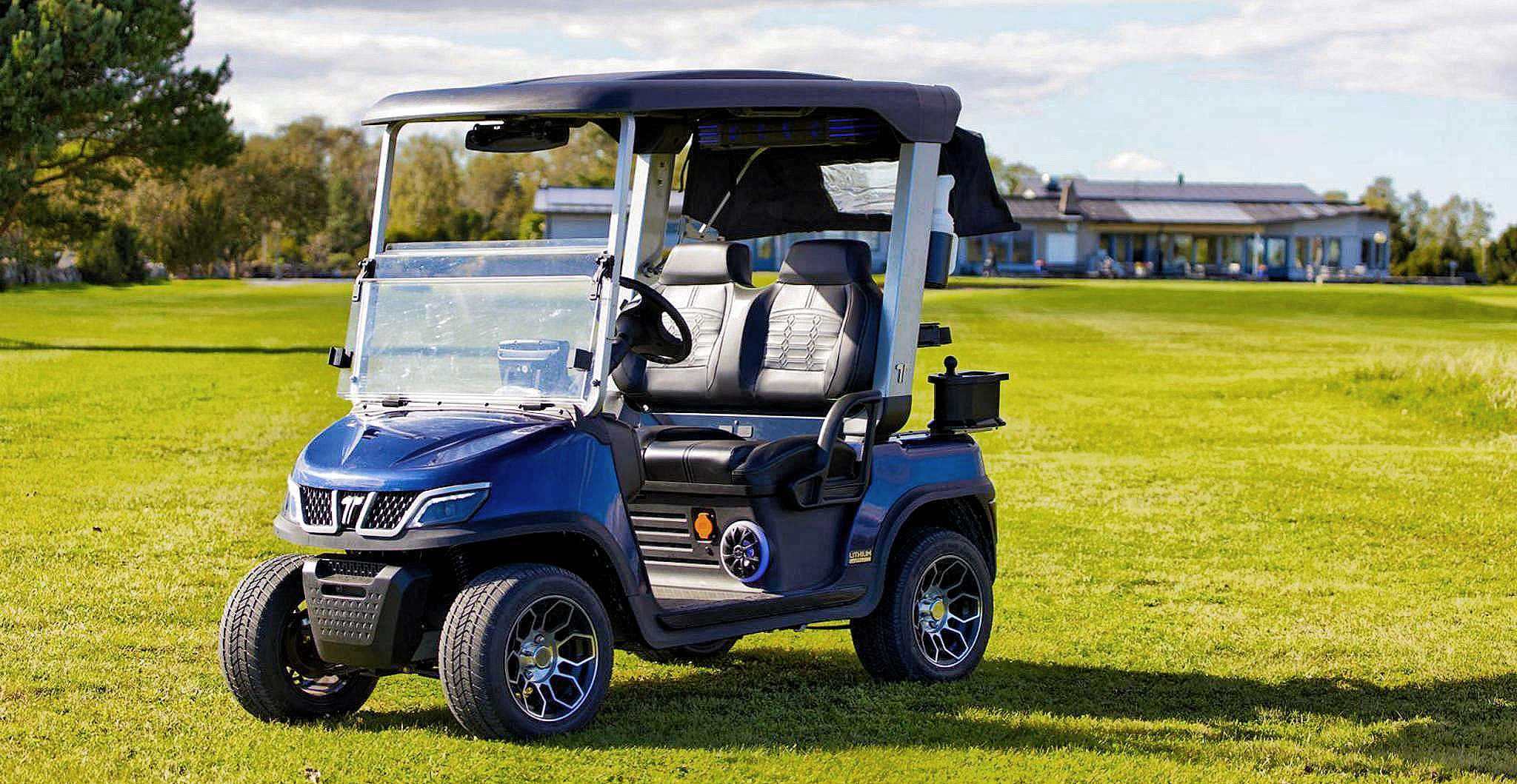
Car For Golf vehicles are typically electric vehicles designed for golf course use, rather than regular cars. Course vehicles need to accommodate player transportation, bag storage, turf protection, and fleet operations. Before selecting a vehicle, determine whether it will be used for player tee times, caddie services, member reception, or maintenance transport, then compare seating layouts, battery configurations, and management features.
Usage Scenarios
Two-seater Electric Golf Carts are suitable for daily tee times and are the primary type of Golf Cart Fleet. Clubs providing caddie services can choose vehicles with rear caddie stands, such as the Tara Harmony; four-seater models are suitable for member reception and group travel, such as the Tara Roadster. Maintenance departments are better suited to Golf Utility Vehicles with cargo beds, such as the Tara Turfman, for transporting vehicles and supplies.
Battery Configuration
For high-frequency operation, Car For Golf vehicles are better suited to mature lithium battery systems. Lithium Golf Carts do not require regular water replenishment like traditional lead-acid batteries, and charging and daily management are simpler. Battery capacity needs to be determined based on course slope, daily rounds, vehicle load, and charging window; simply comparing advertised range is insufficient. Tara offers 105Ah and 160Ah lithium batteries.
Fleet Management
As the number of vehicles increases, scheduling often becomes more critical. Golf Cart GPS can be used to view vehicle location, battery level, speed, and usage records, and can also restrict vehicle access to greens, pit areas, or wet, soft grass via electronic fences.
Small fleets can use basic management; GPS’s value becomes more apparent when there are more vehicles or when managing pace of play is required. Tara currently offers two options: a touchscreen GPS system and a simple GPS Tracker Module.
Tara Vehicle Models
Tara Golf Carts offer two-seater and four-seater Car For Golf and the Turfman series Golf Utility Vehicles. The Spirit Pro and Spirit Plus are designed for course fleets; the Harmony comes with a caddie stand; the Roadster 2+2 and Explorer 2+2 feature a four-seat forward-facing layout.
Tara Car For Golf also offers LiFePO4 lithium battery systems and optional GPS solutions. Golf courses can tailor vehicles according to their on-course, reception, and maintenance roles, rather than purchasing a batch of Car For Golf vehicles with identical functions.
Pre-Purchase Confirmation
In addition to vehicle price, you should also confirm charger configuration, warranty coverage, spare parts availability, technical training, and local after-sales service. For commercial fleets, the long-term, stable operation of vehicles is more important than adding unnecessary features.
FAQs
What is the difference between a golf cart and a golf car?
In everyday use, the two are often used interchangeably. Generally, “golf car” and “golf cart” usually refer to powered, passenger-carrying vehicles used on golf courses.
Is an electric or gas golf cart better?
Electric golf carts run quietly and require less mechanical maintenance; gasoline models refuel quickly but require engine, oil, and fuel system maintenance. The choice depends on charging conditions and operating methods.
How many seats should a golf cart have?
Standard courses typically use two seats; receptions and groups of several people can use four seats; golf utility vehicles are recommended for transporting equipment and supplies.
Are lithium batteries better for golf carts?
Lithium golf carts don’t require refilling and generally offer advantages in weight, charging, and maintenance management, but a matching BMS and charger are required.
Does a golf course need GPS on every cart?
Not necessarily. Medium to large carts, busy courses, or clubs requiring electronic fencing and pace management are better suited to golf cart GPS systems.
Post time: Aug-05-2026


