

For golf courses, turf quality not only determines the course’s visual image but also directly impacts member experience and long-term maintenance costs. With the increasing frequency of golf cart use, minimizing damage to fairways, greens, and sensitive areas has become a core issue in course operation and management. More and more high-end courses are adopting GPS Fleet Management to achieve more refined vehicle control and turf protection. Compared to traditional manual management, intelligent GPS systems, through real-time positioning, electronic fencing, speed control, and operational data analysis, help courses improve operational efficiency while more effectively protecting turf quality and reducing maintenance costs.
In traditional golf course operations, cart management typically relies on manual inspections and experience-based judgment. However, with the expansion of courses, the increase in membership, and the higher frequency of cart use, manual management alone is no longer sufficient to effectively control turf damage and rising maintenance costs.
Especially in the following areas:
Around the green
Near the tee box
Areas softened after rain
Steep slopes and drainage areas
Newly restored turf areas
If golf carts drive haphazardly for extended periods, it can easily lead to:
Turf compaction
Increased turf wear
Decreased drainage
Prolonged turf recovery time
Increased course maintenance costs
Therefore, more and more golf superintendents are beginning to regard the GPS Fleet Management system equipped on golf carts as an important tool for turf protection.
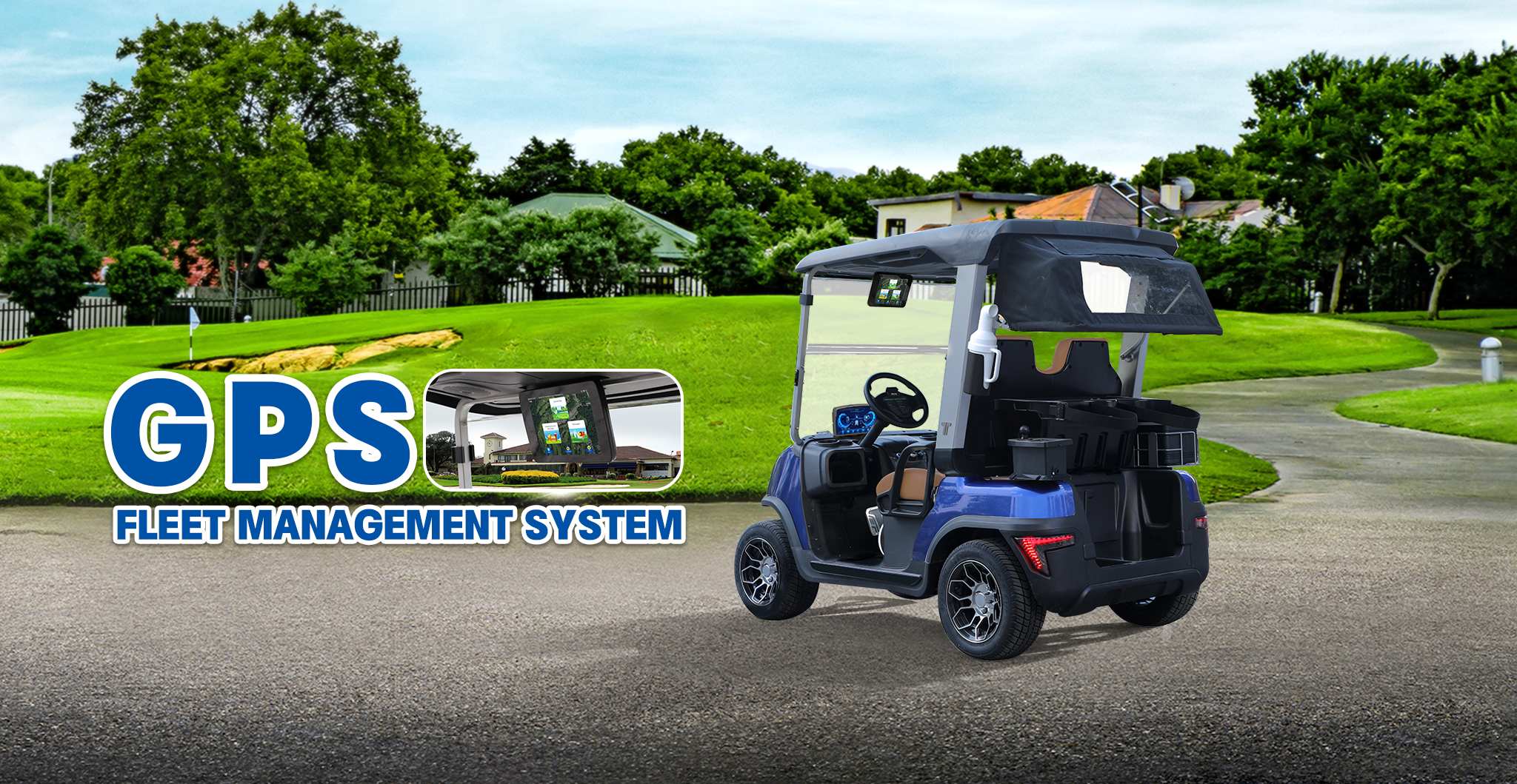
I. Real-time Cart Location Tracking
In busy courses, operations teams often find it difficult to monitor the location and usage status of each golf cart in real time. However, through the Tara GPS system‘s Real-time Cart Location Tracking, operations and management personnel can quickly view the distribution of the entire fleet.
The value of this real-time visual management lies in:
Quickly identifying vehicles illegally entering sensitive areas
Preventing excessive concentration of vehicles in a certain area
Optimizing vehicle flow routes during peak hours
Reducing the risk of localized high-frequency trampling on the turf
For example, after continuous rainfall, some fairway areas may experience a decrease in turf load-bearing capacity. Without a real-time management system, repeated passage of golf carts through the same area can easily cause permanent damage to the turf.
With a GPS system, administrators can immediately adjust vehicle routes or restrict access to certain areas, thus reducing maintenance workload.
II. Geofence
In modern GPS Golf Cart Systems, geofence has become an important feature of high-end courses.
The Tara GPS system supports geofence management, meaning the course can set vehicle restriction rules for different areas, such as:
No entry around the green
Temporarily close areas after rain
Restrict access to newly planted turf
Restrict high-speed driving on steep slopes
Compared to traditional “Please Keep Carts on Path” signs, GPS geofence enables more proactive and precise management.
When a vehicle approaches a restricted area, the system can take the following actions:
Automatically slow down
Improve with warning sound
Restrict further movement
This approach not only improves efficiency but also reduces the workload of manual patrols.
III. Different Operating Rules for Different Vehicle Types
For large golf courses or integrated resort clubs, different vehicle types typically perform different tasks, such as golf carts, event reception vehicles, course maintenance vehicles, and food & beverage service vehicles.
The Tara GPS system supports setting Zone Rules by Vehicle Type, for example:
Maintenance vehicles can enter the back-of-house area. Regular member golf carts are restricted to certain areas. Food and beverage service vehicles have specific route permissions.
This refined management not only improves operational efficiency but also prevents irrelevant vehicles from entering sensitive grass areas.
IV. Pace of Play Management
Pace of play is highly correlated with grass protection. If the course rhythm is chaotic, players linger in certain areas, and vehicles frequently wait, turn, or gather, it will exacerbate localized grass wear.
The Tara GPS system supports Pace of Play Monitoring. Administrators can monitor the following information in real time:
Hole congestion
Vehicle dwell time
High-traffic areas
By optimizing the operational rhythm, the course can not only improve the member experience but also reduce localized grass stress.
V. Speed Control and Remote Management
High-speed sharp turns and frequent sudden stops are major causes of turf wear. Through the Tara GPS system’s Vehicle Speed Monitoring, the course can set appropriate speed limits for different areas.
For example:
Low speed mode around the clubhouse
Automatic speed limit near the greens
Speed control on downhill areas
In addition, the Tara system also supports:
Remote Cart Lock/Unlock
Scheduled Lock/Unlock Control
This not only improves operational safety but also prevents unauthorized vehicle use during non-operational hours.
VI. Operational Data Analysis is Changing Course Management
Modern course operations increasingly rely on data-driven decision-making.
The Tara GPS system provides:
Usage and Driving History
Battery SoC Monitoring
Fault Code Monitoring
Basic Operational Analytics
These data points help golf courses:
Identify areas of high turf wear
Optimize vehicle rotation strategies
Proactively detect maintenance issues
Reduce downtime risks
Compared to traditional experience-based management, data-driven operations help golf courses establish a longer-term, more sustainable turf protection system.
VII. GPS Systems are Becoming Part of the Premium Member Experience
Beyond operational management, modern GPS systems are increasingly becoming an important tool for enhancing the member experience.
The Tara GPS system supports:
Interactive Course Map Display
In-car Messaging
Food & Beverage Ordering
On-screen Advertising Display
These features not only improve the level of service at the golf course but also enhance members’ perception of the course’s professionalism and modern operational capabilities. Furthermore, they can improve the course’s profitability.
VIII. Cross-Brand Compatibility
Many golf courses face the challenge of a complex mix of existing fleet brands, resulting in high overall replacement costs.
Tara’s GPS system supports Cross-Brand Compatibility
This means that golf courses can gradually establish a unified GPS management system without replacing their entire fleet at once, thereby reducing upgrade costs.
Conclusion
For golf courses, turf maintenance is an integral part of the overall course operation system. With the increasing frequency of golf vehicle use, traditional manual management methods are no longer sufficient to meet the courses’ requirements for efficiency, experience, and turf quality management.
Through Tara’s GPS Fleet Management system, golf courses can achieve more precise vehicle control, smarter operational scheduling, and longer-term turf protection strategies. This also means a significant reduction in turf maintenance costs.
With its mature GPS solutions, LiFePO4 lithium battery technology, global delivery capabilities, and professional golf course experience, Tara is helping more and more courses build a more efficient, intelligent, and sustainable modern fleet operation system.
Post time: May-22-2026


