

For golf courses, what truly impacts the member experience is sometimes not the course itself, but rather the “pacing.”
Long wait times, persistent congestion on certain holes, carts clustering near the clubhouse and tees, frequent intersections on popular routes… Once these problems occur, even with excellent greens and high-quality service, the overall player experience will significantly decline. Especially during peak seasons, tournament weeks, or member events, cart path congestion has become one of the most troublesome issues for many course operations teams.
Moreover, these problems are usually not caused by a single factor. Often, courses find that even with sufficient carts, they are still concentrated in a few areas; the pace on certain holes is noticeably slower than the rest of the course; players repeatedly enter sensitive areas without intentional violations. Ultimately, this is a result of a lack of systematic management of cart routes.
Now, some courses are beginning to treat fleet operations as a form of “dynamic traffic management.”
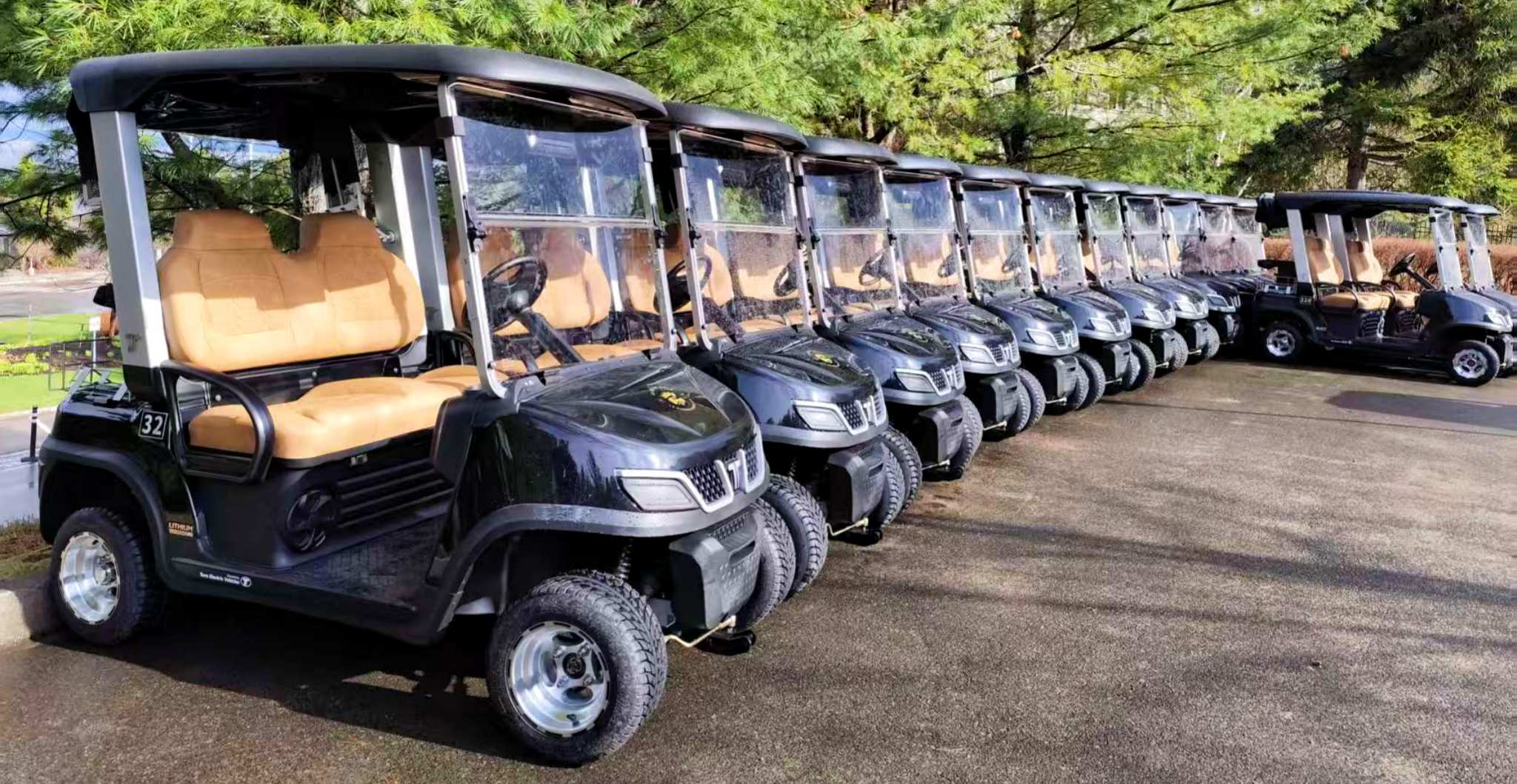
Route Design
Many courses underestimate the impact of cart route design on operational pace. In reality, the route itself often determines whether traffic flow is prone to congestion. Some older golf courses, in their early planning, did not consider the traffic flow in today’s high-frequency operating environment. For example, multiple routes intersect in front of the clubhouse, tees are too close to parking areas, aid stations are poorly located, or there are natural bottlenecks between certain holes. Once peak hours arrive, these areas quickly become congested with carts.
Experienced operations teams typically observe over time which holes are most prone to waiting, which areas have the longest cart dwell times, and which routes are most likely to intersect in both directions. Often, simply adjusting a connecting route or changing the location of a temporary parking area can significantly improve overall flow efficiency.
Some large resort golf courses even adjust traffic flow directions according to different times of day. For example, different routes are used for morning and afternoon operations to reduce cart convergence.
Local Congestion
When faced with congestion, the common first reaction of golf courses is: “Has the overall pace of the game slowed down?” However, in reality, most congestion does not originate from the overall pace, but rather is the result of the gradual spread of localized inefficiencies.
For example, several players might linger too long near a hole, beverage trucks might obstruct traffic, or there might be persistent U-turns at the green exit. These problems may not seem serious individually, but when combined, they gradually impact the overall pace of play.
Therefore, more and more courses are managing cart flow like a traffic system. They try to avoid multiple groups of players entering narrow passages simultaneously and separate service carts from member carts to reduce unnecessary overlap.
This operational approach is very similar to the crowd management of large resort hotels.
Peak Operations
Traffic management during peak hours is often the best indicator of a course’s operational level.
Many courses consider increasing the number of golf carts when congestion occurs. However, more carts do not necessarily mean higher operational efficiency. In some cases, too many carts can actually make pathways more chaotic.
Experienced operations teams focus more on “traffic dispersion capabilities.”
For example, during tournament weeks or large member events, some courses will adjust some route directions in advance, divert service carts to back-office pathways, and set up temporary parking areas. They will also implement flow control in areas prone to congestion in advance.
Essentially, this is a form of “operational flexibility” management. Truly efficient golf courses typically have backup traffic flow plans in place for peak hours, rather than reactively dealing with problems after they arise.
GPS Management
As golf course operations become increasingly digital, traditional methods relying on manual patrols are struggling to handle complex traffic flow issues in real time.
Especially for high-traffic courses, the operations team needs real-time visualization of the entire cart fleet’s status.
This is why more and more courses are introducing GPS Fleet Management systems.
Take the Tara GPS course management system as an example. Its core value isn’t just cart location, but helping the course truly understand how traffic flows within the course. Through Real-time Cart Location Tracking, GPS Geofence Management, and Pace of Play Monitoring, the operations team can quickly identify areas with consistently high traffic loads, paths prone to congestion, and holes with unusual lingering.
Compared to traditional experience-based judgment, this data-driven approach allows for more precise optimization of traffic flow.
For example, through the Geofence function, the course can restrict golf carts from entering undesignated areas and ensure they travel along pre-defined routes; cart Speed Monitoring reduces stress on the greens caused by sharp turns and high-speed driving. The backend system can also detect golf cart malfunctions or low battery levels immediately, preventing disruption to the course’s operations.
Smart Operations
In the past, golf carts were more of a basic amenity.
But today, more and more courses are beginning to consider their cart fleet as an integral part of their overall operations. This is because golf carts not only affect player mobility and playing rhythm but also directly impact member experience and the course’s capacity.
Especially for high-end private clubs and resort courses, a truly efficient cart operation system is no longer just a matter of “enough carts,” but rather a question of whether the course possesses modern operational capabilities.
As the golf industry continues to evolve towards intelligent and refined operations, more scientific and data-driven cart management is gradually becoming an important component of modern course operations.
Conclusion
Cart Path Congestion may seem like just an operational detail, but it reflects the overall operational logic of the golf course.
Excellent golf courses typically don’t wait until severe congestion occurs to address problems; instead, they proactively optimize the entire cart flow through route design, cart scheduling, operational rhythm control, and data-driven management.
For courses aiming to enhance member experience, optimize pace of play, and reduce long-term maintenance burdens, a smarter and more efficient cart management system is becoming a crucial direction for the future operation of high-end golf courses.
Post time: May-27-2026


