

For golf courses, the cart fleet is one of the most important assets. It not only serves as transportation for players but also directly impacts member experience, operational efficiency, and the course’s brand image. However, compared to course renovations or upgrades, fleet replacements are often delayed. Many courses only realize their fleet needs replacement when carts frequently break down, maintenance costs rise, or members begin to complain about the experience.
In fact, well-managed courses typically don’t wait until problems arise to take action; instead, they develop long-term fleet replacement plans in advance.
Lifecycle Management
A common question among course managers is: how long should a cart fleet be used?
The reality is that there is no single answer that applies to all courses. cart lifespan depends not only on the age of the cart but also on usage frequency, operating environment, and maintenance levels. Even using the same cart models, a members-only course and a high-traffic resort course may have completely different fleet lifecycles.
Instead of simply focusing on how many years the carts have been used, more and more operations teams are beginning to focus on the overall condition of the fleet. For example, whether the carts can maintain stable range, whether maintenance frequency has increased significantly, and whether member evaluations of the cart experience have begun to decline. These factors often reflect whether the fleet is entering a replacement cycle more accurately than the age of the carts themselves.
Good course managers typically assess the fleet condition regularly, rather than waiting until carts are aging significantly before taking action. This avoids operational risks and helps in more rational budget allocation.
Hidden Cost Assessment
When considering whether to replace their fleets, courses often overlook hidden costs that are not easily quantifiable.
As carts age, maintenance teams typically need to spend more time handling breakdowns and repairs. The number of spare carts increases, spare parts inventory costs rise, and operations staff need to spend more time coordinating cart dispatch. Meanwhile, the member experience issues caused by declining cart performance are often more concerning than the repair costs themselves.
For private clubs, members spend a significant amount of time with the golf carts during a round of golf. If carts frequently experience insufficient range, power loss, or decreased comfort, even if the course conditions remain excellent, the overall experience will be affected.
From a long-term operational perspective, maintaining an aging fleet can sometimes be more costly than replacing it.
Future-Oriented Needs
In the past, golf carts primarily served to transport players from hole to hole. However, with the development of the golf industry, the requirements for golf carts have changed significantly.
Today, more and more courses are looking to enhance their overall operational capabilities through their fleets. Beyond basic transportation, carts need to support digital applications such as GPS navigation, Pace of Play management, operational data analytics, and member interaction services.
Therefore, when planning their next fleet upgrade, courses are considering not only replacing old carts but also their operational ways for the next five to ten years.
If a new fleet cannot adapt to future development needs, even with a lower purchase cost, it may soon face the pressure to upgrade again. Conversely, carts with scalability and intelligent features often bring longer-term value to the course.
Return on Investment Perspective
A golf cart fleet with lower initial purchase costs may have significantly higher actual operating costs if it requires more frequent maintenance, higher energy consumption, and more spare carts. Conversely, a stable fleet with lower maintenance requirements, while requiring a higher initial investment, may generate better returns over its entire lifecycle.
Golf course operations teams should focus on Total Cost of Ownership (TCO) and incorporate vehicle lifespan, maintenance costs, downtime, and member satisfaction into their decision-making processes.
The Lithium-ion Battery Trend
One of the most prominent trends in the golf cart industry in recent years has been the rapid adoption of lithium-ion battery technology.
More and more courses are transitioning from gasoline and lead-acid batteries to lithium-ion battery-powered carts. For operations teams, lithium-ion battery fleets mean more stable power performance, longer battery life, and lower maintenance requirements.
Especially in high-frequency operating environments, lithium-ion battery systems can help courses reduce downtime, increase cart availability, and lower long-term operating costs.
Choosing a Long-Term Partner
Fleet upgrades are not just about choosing products, but also about choosing partners for years to come.
For golf courses, completing cart procurement is just the beginning of a partnership. Subsequent parts supply, technical support, after-sales service, and system upgrade capabilities directly impact operational performance.
Therefore, when evaluating suppliers, golf courses no longer simply compare product specifications, but focus more on whether the brand possesses global delivery capabilities, a stable service network, and continuous innovation capabilities. Especially with the increasing prevalence of digital operations, the fleet’s ability to support intelligent management systems in the future has become a crucial evaluation criterion.
Planning the Next-Generation Fleet
For golf courses, the new fleet not only needs to meet daily operational needs but also needs to help improve operational efficiency, enhance the member experience, reduce long-term maintenance costs, and support future digital management.
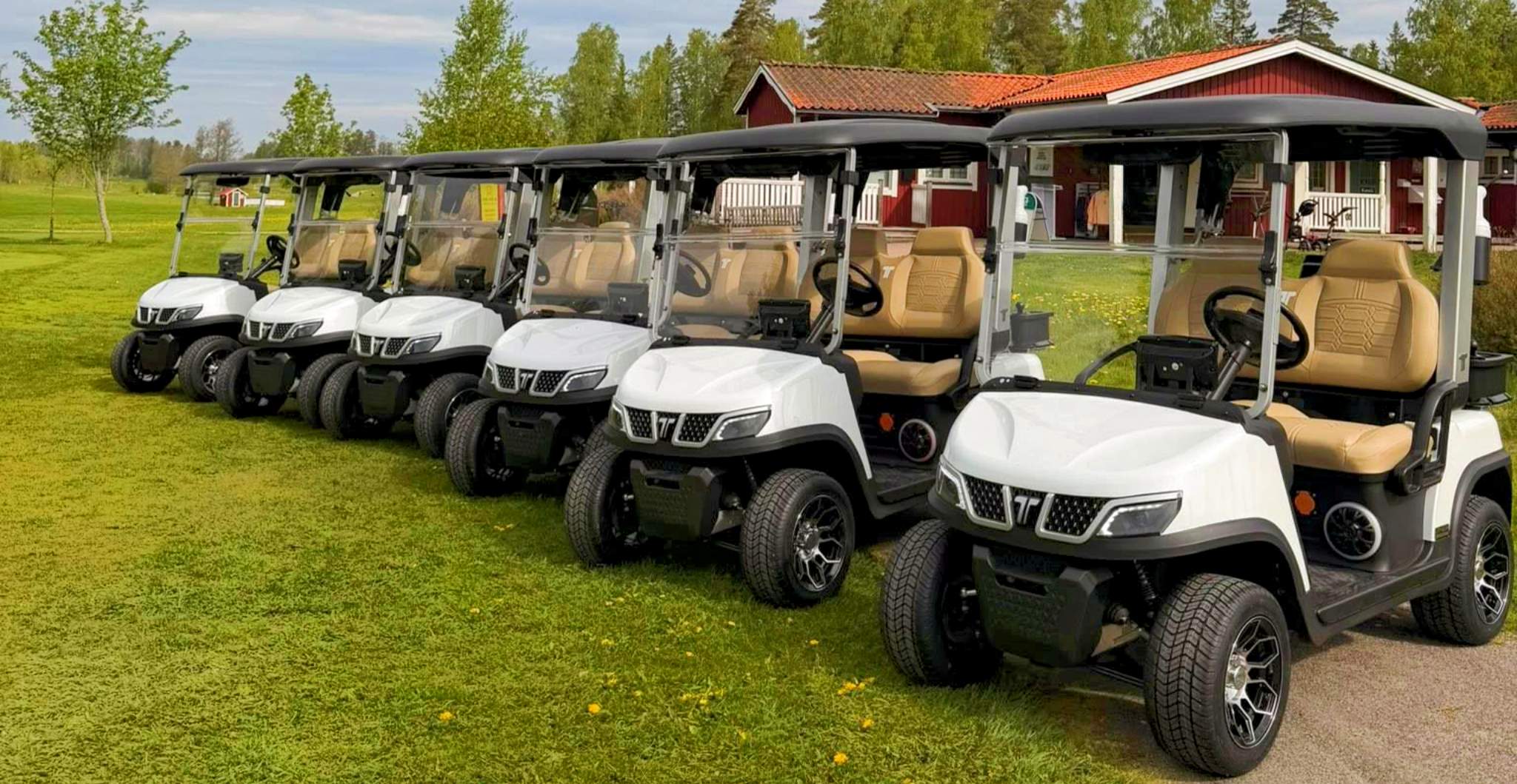
Take Tara golf carts as an example. They utilize mature LiFePO4 lithium battery technology and can be equipped with a GPS Fleet Management system, enabling functions such as cart positioning, Pace of Play monitoring, electronic fence management, battery status monitoring, and operational data analysis. These capabilities help golf courses establish a more intelligent and efficient operating system.
With over 20 years of industry experience, CE and ISO certifications, global delivery capabilities, and a worldwide partnership network, Tara is providing professional cart fleet solutions to a growing number of golf courses and private clubs, helping clients move beyond simple cart procurement to long-term operational upgrades.
Conclusion
For modern golf courses, cart fleet upgrades are never simply a matter of “replacing old carts with new ones.” They involve multiple aspects, including asset management, operational efficiency, member experience, and future development planning.
Excellent courses typically assess their fleet lifecycle in advance, analyze long-term operating costs, and develop upgrade plans that incorporate future digital operational needs. Only in this way can fleet investment truly become a long-term asset that enhances a course’s market competitiveness.
Post time: Jun-10-2026


