

If you are in the market for a “Golf Truck,” the key takeaway is this: it typically refers to a golf course transport vehicle equipped with cargo-carrying capabilities. Essentially a type of light-duty Utility Vehicle, it serves as a functional extension of traditional electric golf carts. Unlike carts designed solely for passenger transport, golf trucks prioritize hauling capacity and operational efficiency, making them indispensable equipment for modern golf courses and large-scale facility operations.
In golf courses, resorts, and expansive campuses, the strategic deployment of golf trucks can significantly boost overall operational efficiency while simultaneously reducing labor and equipment costs.
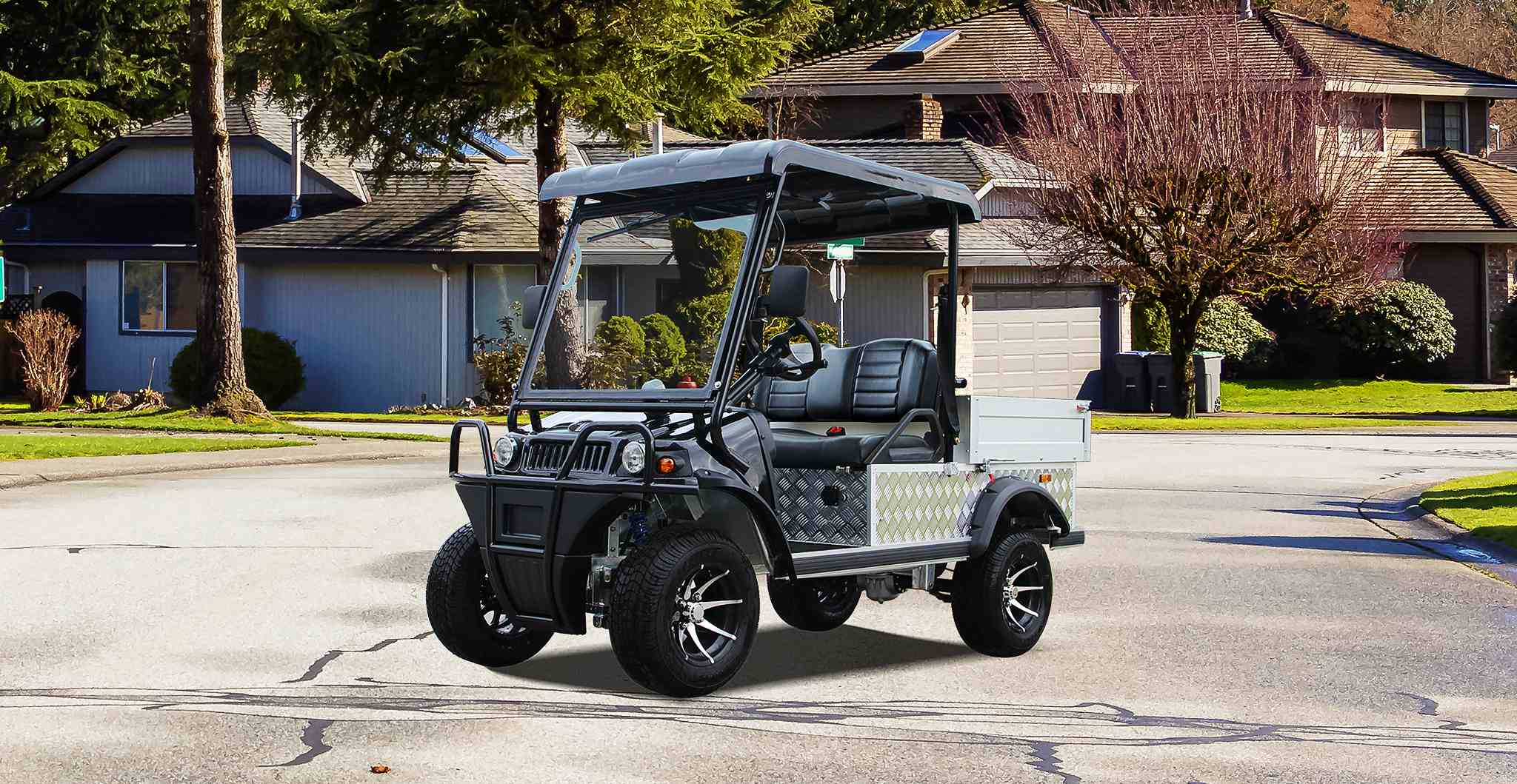
What Exactly Is a Golf Truck? Not a “Truck,” but a Functional Extension
From an industry perspective, a golf truck is not a “truck” in the traditional sense; rather, it is a type of light-duty transport vehicle built upon a golf cart platform—typically classified as a “utility vehicle.”
Its defining characteristics include:
A rear-mounted cargo bed
A reinforced chassis structure
Higher load-bearing capacity
Simplified passenger seating, emphasizing utility over luxury
Consequently, golf trucks are better suited for “work-related scenarios” than for mere passenger transport.
How Did Electric Golf Carts Evolve into Golf Trucks?
Many golf trucks are, in fact, direct extensions of existing electric golf cart platforms.
This design approach offers several distinct advantages:
Mature Platform, Lower Costs
Eliminates the need to re-engineer the entire vehicle structure from scratch.
Consistent Maintenance Ecosystem
Shares common components and parts with standard electric golf carts.
Simple Operation
Requires no additional training to operate.
Eco-Friendly and Energy-Efficient
Electric drive systems reduce energy consumption and emissions.
Therefore, from a long-term operational perspective, electric-powered golf trucks have emerged as the dominant industry trend.
The Value of Golf Trucks in Operations
In practical application, the primary value of a golf truck lies in its ability to “boost efficiency.”
Course Maintenance
Transporting turf equipment, tools, and materials.
Material Distribution
Facilitating short-distance transport within the golf course or facility grounds.
Logistical Support
Providing support for tournaments, special events, and daily operations.
Replacement for Traditional Transport Vehicles
Reducing reliance on larger, heavier vehicles.
These applications position the golf truck as a vital link connecting front-of-house services with back-of-house operations.
How Should a Golf Cart Fleet Be Strategically Configured with Golf Trucks?
For facilities that maintain a comprehensive fleet of golf carts, the strategic integration of golf trucks is absolutely critical. The recommended fleet composition is as follows:
80% Electric Golf Carts (Passenger Transport)
20% Golf Trucks (Transport/Hauling) or Utility Vehicles
This combination strikes a balance between customer experience and operational efficiency, thereby maximizing resource utilization.
How Do They Differ from Traditional Utility Vehicles?
Golf trucks fall under the broader category of utility vehicles, but offer distinct advantages:
Lighter weight construction
Better suited for the golf course environment
Simpler to operate
Higher payload capacity
Wider range of applicable scenarios
In the specific context of a golf course, a golf truck is often the more appropriate choice.
How to Choose the Right Golf Truck?
When purchasing golf trucks, it is recommended to prioritize the following factors:
Payload Capacity
Select the appropriate specifications based on your specific transport requirements.
Battery System (Lithium Battery)
This impacts driving range and operational efficiency.
Body Structure
Assess whether it is built to withstand long-term outdoor use.
Supplier Reliability
Choose a reputable golf cart manufacturer to ensure product quality and reliable after-sales support.
By evaluating these dimensions, you can identify the products that truly align with your specific needs.
Frequently Asked Questions (FAQ)
What is the difference between a golf truck and a standard golf cart?
Golf trucks are primarily designed for hauling and feature a cargo bed, whereas standard golf carts are primarily designed for transporting passengers.
Can electric golf carts be converted into golf trucks?
While some models can be modified to serve this purpose, it is highly recommended to opt for a purpose-built golf truck, as they offer superior safety and reliability.
Are golf trucks suitable for use on a golf course?
Absolutely; they are particularly well-suited for maintenance and logistics operations.
Is it necessary to choose an electric model?
Electric golf trucks are currently the industry standard, as they are more environmentally friendly and offer lower operating costs.
Efficient Transport Solutions for Golf Courses
As the operational demands of golf courses and large-scale facilities continue to rise, golf trucks are evolving from mere auxiliary equipment into core operational assets. They not only fulfill transport duties but also play a pivotal role in streamlining workflows and reducing costs.
By integrating golf trucks into your existing fleet—alongside electric golf carts and other utility vehicles—you can establish a more efficient and agile operational framework.
For facilities striving for high efficiency and sophisticated management, the strategic allocation of golf trucks represents a crucial step toward achieving modern operational excellence.
Post time: Apr-24-2026


