

When a golf course operates dozens of golf carts daily, maintenance directly impacts vehicle availability. The primary differences in maintenance between gas and electric golf carts stem from their respective powertrains: gas-powered carts require ongoing upkeep of the engine and its associated mechanical components, while electric carts focus maintenance efforts on the battery, electrical system, and routine chassis inspections.
For a golf course fleet, the number of maintenance tasks, the frequency of inspections, and the resulting downtime all factor into long-term operational costs.
Engine Maintenance
Gas-powered golf carts utilize internal combustion engines, requiring regular checks of engine oil, air filters, spark plugs, fuel systems, and drivetrain components.
Extended, high-frequency use may also necessitate maintenance on drive belts, starting systems, and other engine-related parts. Golf courses typically establish maintenance schedules based on operating hours or manufacturer recommendations, while keeping a stock of frequently used consumables on hand.
These requirements add specific, recurring tasks to the maintenance schedule.
Battery Maintenance
Electric golf carts lack engines, spark plugs, and fuel systems; therefore, powertrain maintenance is concentrated on the battery, motor, and controller.
Traditional lead-acid batteries require checks for electrolyte levels, terminal condition, and corrosion. With LiFePO4 lithium batteries, the need for routine watering is eliminated; instead, staff focus on monitoring the state of charge (SoC), charging status, electrical connections, and overall battery health.
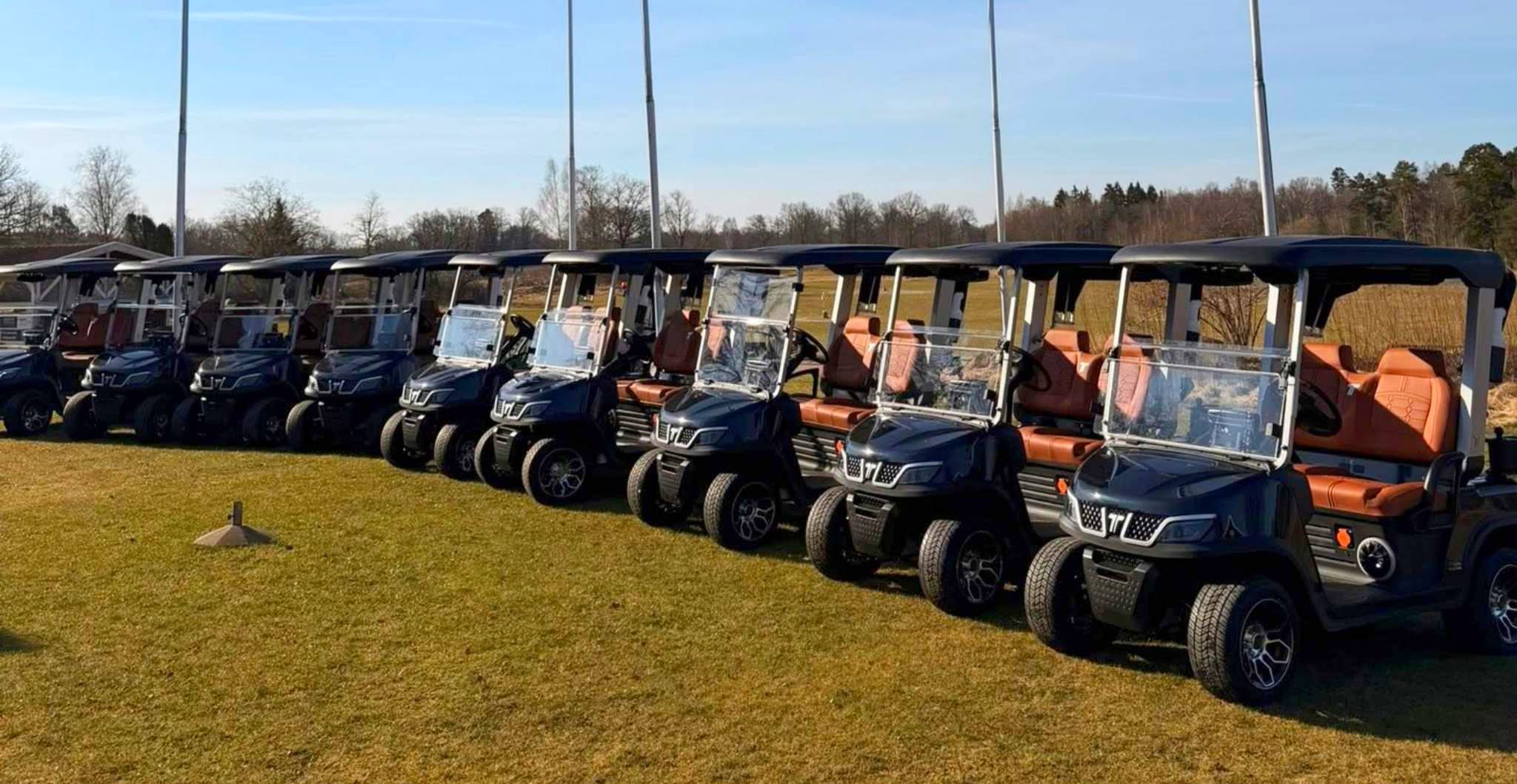
Tara Golf Carts offers professional-grade models equipped with LiFePO4 lithium battery systems, making them an ideal choice for golf course fleets that require centralized management of a large number of vehicles.
Routine Inspections
Regardless of whether a cart is gas or electric, components such as tires, brakes, steering, and suspension require regular inspection.
Because golf carts frequently traverse cart paths, inclines, and turf areas, issues like improper tire pressure, tire wear, or degraded braking performance can compromise safe operation. Large fleets typically implement a two-tiered inspection process: quick daily checks combined with more comprehensive, periodic inspections.
Records—including vehicle identification numbers, inspection dates, and any reported faults—should be maintained systematically to help maintenance staff track and address issues.
Downtime
Maintenance costs also encompass the time during which a vehicle is unavailable for use.
Engine maintenance, in particular, often involves replacing consumables and performing mechanical inspections, which can lead to vehicle downtime. Electric golf carts feature a simpler powertrain structure, and lithium-powered models require less routine maintenance. This allows fleet operators to dedicate more time to inspecting tires, brakes, and overall vehicle condition.
For golf courses with high vehicle utilization during peak periods, minimizing unplanned downtime helps improve fleet availability.
Operating Costs
The choice between gas and electric golf carts also impacts a fleet’s long-term budget.
Gas-powered vehicles require ongoing expenditures for fuel, engine oil, and engine-related consumables. For electric golf carts, operating expenses are primarily focused on electricity, battery lifecycle costs, tires, brakes, and standard replacement parts.
Actual costs are influenced by local energy prices, frequency of use, terrain (inclines), payload, and the quality of maintenance; therefore, procurement decisions should be based on total cost of ownership over the vehicle’s entire lifecycle.
Tara Solutions
Tara Electric Vehicles offers two-seater models such as the Spirit Pro, Spirit Plus, and Harmony, as well as the Roadster 2+2, Explorer 2+2, and Turfman utility vehicles.
Tara’s lithium-powered models can be equipped with battery State of Charge (SoC) monitoring and GPS fleet management systems. Golf courses can track vehicle location, battery status, fault codes, and usage history, providing data to optimize charging schedules and maintenance planning.
For golf courses looking to reduce the complexity of daily maintenance, a lithium-powered fleet enables more standardized maintenance procedures, simplifying staff training and fleet management.
FAQs
Are electric golf carts easier to maintain than gas golf carts?
Electric golf carts lack engine oil, spark plugs, and fuel systems, generally resulting in fewer routine maintenance requirements for the powertrain.
What maintenance does an electric golf cart need?
Maintenance primarily involves checking the battery status, charging system, tires, brakes, steering, suspension, and electrical connections. Lithium-powered models do not require the watering (topping up) necessary for traditional lead-acid batteries.
What maintenance does a gas golf cart need?
Common maintenance tasks include checking engine oil, air filters, spark plugs, fuel systems, drive belts, and other engine-related components.
How often should golf carts be serviced?
Service intervals should be determined based on the manufacturer’s maintenance schedule, the intensity of vehicle use, and the specific environment of the golf course. For high-utilization commercial fleets, a combination of daily inspections and scheduled periodic maintenance is typically required.
Does Tara offer low-maintenance electric golf carts?
Tara Golf Carts provides professional electric golf carts equipped with LiFePO4 lithium battery systems, which eliminate the need for the maintenance tasks—such as topping up water levels—required for traditional lead-acid batteries, as well as the maintenance associated with fuel-powered engines.
Post time: Oct-16-2026


