

If you’re looking for a golf buggy manufacturer, the most important evaluation criteria typically include: vehicle quality, technical specifications, after-sales service capabilities, and professional design experience for golf courses. A reliable golf buggy manufacturer not only provides stable and durable electric golf buggies but should also be able to offer long-term solutions for the golf cart fleet, such as efficient battery systems, low maintenance costs, and vehicle structures suitable for the golf course environment.
With the development of the global golf industry, more and more courses, resorts, and communities are adopting electric golf carts and utility vehicles to improve operational efficiency. Therefore, choosing the right manufacturer has become one of the most important decisions for course managers in equipment procurement.
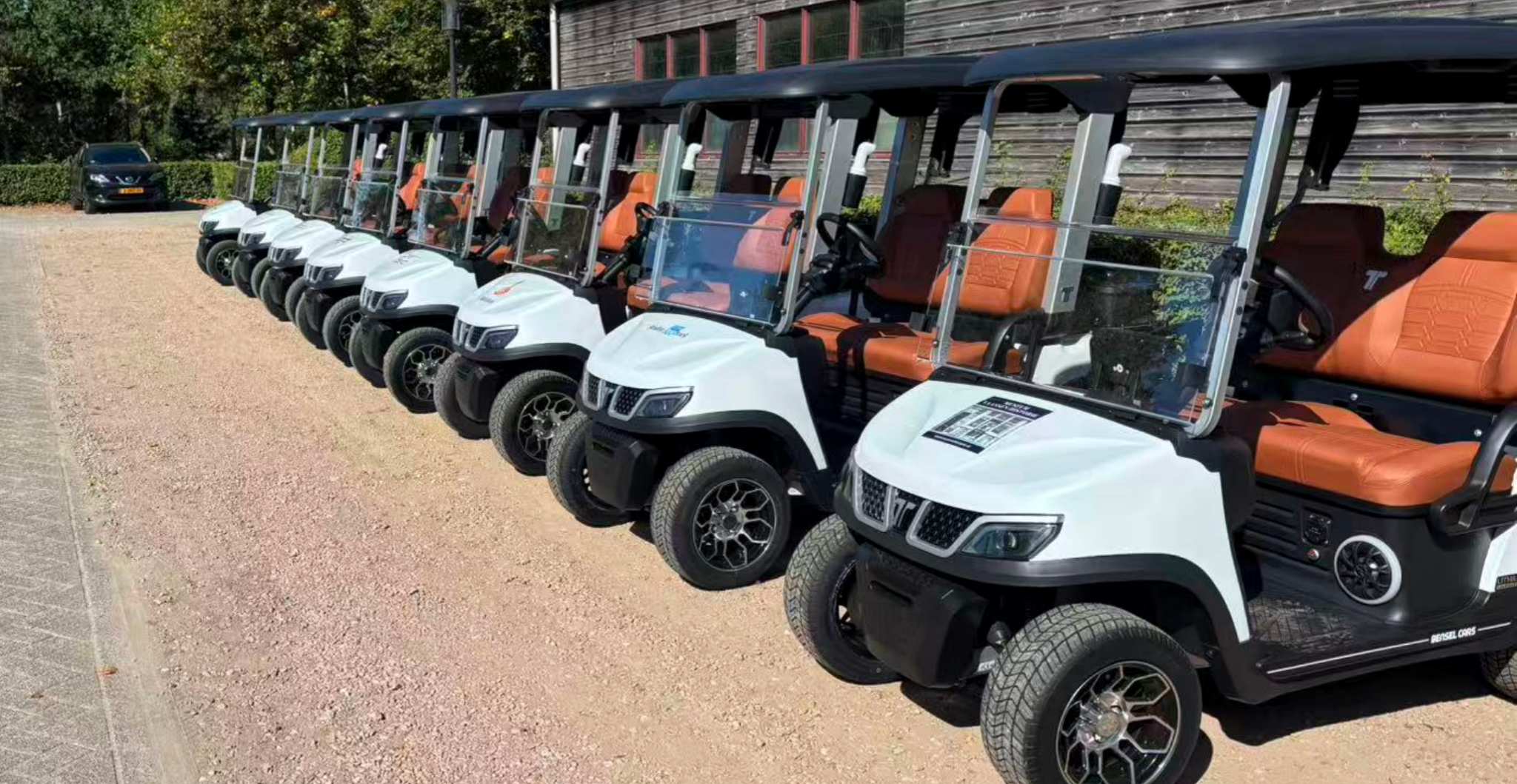
Why a Golf Buggy Manufacturer is So Important for Course Operations
For golf courses, golf carts are not just a means of transportation but also crucial equipment for improving course operational efficiency. Professional golf buggy manufacturers typically design their products specifically for the course’s usage scenarios, such as low-noise operation, turf-friendly tire structures, and rear designs suitable for golf bag storage.
Compared to ordinary personal transport vehicles, professional golf buggies place greater emphasis on the following aspects:
1. Turf Protection:
Golf course turf requires meticulous maintenance, therefore the buggies must have stable weight distribution and tires suitable for turf travel.
2. Continuous Operation:
Large courses often have dozens to hundreds of golf buggies, which need to be able to operate stably for extended periods.
3. Maintenance Cost Control:
Adopting modern technologies, such as electric golf buggies, can effectively reduce operating and maintenance costs.
For course operators, choosing an experienced golf buggy manufacturer can reduce equipment failure rates and improve the overall course service experience.
Technological Trends in Electric Golf Buggies
In recent years, golf courses worldwide have increasingly favored the use of electric golf buggies. This trend stems primarily from factors such as environmental policies, operating costs, and user experience.
Firstly, electric golf buggies are quieter, providing players with a quieter playing environment. Secondly, electric buggies require less maintenance, eliminating the need for complex engine maintenance.
Modern golf buggy manufacturers are constantly upgrading their vehicle technology, including:
High-efficiency lithium battery systems
Intelligent control systems
Digital instruments or touchscreens
GPS management systems (golf cart GPS management)
These technologies allow golf courses to manage their entire golf buggy fleet more easily, while improving vehicle utilization efficiency.
Why do golf courses need utility vehicles?
In addition to standard golf buggies, many courses also purchase utility vehicles for daily operations.
These vehicles are typically equipped with cargo beds and can be used for:
Greenway maintenance transport
Tournament equipment transport
Staff patrols
Tournament supplies transport
Professional golf buggy manufacturers usually offer a variety of utility vehicle models, forming a complete golf course fleet solution.
For example, in large golf courses or resorts, utility vehicles often play a crucial role in logistical support, while electric golf buggies are primarily used for player transportation.
How to determine if a golf buggy manufacturer is reliable?
When purchasing golf carts, course managers typically focus on the following aspects:
Manufacturing Experience
Experienced golf buggy manufacturers with years of industry experience understand course needs better.
Product Quality
Vehicle structural design, chassis strength, and battery system stability are all key factors.
After-Sales Support
A stable supply of spare parts and technical support is crucial for a large golf buggy fleet.
Product Line Completeness
Reputable manufacturers typically offer a variety of models, including electric golf buggys, golf buggy, and utility vehicles.
Frequently Asked Questions (FAQ)
What is the difference between a golf buggy and a golf cart?
Actually, “golf buggy” and “golf cart” usually refer to the same vehicle.
The term “golf buggy” is more common in the UK and Australia, while “golf cart” is more prevalent in North America.
What is the typical speed of an electric golf buggy?
Most electric golf buggy speeds are around 15–25 km/h.
This speed meets the transportation needs of the course while ensuring safety on fairways and course roads.
How many golf cart fleets does a course typically need?
This depends on the size of the course. Generally:
18-hole courses: 40–80 golf cart fleet
Large resort courses: 80–120 or more
The specific number needs to be planned based on the course’s visitor traffic.
Are electric golf buggy vehicles more economical?
In the long run, electric golf buggy vehicles are generally more cost-effective.
They have lower energy costs, simpler maintenance structures, and are more environmentally friendly, which is why more and more courses are switching from fuel-powered vehicles to electric vehicles.
The Long-Term Value of Course Vehicle Procurement
For golf courses, choosing the right Golf Buggy Manufacturer not only affects the user experience but also directly impacts the course’s operational efficiency and long-term costs.
With the continuous advancement of electric golf buggy technology, modern golf buggy vehicles are no longer just simple transportation tools but an important part of the course’s service system. At the same time, a complete fleet solution with utility vehicles can help the course achieve more efficient daily operations.
Therefore, when choosing a manufacturer, course managers should prioritize Golf Buggy Manufacturers with professional experience, stable quality, and comprehensive after-sales support. By rationally planning the golf cart fleet, the course can provide players with a more comfortable and convenient experience, while improving overall operational efficiency.
Post time: Mar-06-2026


