

Driving a golf car may seem simple, but the golf course environment includes players, caddies, maintenance personnel, narrow paths, ramps, and slippery grass. Proper driving is crucial for personal safety and can also affect the condition of the grass and the lifespan of the vehicle. For commercial courses, Golf Cart Safety should be part of the daily fleet management.
Starting and Parking
Before driving an electric golf car, ensure there are no people or obstacles around the vehicle and operate the vehicle from the driver’s seat. Tara Golf Carts’ safety guidelines require drivers to keep their hands and feet inside the vehicle and not use their mobile phones while driving; when leaving the vehicle, the power should be turned off and the parking brake engaged. When encountering bends with obstructed visibility, reduce speed in advance and use the horn.
Cart Path Rules
When driving a golf car, also adhere to the course’s driving rules for the day. The common Cart Path Only rule requires vehicles to remain on the cart path, typically used after rain or when the grass is soft.
Another common rule is the 90-Degree Rule. The USGA explanation is: the golf cart travels along the road to a position roughly level with the ball, then turns at approximately a 90-degree angle towards the ball, and returns to the cart path along the shortest route after the shot. This reduces the distance the vehicle travels on the green.
Slopes and Turns
Slopes and sharp turns require lower speeds. Tara Electric Vehicles’ safety documentation clearly reminds drivers to be cautious on steep slopes, as higher speeds can reduce vehicle stability. Slowing down before entering a downhill or turn is also easier to control than braking suddenly in the middle of a turn.
Different vehicle models have different load capacities, tires, and climbing abilities; therefore, when driving a golf cart, the specific vehicle’s manual and course regulations should be followed. Overloading and having passengers stand in non-sitting positions are prohibited.
GPS Management
Large golf cart fleets can be managed using a golf cart GPS system. Tara offers an optional GPS Fleet Management System and GPS Tracker Module, which can view vehicle location, speed, and driving records, and supports geofencing. Courses can set management areas based on the green, pit lane, or temporarily closed areas.
Tara Golf Carts
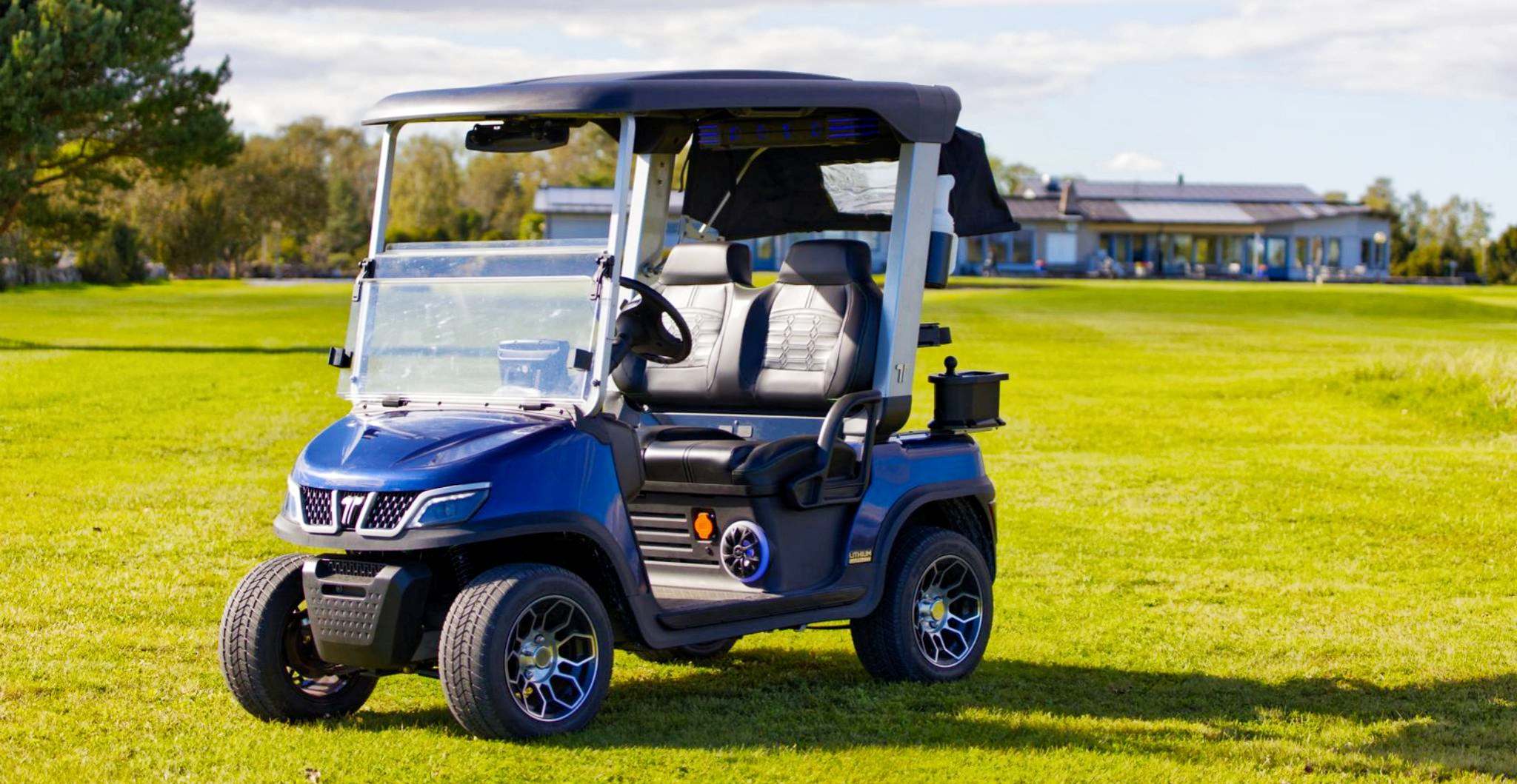
Tara Golf Carts’ Spirit Pro, Spirit Plus, and Harmony models are all designed for golf course use. The Spirit Pro features a lithium-ion battery system and a two-seat layout; the Harmony adds a caddie stand, suitable for courses that offer caddie services.
Tara Electric Vehicles provides comprehensive support in vehicle design, GPS fleet management, and safety information. Regardless of the model used, proper driving of a golf cart should begin with controlling speed, adhering to cartway rules, and parking correctly.
FAQs
How do you drive a golf cart safely?
Maintain a reasonable speed, remain in the driver’s seat, keep your hands and feet inside the vehicle, slow down before turns and ramps, and turn off the vehicle and engage the parking brake after parking.
What is the 90-degree rule for golf carts?
The 90-degree rule means that the vehicle primarily travels along the cartway, then, after reaching a position roughly level with the ball, proceeds towards the ball at approximately a 90-degree angle before returning to the cartway.
Can you drive a golf cart on the fairway?
This depends on the course’s regulations for the day. Some courses allow access to the fairway according to the 90-Degree Rule, but Cart Path Only may be implemented in rainy weather or when the grass is soft.
Are golf carts safe on hills?
They can be driven normally within the gradient allowed by the vehicle’s design, but on steep slopes, reduce speed and avoid sharp turns. Specific restrictions should be checked with the vehicle’s owner’s manual.
Do you need a license to drive a golf cart?
This depends on the location and local regulations. Private golf courses usually have their own driving age and usage rules; if the vehicle enters public roads, local motor vehicle and low-speed vehicle regulations must also be followed.
Post time: Aug-19-2026


