

When establishing or upgrading a fleet, many golf courses focus primarily on the vehicle’s quoted price. However, the purchase price is not the sole determinant of operating costs. For fleets comprising dozens or even hundreds of vehicles, long-term operating expenses often far exceed the initial acquisition cost. Therefore, when evaluating the cost of a golf cart fleet, it is crucial to consider the total cost of ownership over the vehicle’s entire lifecycle.
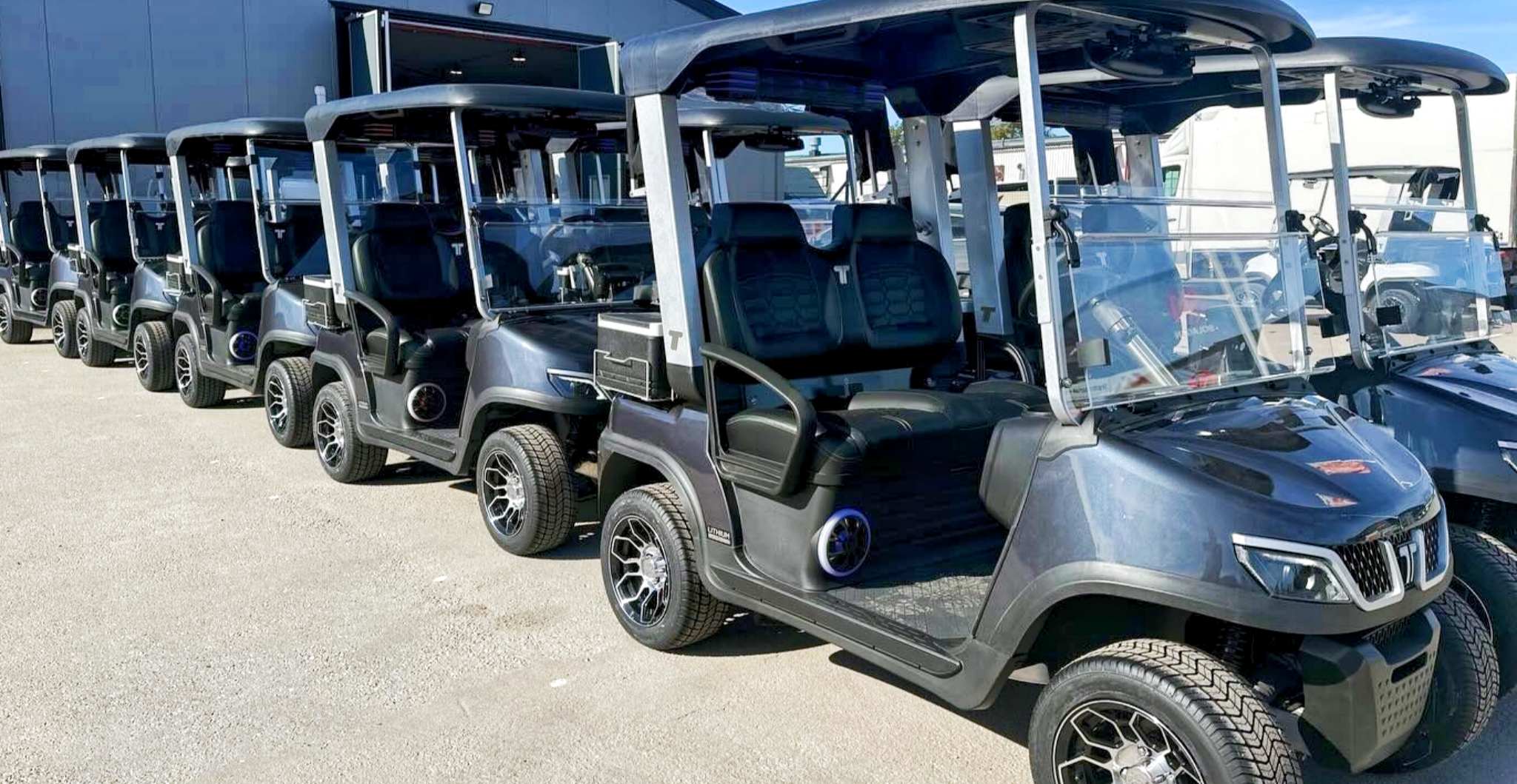
Vehicle Purchase
The purchase price is the most immediately apparent component of fleet costs. Prices vary significantly based on brand, configuration, and model; for instance, there can be a substantial difference in the budget required for a standard two-seater versus a fleet model equipped with premium features.
However, for course managers, comparing unit prices alone does not reflect the true cost. If vehicles suffer from high failure rates or short battery lifespans, the money seemingly saved on the initial purchase may well be spent later on repairs and replacements.
Consequently, an increasing number of golf courses are prioritizing brand reputation, product reliability, and long-term operational performance when making purchasing decisions.
Battery Costs
Batteries are a key factor influencing golf cart fleet costs.
In the past, many golf carts relied on lead-acid batteries, but technological advancements have led more courses to opt for lithium-powered carts. Although the initial investment for lithium models is typically higher than for traditional ones, lithium batteries offer a longer lifespan, faster charging, and lower maintenance requirements.
For fleets in frequent daily operation, reducing the frequency of battery replacements translates to lower long-term costs and improved vehicle availability.
At large golf courses or resorts, the stability of the battery system often directly impacts the operational efficiency of the entire fleet.
Maintenance and Repairs
Any fleet incurs maintenance expenses.
Tire wear, brake system inspections, suspension maintenance, and electrical system servicing are all standard, recurring operational costs.
For golf courses, repair costs are not the only concern; the impact of vehicle downtime is often more significant. A high number of vehicle breakdowns on tournament days or during peak operational periods can compromise the quality of service provided to golfers.
Therefore, choosing a reliable electric golf cart brand is generally more valuable than simply seeking the lowest purchase price.
Fleet Management Costs
As a golf course expands, managing the fleet itself generates additional costs. In the past, many golf courses relied on manual methods to track vehicle usage. Today, an increasing number of operators are adopting GPS systems to manage their golf cart fleets.
GPS technology enables managers to monitor vehicle locations, battery status, usage frequency, and operational data, thereby optimizing dispatch efficiency.
For large golf cart fleets, this digital management approach helps minimize vehicle downtime, increase utilization rates, and facilitate the creation of more effective maintenance schedules.
In the long run, such management tools help reduce the overall cost of the golf cart fleet.
Fleet Solutions from Tara
As a brand dedicated to the golf course vehicle sector, Tara focuses on the long-term operational needs of fleets.
Currently, hundreds of golf courses and clubs worldwide utilize Tara golf cart products. In addition to advanced lithium battery technology, Tara offers a professional GPS fleet management system that supports features such as vehicle tracking, battery monitoring, geofencing, and operational analytics.
With over twenty years of industry experience, Tara provides tailored fleet solutions based on the size of the golf course, helping operators control long-term costs while maintaining service quality.
For golf courses planning to upgrade or expand their fleets, evaluating costs involves looking beyond the initial purchase price to consider factors such as battery lifespan, maintenance requirements, management efficiency, and future operating costs.
FAQs
What is included in golf cart fleet costs?
Golf cart fleet costs typically include vehicle procurement, battery replacement, maintenance and repairs, fleet management, and potential operational costs associated with vehicle downtime.
Do lithium golf carts reduce long-term costs?
Generally, yes. Lithium golf carts offer longer battery lifespans and lower maintenance requirements, often resulting in reduced overall costs during long-term operation.
Is a golf cart GPS system worth the investment?
For medium-to-large fleets, a GPS system helps increase vehicle utilization, optimize dispatch efficiency, and improve overall management standards.
What factors should golf courses compare besides vehicle price?
In addition to the purchase price, courses should consider battery technology, vehicle reliability, after-sales service, GPS system capabilities, and future operating costs.
Post time: Jul-15-2026


