

For golf courses, resorts, and large venues, price is only one part of the procurement cost when looking for affordable utility vehicles. Vehicles perform daily tasks such as tool transport, material handling, lawn maintenance, and course patrols; cargo bed capacity, power system, maintenance needs, and lifespan all affect long-term expenses.
A suitable electric utility vehicle must first meet the actual tasks, then consider configuration and price.
Purpose
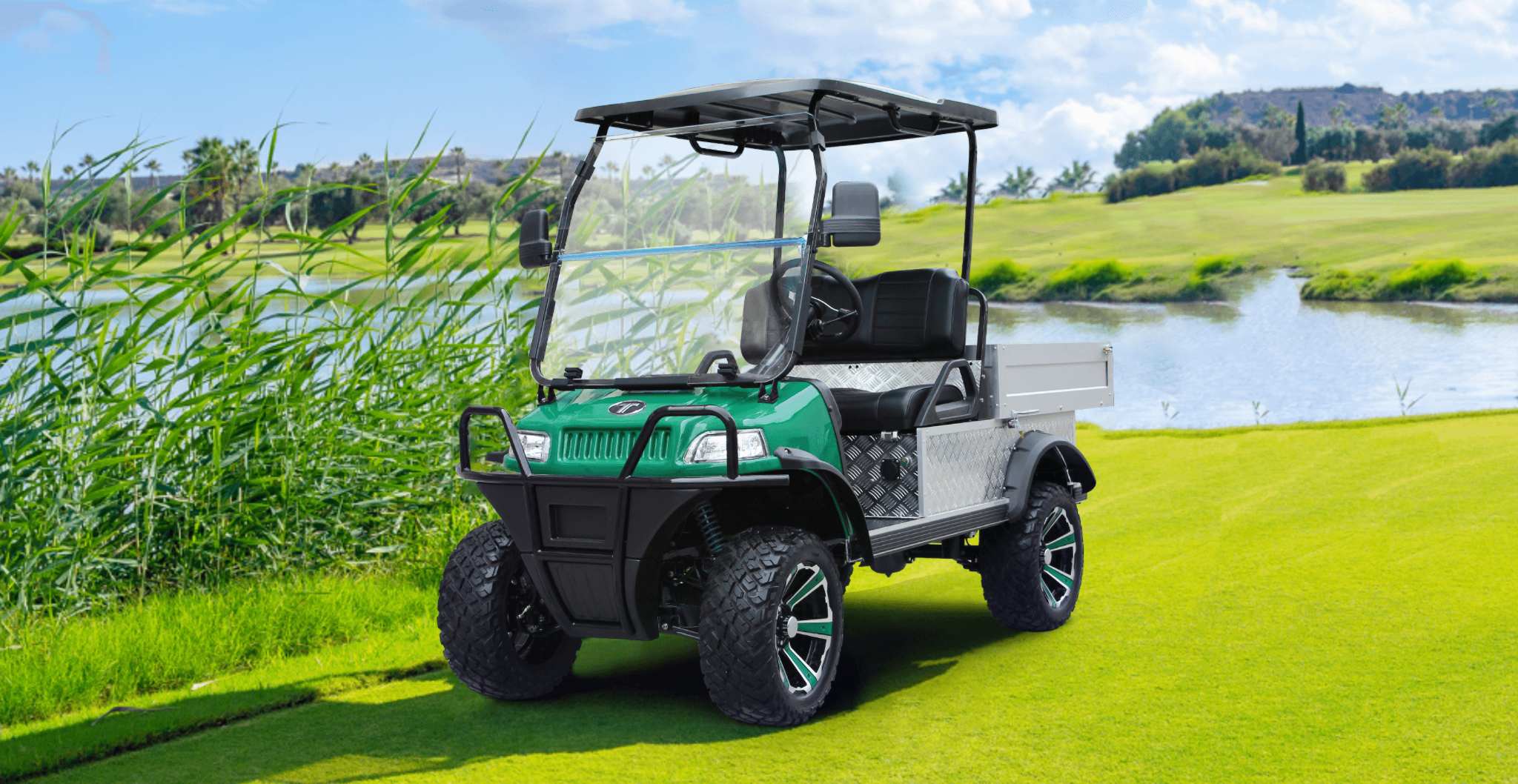
Golf course maintenance teams need to transport sand, fertilizer, tools, spare parts, and lawn equipment daily. Standard electric golf carts typically have limited storage space, making utility vehicles with cargo beds more suitable for this type of work.
Tara’s Turfman series is designed for this scenario. The Turfman 700, equipped with a cargo bed, can be used for golf course maintenance, logistics, and daily material handling. The Turfman 1000 offers greater capacity, suitable for venues with higher transport demands. (Tara Golf Carts)
Electric Power
Affordable utility vehicles are increasingly adopting lithium-ion battery power. Electric golf carts eliminate the need for engine, oil, and fuel system maintenance, making them suitable for environments requiring frequent short-distance travel.
Tara’s Electric Vehicles utilize a lithium-ion battery platform. The Turfman 700, for example, uses 100% LiFePO4 batteries, a 48V 6.3kW AC motor, and a 400A controller. Official documentation also indicates that this model is equipped with a cargo bed, LED lights, a tow hook, and an onboard charger, and is designed for golf course maintenance and logistics.
Long-Term Costs
Determining the cost-effectiveness of affordable utility vehicles involves several factors: vehicle purchase cost, energy costs, routine maintenance, downtime, spare parts availability, and battery life.
Lithium-ion battery vehicles typically reduce maintenance tasks such as water replenishment, but actual costs still depend on usage frequency, load, terrain, and charging conditions. For golf courses with high daily operating volumes, maintaining stable vehicle operation is itself part of cost management.
Tara Utility Vehicles
Tara Golf Carts not only provides vehicles for players but also offers the T2 series of Electric Utility Vehicles. The Turfman 450 is suitable for lighter transport tasks, the Turfman 700 for medium-sized tasks, and the Turfman 1000 for higher load scenarios. The Turfman 700 EEC is also EEC certified, allowing it to be used on European roads in compliance with local regulations.
For golf course managers looking for affordable utility vehicles, different vehicle classes can be selected based on the specific tasks. Tara Electric Vehicles can also combine utility vehicles with Tara Golf Carts’ cart products to form a complete fleet for golf course transport and maintenance.
FAQs
What is an affordable utility vehicle?
It generally refers to a utility vehicle with reasonable purchase and long-term operating costs. Evaluation should consider price, maintenance, energy, and lifespan.
What is an electric utility vehicle used for?
Electric utility vehicles are commonly used for tool transport, lawn maintenance, material handling, inspection, and park logistics.
Are electric utility vehicles cheaper to operate?
Specific costs depend on electricity prices, usage intensity, and vehicle configuration. Electric vehicles reduce engine and fuel system maintenance, while lithium-ion battery models further reduce routine battery maintenance.
What is the difference between a golf cart and a utility vehicle?
A golf cart is primarily used for transporting people and golf bags, while a utility vehicle, equipped with a cargo bed or other work attachments, is better suited for transporting vehicles, equipment, and materials.
Which Tara utility vehicle should a golf course choose?
The Turfman 450 is suitable for light tasks, the Turfman 700 for routine maintenance and material transport, and the Turfman 1000 for higher transport demands. The final model should be determined based on load, terrain, and operating frequency.
Post time: Aug-31-2026


