

A 48V lithium-powered golf cart is a common configuration for electric vehicles used on golf courses. The 48V electrical system serves as the power foundation for the battery, motor, controller, and other vehicle components.
For golf courses, resorts, and commercial fleet operators, the choice of battery impacts daily operating hours, charging schedules, and long-term maintenance. Tara Golf Carts offers several 48V lithium-powered models, featuring various motor outputs, seating layouts, and equipment configurations.
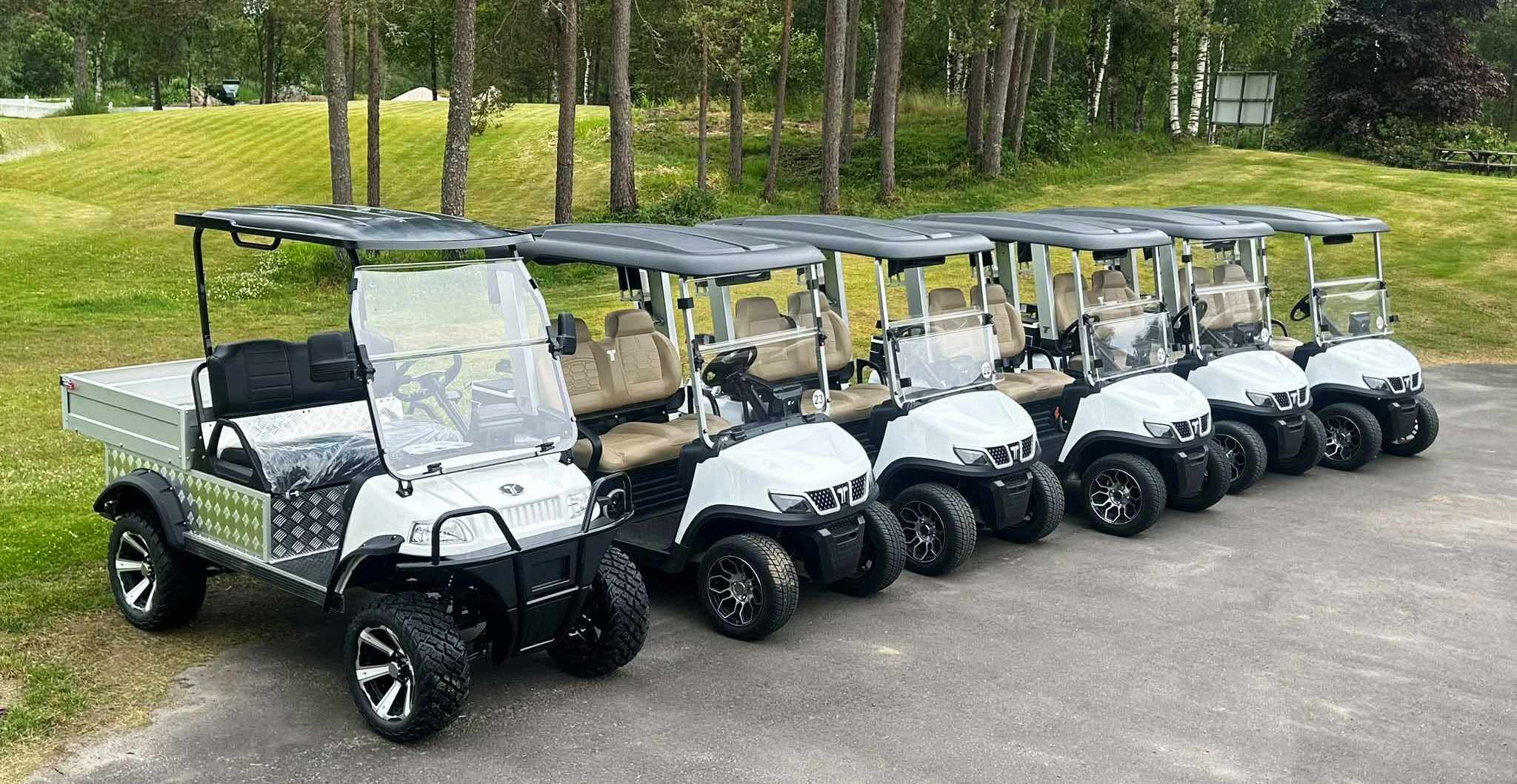
48V System
“48V” refers to the nominal voltage of the golf cart’s electrical system. This is a critical specification, as the battery, motor, controller, and charger must all operate within compatible electrical parameters.
A comprehensive evaluation of a 48V golf cart should also take into account motor power, controller specifications, battery capacity, and charging current.
Tara’s professional-grade golf cart lineup includes 48V lithium configurations, with options for 4kW or 6.3kW AC motors, depending on the specific model.
Battery Capacity
Battery capacity determines the amount of electrical energy a vehicle can store.
Key battery parameters to consider during procurement include voltage, amp-hours (Ah), and kilowatt-hours (kWh).
“Ah” (amp-hours) represents the battery’s capacity in terms of current over time, while “kWh” (kilowatt-hours) indicates the total stored electrical energy. In a 48V system, a higher battery capacity generally provides more usable energy; however, the actual range is also influenced by factors such as discharge limits, vehicle load, terrain (inclines), tires, and driving style.
Therefore, when purchasing a 48V lithium-powered golf cart, you should request detailed data on battery capacity and energy storage from the supplier, and evaluate the configuration based on your specific operational range requirements.
BMS Protection
A Battery Management System (BMS) is an essential component of any lithium battery system.
The BMS monitors the voltage, current, and temperature of the battery pack, providing protection against overcharging, over-discharging, overcurrent, and extreme temperatures—all in accordance with the battery’s design specifications. Some systems also include cell balancing functionality.
For commercial golf carts that see frequent daily use, factors such as battery protection, the compatibility of the control system, and charging management should all be included in your procurement assessment. Tara’s lithium-powered models incorporate battery management technologies; specific battery specifications and protection parameters can be confirmed based on the individual model and project configuration.
Charging System
The charger must be compatible with the battery system’s voltage, charging curve, and allowable current.
Tara offers various charger configurations depending on the model:
Spirit Pro: 48V lithium system, equipped with a 17A off-board charger.
Spirit Plus: 48V lithium system, equipped with a 17A adaptive off-board charger.
Explorer 2+2: 48V lithium system, equipped with a 25A on-board charger.
Charging time depends on battery capacity, remaining charge, charger output, the battery management system (BMS), and ambient temperature. For large golf cart fleets, it is essential to plan ahead regarding the number of chargers, power supply requirements, and overnight charging arrangements.
Tara Models
Tara offers a range of 48V lithium-powered golf carts designed to meet diverse operational needs.
Spirit Pro: A two-seater model designed for professional golf courses. It features a 48V 4kW AC motor and comes equipped with a golf bag rack, storage basket, USB port, and a folding windshield—ideal for standard golf course fleets.
Spirit Plus: A two-seater model powered by a 48V 6.3kW AC motor. It includes 12-inch aluminum alloy wheels, deluxe seating, a 9-inch touchscreen, an audio system, and an optional built-in refrigerator.
Explorer 2+2: A four-seater “lifted” model featuring a 48V 6.3kW powertrain, off-road tires, independent suspension, and a forward-facing four-seat layout—suitable for venues that require higher ground clearance.
These models can be selected based on a facility’s passenger capacity requirements, terrain conditions, and frequency of use.
Range & Performance
The actual range of a 48V lithium-powered golf cart should be evaluated by considering its complete set of powertrain specifications. The following factors directly influence the amount of work a vehicle can complete in a single day:
Battery capacity and available energy
Motor power and controller output
Number of passengers and vehicle payload
Course terrain (slopes) and surface conditions
Driving speed and operator habits
Power consumption of onboard equipment and accessories
For golf courses, battery specifications should be determined based on daily round volume, course terrain, and available charging windows. For resorts and residential communities, assessments should be based on daily mileage and required continuous runtime.
Fleet Solutions
When purchasing 48V lithium-battery golf carts in bulk, battery specifications and charging systems must be considered in the context of unified fleet management.
Tara offers two-seater, four-seater, and various commercial models, allowing for a tailored fleet mix based on specific operational roles. Additionally, an optional GPS Fleet Management System enables real-time tracking, monitoring of battery State of Charge (SoC), speed, fault codes, and usage history.
By standardizing vehicle models, battery specifications, charging equipment, and maintenance records, golf courses can establish more structured and efficient fleet management processes.
With over 20 years of industry experience, Tara Golf Carts provides vehicle customization, technical support, and services for international projects. For golf courses, resorts, and dealerships planning a new fleet, Tara can develop a procurement strategy based on specific battery requirements, operating conditions, and fleet size.
FAQs
What Does 48V Mean on a Lithium Golf Cart?
“48V” indicates that the vehicle utilizes a battery and electrical system with a nominal voltage of 48 volts. Determining actual performance requires evaluating this alongside other technical parameters, such as battery capacity, total energy, and motor power.
How Long Does a 48V Lithium Golf Cart Battery Last?
The service life depends on factors such as cell quality, depth of discharge, charging management, operating temperatures, and daily usage patterns. When purchasing, it is advisable to verify the battery’s cycle life test conditions and warranty terms.
How Far Can a 48V Lithium Golf Cart Travel?
Range is determined by battery capacity, vehicle payload, road surface conditions, terrain (slopes), and driving style. The 48V nominal voltage alone is not sufficient to accurately predict the actual driving range.
Are 48V Lithium-Powered Golf Carts Maintenance-Free?
Unlike traditional lead-acid batteries, lithium batteries do not require periodic watering. However, you must still inspect the charging system, electrical connections, tires, and braking system in accordance with the manufacturer’s requirements.
Which Tara Golf Carts Use 48V Lithium Batteries?
Models such as the Tara Spirit Pro, Spirit Plus, and Explorer 2+2 offer 48V lithium battery configurations. These models differ in terms of motor power, charging systems, and vehicle layout.
Post time: Nov-13-2026


