

Globally, golf courses are re-evaluating a long-neglected yet profoundly impactful aspect of operational efficiency—the structure of their cart fleets.
In the past, many courses purchased different models, configurations, and even brands of carts at different times. While this seemed flexible in the short term, it gradually revealed problems such as complex management, high maintenance costs, and inconsistent experiences in the long run. Therefore, more and more courses are turning to a more mature solution: cart fleet standardization.
This is not merely a uniformity in appearance, but a systemic upgrade encompassing operational efficiency, asset management, and member experience.
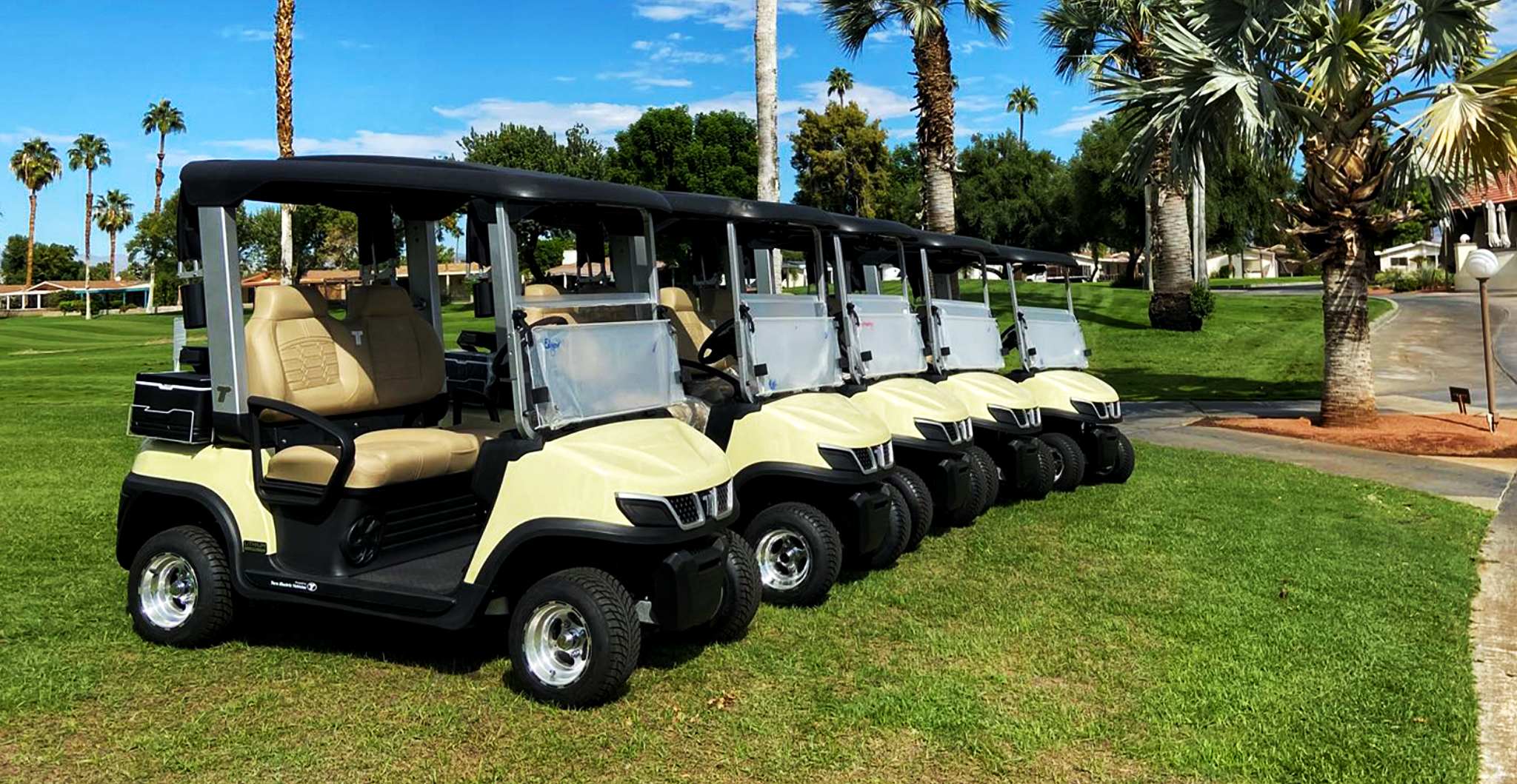
I. Simpler Operations: The Primary Reason for Standardization
For golf course managers, carts are first and foremost high-frequency operational equipment, not just decorative items.
When a golf cart fleet contains a mix of different models and configurations, the difficulty of maintenance and repair is amplified significantly:
Different models use different parts.
High spare parts inventory pressure.
Maintenance personnel need to master multiple system logics.
If critical components are unavailable, the cart must be taken out of service.
Standardized fleets can significantly reduce the probability of these problems occurring:
Unified maintenance processes.
Highly interchangeable spare parts.
Faster repair response times.
More stable cart availability during peak hours.
For courses with high daily visitor volume and frequent tee times, this stability is a core competitive advantage.
II. A consistent driving experience directly impacts safety and satisfaction
From a player’s perspective, the golf cart is one of the most frequently encountered facilities during an 18-hole course.
If the same course has golf carts with different driving experiences:
Different acceleration responses.
Inconsistent braking distances.
Significant differences in steering feel.
This not only affects comfort but also introduces potential safety risks.
By standardizing their fleets, golf courses can ensure:
A consistent driving experience for all players.
Highly predictable cart behavior across fairways, driveways, and service areas.
Reduced learning curve for new members and visitors.
This is especially important for resort courses, membership-only premium courses, and tournament-hosting courses.
III. Standardized fleets make asset management more “calculable”
From a financial perspective, golf carts are not just one-time purchases, but long-term asset investments.
Standardized fleets enable courses to:
Unify cart replacement cycles.
More accurately predict annual maintenance and upgrade budgets.
Complete battery upgrades or refurbishments within the same timeframe.
Increase resale or trade-in value.
Compared to a passive “fix what breaks, replace what’s old” approach, standardization is closer to proactive, plannable asset lifecycle management.
IV. A professional and unified appearance is part of the golf course’s image
While the core value of golf carts lies in their functionality, visual consistency also significantly impacts the overall impression of the course in practical operations.
A unified design, color, and configuration of golf carts enhances the professionalism of a golf course in the following scenarios:
Members’ daily play.
Business receptions.
Corporate tournaments.
Publicity promotion and video shooting.
For mid-to-high-end golf courses, standardized cart fleets are increasingly becoming “part of the infrastructure,” rather than optional add-ons.
V. Easier Integration with Digital and Intelligent Management Systems
With the widespread adoption of GPS, fleet management systems, and digital services in golf courses, the consistency of the hardware platform becomes crucial.
A unified platform for golf cart fleets facilitates:
GPS positioning and geofence management.
cart usage frequency and scheduling analysis.
Unified screens and information push systems.
Phase-based upgrades to intelligent functions based on budget.
This provides golf courses with greater flexibility, preventing them from being “reversely restricted” by system differences in cart models.
VI. This is not a short-term trend, but an upgrade in management methods
Standardizing golf cart fleets is not just about “looking neater.”
Through standardization, golf courses can:
reduce long-term operational risks.
improve management transparency.
prepare for future expansion and upgrades.
For modern golf courses, cart fleet standardization is no longer a question of “whether to do it,” but rather “when to start.”
Post time: Feb-11-2026


