

With the increasing demand for community transportation and internal travel within resorts, more and more property managers are paying attention to electric shuttle vehicles, specifically village golf carts. These vehicles are not designed for public roads but are focused on short-distance transportation within communities, parks, hotels, and resorts, emphasizing comfort, practicality, and quiet, zero-emission operation.
As a professional manufacturer of electric golf carts and utility vehicles, Tara has accumulated extensive experience in community transportation scenarios. This article will provide a comprehensive analysis of the application scenarios, core configurations, purchase costs, and comparisons with traditional fuel-powered community vehicles for village golf carts, and will combine real-world needs to help buyers make more reliable purchasing decisions.
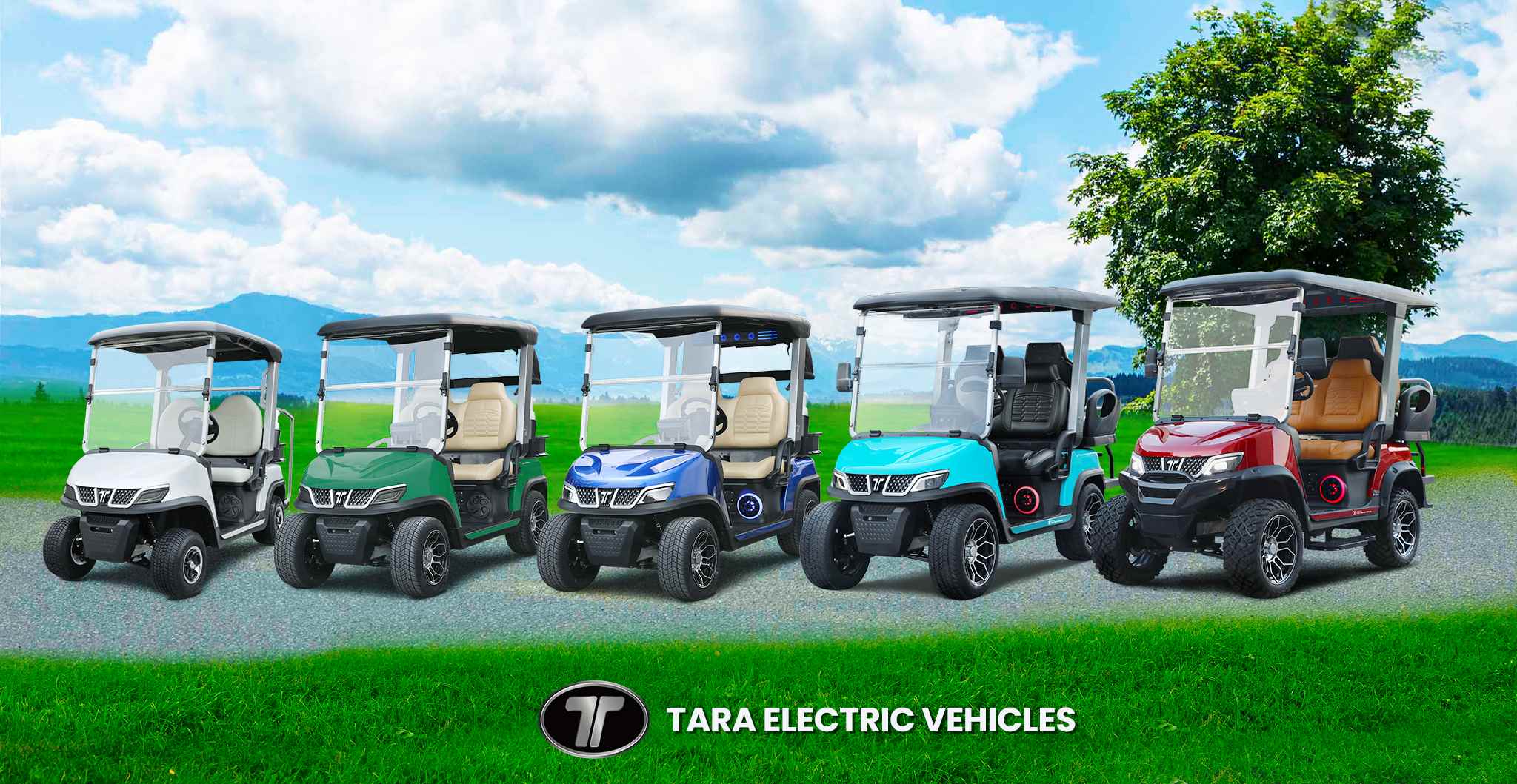
I. The Real Definition and Usage Scenarios of Village Golf Carts
Globally, “village golf carts” is often used to describe electric shuttle vehicles used within communities, gated parks, or resort properties. These vehicles are not road vehicles and do not have road driving certification, therefore their use is primarily for:
Internal transportation within gated communities
Shuttle services within resorts and hotel complexes
Short-distance transportation in retirement communities
Patrols within schools and scenic areas
Auxiliary transportation around golf courses
Their core function is closer to neighborhood-style electric carts, emphasizing low speed, safety, quietness, and ease of operation.
II. Why do communities and resorts favor Village Golf Carts?
1. Zero-emission electric system, quiet and non-disturbing
For residential areas and resorts, vehicle noise and exhaust fumes are significant concerns.
Electric village golf carts use a pure electric drive system, achieving:
Smooth start-up
Lower driving noise than gasoline vehicles
No exhaust emissions
Suitable for operation in densely populated areas
Tara’s electric system has undergone multiple iterations, achieving industry-leading levels in stability and range performance.
2. Simple operation, suitable for all ages
Electric carts have a simple structure; simply:
Turn on the power
Shift gears
Press the accelerator pedal
And you can drive smoothly. No complex operation or professional driving training is required.
This is a significant advantage for community workers, hotel staff, and residents.
3. Highly customizable, better suited for property management
Compared to traditional transportation, village golf carts emphasize flexibility. Tara offers a variety of customization options:
Seat layout (2/4/6 seats)
Luggage or cargo platform
Windshield, LED headlights, rain curtains
Corporate color scheme and logo customization
Patrol vehicle configuration (warning lights, public address system, etc.)
This makes the vehicles suitable for:
Resident shuttle
Property maintenance
Security patrol
Luggage transport
Cleaning services
It also makes them an important tool for optimizing resort and community operating costs.
III. Battery System: A Core Factor Affecting Range and Reliability
Most high-end village golf carts have adopted lithium battery golf cart systems.
Compared to traditional lead-acid systems, lithium batteries offer:
Fast charging speed
Stable range
Longer lifespan
Minimally maintenance-free
Superior performance in environments with varying temperature ranges
Tara uses its self-developed batteries and a mature BMS system to ensure safety and longevity, which is a primary concern for community buyers.
IV. Power System: AC Motor and Controller for Smoother Riding
Although village golf carts are low-speed vehicles, sufficient power is still required in scenarios such as community ramps and hotel inclines.
AC motor golf carts are generally recommended because:
Strong starting force
Better ramp handling
Superior heat dissipation
More energy-efficient
Tara’s AC system and controller have undergone multiple rounds of verification to meet the needs of long-term, high-frequency use.
V. Key Concerns for Buyers: Village Golf Carts Cost Structure
Community and hotel buyers typically focus on the following cost components when selecting vehicles:
Total vehicle cost (depending on seating capacity and configuration)
Battery lifespan and replacement costs
Annual usage frequency and maintenance costs
Spare parts availability (motor, controller, lights, tires)
After-sales response speed
High-quality electric systems have lower long-term costs, especially in high-frequency community settings, where stability is more critical than the initial purchase price.
VI. FAQs
Q1: What is a village golf cart?
A: A village golf cart is an electric mobility scooter used within communities, hotel parks, resorts, and gated properties, emphasizing low speed, safety, and quietness. It is not a road vehicle and typically does not have road driving certification.
Q2: Are village golf carts street legal?
A: Generally not. In most countries, these vehicles are not street legal and are only permitted for use within closed grounds or communities. Buyers should comply with local regulations.
Q3: How fast do village golf carts go?
A: The speed is typically maintained within a safe range (e.g., 20–25 km/h). Actual speeds will vary depending on local regulations and manufacturer settings. Tara will adjust the speed according to the community’s needs.
Q4: Can village golf carts be customized for commercial use?
A: Yes. Tara supports customization for various commercial applications, including seating layouts, luggage platforms, enclosed cabins, and patrol car kits.
VII. Why choose Tara as your Village Golf Carts supplier?
As a professional manufacturer, Tara offers:
Highly reliable electric golf carts and utility carts
A full range of lithium battery system configurations
A stable parts supply chain
A comprehensive quality control system
Customization capabilities
Global after-sales support
Whether for community, hotel, scenic area, or park operations, Tara provides stable solutions tailored to specific needs.
Post time: Dec-09-2025


