

In golf courses and large venues, utility task vehicles are crucial tools for improving operational efficiency and reducing labor costs. Compared to traditional transportation methods, modern utility task vehicles combine electric drive with multi-functional design, efficiently completing various tasks such as equipment transport, inspection, and maintenance. Therefore, utility vehicles have become standard equipment for courses requiring high-frequency maintenance.
Tara’s utility task vehicles are typically used in conjunction with electric golf carts: the former handles logistical support, while the latter transports personnel. This combination creates a complete site transportation and maintenance system.
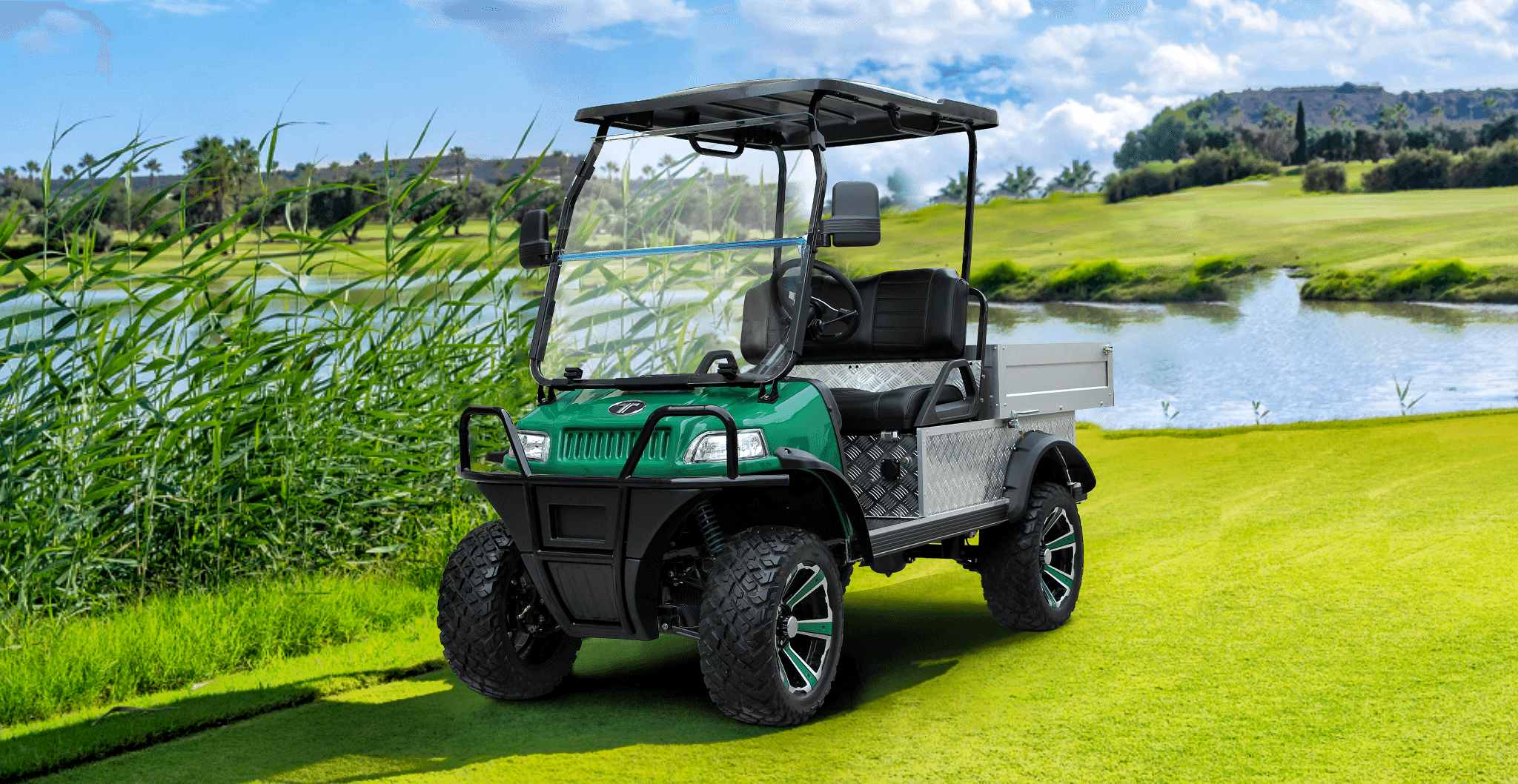
Why has the Utility Task Vehicle become the industry standard?
As golf courses and commercial facilities continue to expand, traditional manual or inefficient transportation methods can no longer meet the demands. This is where the advantages of utility task vehicles become apparent.
High-Efficiency Transportation Capacity
Compared to ordinary vehicles, utility vehicles are designed for short-distance, high-frequency transportation, enabling them to complete tasks quickly. They are typically equipped with large-capacity cargo beds or containers to carry various golf course maintenance equipment.
Electric Drive for Greater Economy
Electric utility task vehicles offer significant advantages in energy consumption and maintenance, making them suitable for long-term use.
Multi-functional Adaptability
From lawn maintenance to equipment transport, one vehicle can meet a variety of needs.
These features make utility task vehicles indispensable equipment for modern golf courses.
Electric Utility Vehicles: A Balance of Low Cost and High Performance
In the current market, electric utility vehicles are gradually replacing traditional fuel-powered vehicles. Their advantages are not only reflected in environmental protection but also in actual operational efficiency.
Low Noise Operation
Suitable for venues with high environmental requirements, such as golf courses.
Simple Maintenance
Compared to fuel-powered vehicles, they significantly reduce engine-related maintenance and downtime.
Stable Output Performance
Electric drive provides smooth power, making it more suitable for delicate operation scenarios.
For managers seeking long-term operational stability, electric utility vehicles are a more sustainable choice.
Synergistic Relationship with Electric Golf Carts
In a complete course transportation system, utility task vehicles do not exist in isolation; they complement electric golf carts.
Electric golf carts are primarily responsible for:
Player transportation
Enhancing customer experience
Efficient course movement
Utility task vehicles are primarily responsible for:
Equipment and tool transportation
Daily inspection and maintenance
Logistical support
This division of labor allows golf courses to achieve more efficient resource allocation. This is why professional golf cart manufacturers typically offer both types of products.
A crucial component of a golf cart fleet
While fewer in number, utility task vehicles play a vital role in a complete golf cart fleet.
A well-planned fleet typically includes dozens to hundreds of electric golf carts. The appropriate number of utility vehicles should be allocated based on the course size and maintenance frequency.
A lack of sufficient utility task vehicles will impact course maintenance efficiency, indirectly affecting customer experience. Therefore, their deployment ratio should be carefully considered when planning the fleet.
Application scenarios: Beyond golf courses
While utility task vehicles are widely used in the golf industry, their applications are constantly expanding.
Resorts and hotels: For logistical transportation and service support.
Industrial parks and campuses: For inspection and material distribution.
Large event venues
Support short-distance, high-frequency transportation needs.
This versatility makes utility task vehicles a universal electric transportation solution.
Frequently Asked Questions (FAQ)
Is there a difference between a utility task vehicle and a regular utility vehicle?
Essentially similar, but utility task vehicles emphasize task orientation, focusing on transportation and operational uses.
What is the range of an electric utility vehicle?
Most electric utility vehicles can meet a day’s work needs, depending on battery configuration and usage intensity.
How many utility task vehicles does a golf course need?
Depending on size, medium to large courses typically require multiple utility vehicles to support daily operations.
Are utility task vehicles suitable for complex terrain?
Yes, professionally designed utility task vehicles have excellent maneuverability and can adapt to grass and sloping environments.
Core Operational Tool for Golf Courses
In modern golf course management, operational efficiency has become a crucial factor in determining competitiveness. Utility task vehicles are key equipment for enhancing this capability.
By integrating with electric golf carts and forming a complete golf cart fleet, courses can achieve a more efficient operating model. At the same time, choosing an experienced golf cart manufacturer ensures the reliability and long-term value of the equipment.
For courses looking to improve service quality and optimize cost structure, introducing high-performance utility task vehicles represents a comprehensive optimization of the operating system.
Post time: Apr-07-2026


