

In the cost structure of operating a golf course, golf carts are often the most important, yet also the most easily misjudged, investment. Many courses focus on the “cart price” when purchasing carts, neglecting key factors that determine long-term costs—maintenance, energy, management efficiency, downtime losses, and lifecycle value.
These overlooked items are often more expensive than the carts themselves, and can even directly impact member experience, operational efficiency, and long-term profitability.
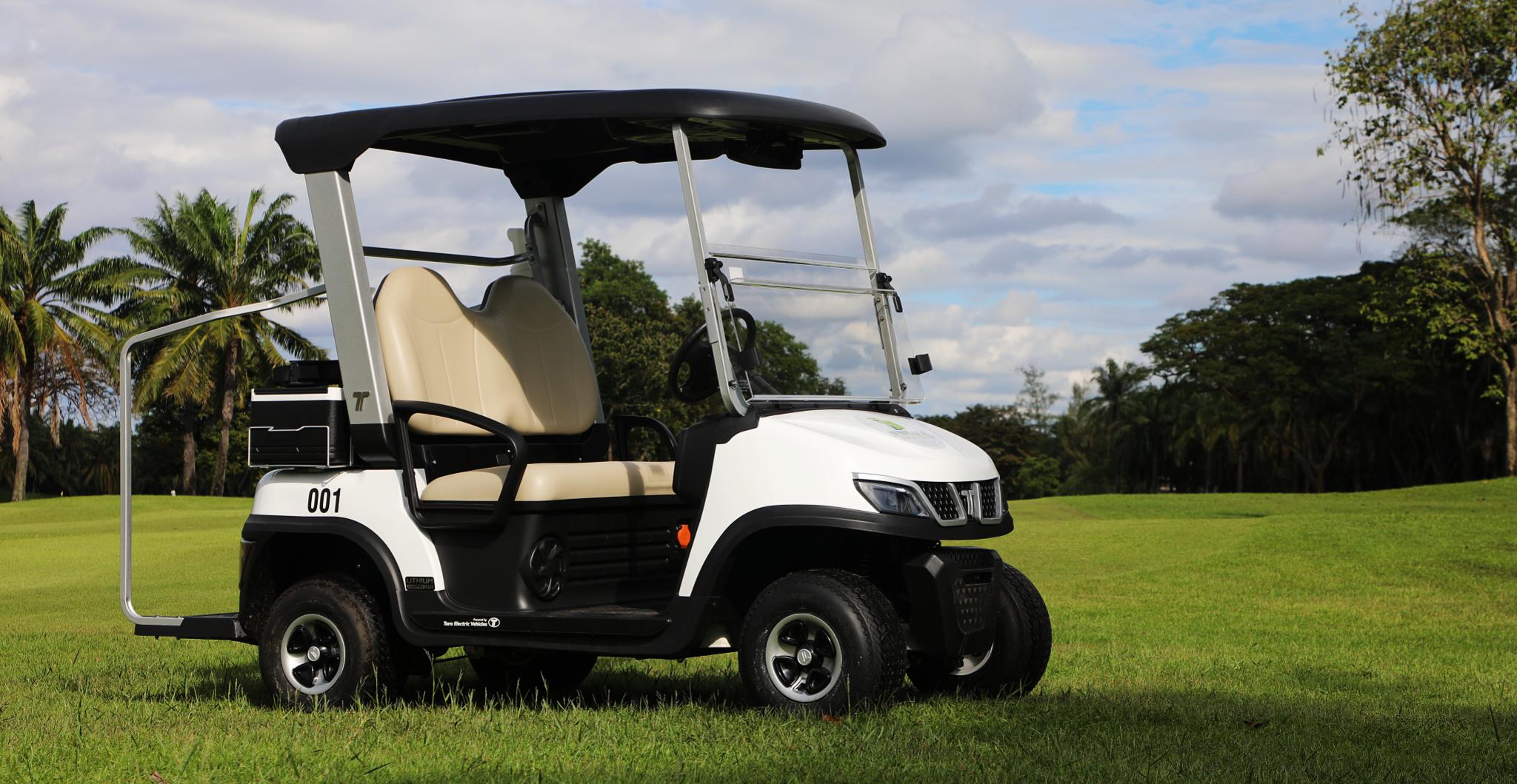
This article summarizes 5 major “hidden cost” pitfalls to help course managers make more scientific and comprehensive decisions when planning, purchasing, and operating golf carts.
Pitfall 1: Focusing Only on Cart Price, Ignoring the “Total Cost of Ownership”
Many courses only compare cart prices during the procurement phase, ignoring maintenance costs, sustainability, and resale value over a 5-8 year period.
In fact, the total cost of ownership (TCO) of a golf cart far exceeds the initial purchase price.
Often overlooked costs include:
Differences in replacement frequency due to varying battery lifespan
Reliability of key components such as motors, controllers, and brakes
The impact of frame welding and painting processes on durability
Resale value (reflected when returning a leased cart or upgrading the team)
For example:
Inexpensive lead-acid golf carts may require battery replacement every 2 years, resulting in higher cumulative costs.
Poorly manufactured golf carts begin to experience widespread repairs after 3-4 years of use, leading to a sharp increase in downtime costs.
While lithium-ion battery golf carts have a higher initial price, they can be used for an average of 5-8 years, resulting in higher residual value.
Tara’s advice: When choosing a golf cart, always calculate the total cost over a 5-year period, rather than being misled by the initial quote.
Pitfall 2: Ignoring Battery Management – The Most Expensive Hidden Cost
The core cost of a golf cart is the battery, especially for electric teams.
Many golf courses make the following common operational mistakes:
Prolonged undercharging or overcharging
Lack of a fixed charging schedule
Failure to add water to lead-acid batteries as required
Failure to track and record battery temperature and cycle count
Resetting batteries only when they reach 5-10%
These practices directly reduce battery life by 30-50%, and can even lead to performance degradation, complete battery failure, and other problems.
More importantly: Premature battery degradation = a direct decrease in ROI.
For example, lead-acid batteries:
Should have a normal lifespan of 2 years
But become unusable after only one year due to improper use
The golf course has to replace them twice in two years, doubling the cost.
While lithium batteries are more durable, without BMS monitoring, their lifespan can also be shortened due to excessive deep discharge.
Tara’s recommendation: Use lithium batteries with intelligent BMS, such as those used in Tara golf carts; and establish a “systematic charging management system.” This is more cost-effective than adding 1-2 employees.
Pitfall 3: Ignoring Downtime Costs – More Expensive Than Repair Costs
What do golf courses fear most during peak seasons? Not broken golf carts, but “too many” broken carts.
Every broken-down cart leads to:
Increased waiting times
Decreased course capacity (direct revenue loss)
Poor member experience, impacting repeat purchases or annual fee renewals
May even cause complaints or event delays during tournaments
Some courses even treat “number of carts” as normal:
A team of 50 carts, with 5-10 constantly under repair
Actual availability is only around 80%
Long-term losses far exceed repair costs
Many downtime problems are essentially due to:
Inadequate component quality
Slow after-sales response
Unstable spare parts supply
Tara’s advice: Choose brands with mature supply chains, comprehensive after-sales systems, and local spare parts inventory; downtime rates will be significantly reduced.
This is also one of the key reasons why Tara has signed numerous local dealerships worldwide.
Pitfall 4: Underestimating the Value of “Intelligent Management”
Many golf courses consider GPS and fleet management systems as “optional decorations,”
but the reality is: Intelligent systems directly improve fleet efficiency and reduce management costs.
Intelligent management systems can solve:
Unauthorized driving of golf carts beyond their designated areas
Players taking detours leading to reduced efficiency
Use of golf carts in dangerous areas such as forests and lakes
Theft, misuse, or haphazard parking at night
Inability to accurately track battery life/cycle count
Inability to allocate idle carts
Just “reducing detours and unnecessary mileage” can extend tire and suspension life by an average of 20-30%.
Furthermore, GPS systems allow managers to:
Remotely lock carts
Monitor real-time battery levels
Automatically calculate usage frequency
Develop more reasonable charging and maintenance plans
The value brought by intelligent systems can often be recouped within a few months.
Pitfall 5: Ignoring After-Sales Service and Response Speed
Many golf courses initially believe:
“After-sales service can wait; price is the priority now.”
However, true operators know: After-sales service for golf carts is a watershed moment in brand value.
Problems caused by untimely after-sales service include:
A cart breaking down for days or even weeks
Recurring problems that cannot be completely resolved
Long waits for replacement parts
Uncontrollable maintenance costs
Insufficient carts during peak periods leading to operational chaos
Tara’s success in multiple overseas markets is precisely because of:
Authorized dealerships in the local market
Self-built spare parts inventory
Highly trained technicians
Rapid response to after-sales issues
Providing management advice to golf courses, not just maintenance services
For golf course managers, this long-term value is far more important than “pursuing the lowest price.”
Seeing Hidden Costs is the Key to Really Saving Money
Purchasing a golf cart is not a one-time investment, but an operational project lasting 5-8 years.
Truly excellent fleet management strategies should focus on:
Long-term cart durability
Battery life and management
Downtime and supply chain
Intelligent dispatch capabilities
After-sales system and maintenance efficiency
By taking these hidden costs into account, the golf course will naturally make optimal configurations, achieving higher operational efficiency, lower long-term investment, and a more stable member experience.
Post time: Dec-03-2025


