

In gated communities, residential areas, resort developments, and large private estates, neighborhood golf carts are frequently used for short-distance daily travel. Residents rely on them to commute between locations such as clubhouses, swimming pools, restaurants, community activity areas, and parking lots, as well as to transport family members and guests within the property.
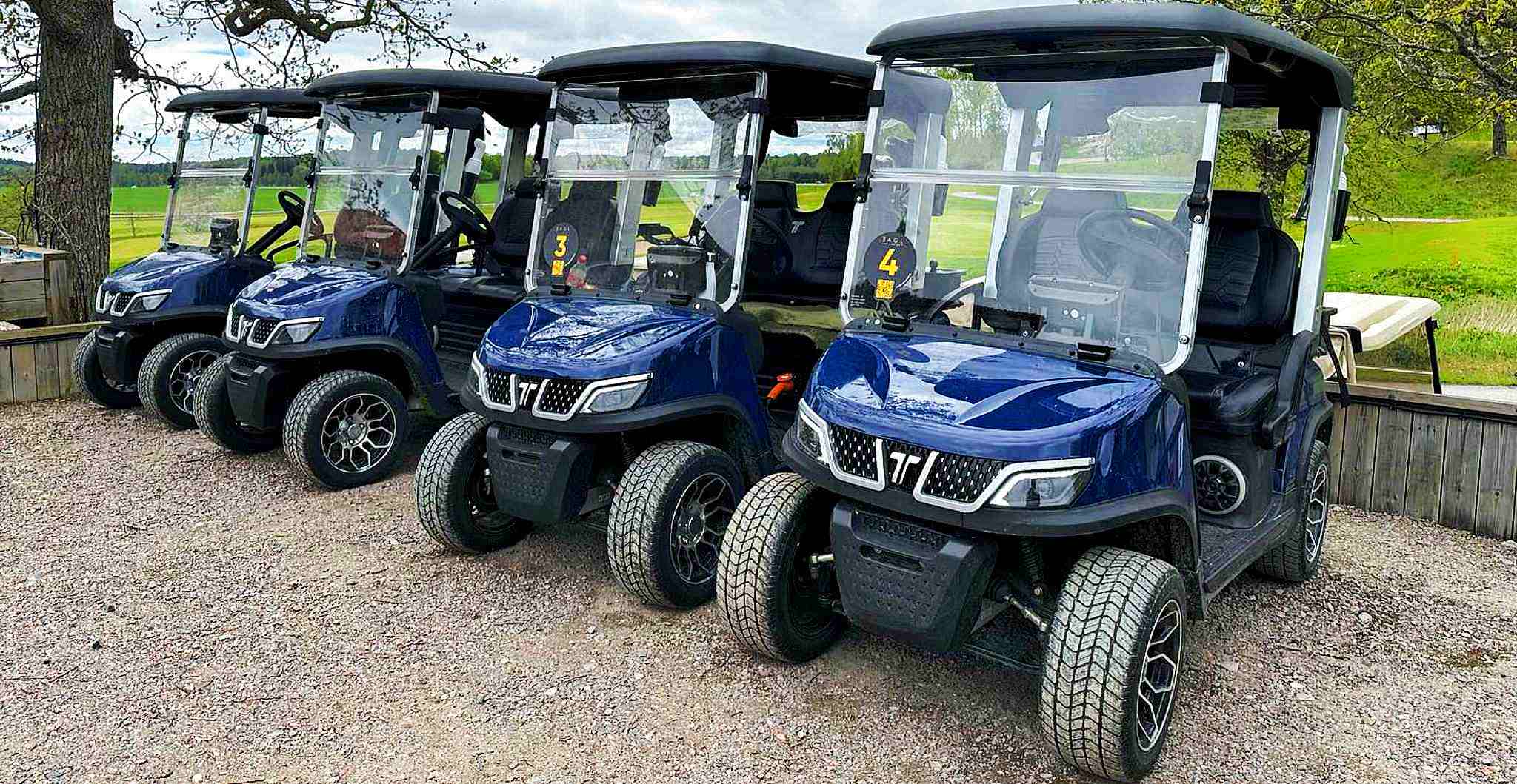
Because these vehicles are typically used for frequent, short-distance trips along set routes, factors such as seating capacity, terrain adaptability, lighting, storage, and charging accessibility significantly influence the user experience. Tara Golf Carts offers two-seater, four-seater, and “lifted” (raised-suspension) models to suit various community environments.
Daily Routes
Before selecting a neighborhood golf cart, consider the routes you travel most frequently.
If the vehicle will primarily be used to travel between residences and a clubhouse, prioritize ease of turning, parking, and boarding/alighting. For larger communities, also consider the total daily distance traveled, the steepness of any inclines, and the availability of charging locations.
Having a clear understanding of your regular routes makes it easier to determine the ideal model and battery configuration.
Four-Seater Layouts
Family and community use often require transporting multiple passengers.
The Tara Roadster 2+2 and Explorer 2+2 feature four-seater layouts, making them well-suited for carrying family members, guests, or staff within a property.
For users who primarily travel in pairs, a more compact two-seater model may be a better choice.
Road Conditions
Internal community paths may consist of paved surfaces, gentle slopes, grassy areas, or light gravel.
The Roadster 2+2 is designed for standard community roads. The Explorer 2+2 features a “lifted” design and tires better suited for varied terrain, making it ideal for properties with steeper inclines or more diverse surface conditions.
Before purchasing, evaluate your specific road widths, inclines, and available parking space—paying particular attention to the height of lifted models and the turning radius required.
Nighttime Use
Neighborhood golf carts are often used during the evening or at night.
Equipped with front and rear LED lights, these vehicles offer improved visibility in low-light conditions. Depending on the specific area of use, you should also ensure the vehicle is equipped with features such as turn signals, rearview mirrors, and other necessary safety equipment.
If the vehicle is intended for use on public roads, be sure to check local regulations governing golf carts, low-speed vehicles (LSVs), or neighborhood electric vehicles (NEVs). Permit requirements, speed limits, and safety equipment standards may vary by city or community.
Charging Management
Electric neighborhood golf carts are well-suited for environments where vehicles have designated parking and centralized charging facilities.
Tara Electric Vehicles utilize LiFePO4 lithium battery technology, eliminating the need for the routine water-topping required by traditional lead-acid batteries. Owners or property management can easily handle daily charging in garages, designated parking areas, or specific charging stations.
When purchasing, be sure to verify the compatibility of the charger, power supply requirements, and your expected daily mileage.
Comfort Features
Since neighborhood vehicles are typically used for daily local travel, features such as seating, storage, and onboard amenities are key considerations.
Tara models offer options including luxury seating, USB charging ports, touchscreens, and integrated speakers. Certain models even feature a built-in refrigerator—an ideal addition for resort communities, private clubs, and high-end residential developments.
Customization options for colors, wheels, and logos are also available to align with the branding or specific requirements of a community or property project.
Tara Models
Tara Golf Carts offers four-seater models designed for a variety of neighborhood transportation needs.
The Roadster 2+2 is ideal for standard neighborhood roads, while the Explorer 2+2—featuring a lifted chassis—offers enhanced terrain adaptability. The T3 series is tailored for personal use and leisure activities within a community.
When selecting a neighborhood golf cart, consider factors such as passenger capacity, road conditions, frequency of nighttime use, and charging methods. Additionally, check local regulations to determine whether the vehicle is permitted for use on public roads.
FAQs
What is a neighborhood golf cart?
A neighborhood golf cart is a small electric vehicle designed for short-distance travel within residential communities, resorts, and large properties. They typically accommodate two or four passengers.
Are golf carts legal in neighborhoods?
This depends on local laws and community regulations. Some jurisdictions allow golf carts or low-speed vehicles (LSVs) on designated roads, often requiring specific safety equipment such as lights, rearview mirrors, and license plates.
Is a 4-seat golf cart suitable for neighborhood use?
Yes, they are well-suited for families or groups traveling short distances. The Tara Roadster 2+2 and Explorer 2+2 feature four-seat layouts, making them excellent choices for getting around within a community.
Are lithium-powered golf carts a good choice for communities?
Lithium-powered golf carts are ideal for settings with fixed parking and daily charging access; they also eliminate the maintenance tasks—such as topping off water levels—associated with traditional lead-acid batteries. Actual range will depend on factors such as the route, payload, and gradients.
Which Tara golf cart is suitable for neighborhood use?
The Roadster 2+2 is well-suited for standard neighborhood roads, while the Explorer 2+2—featuring higher ground clearance—is designed for more challenging terrain. The T3 series is also suitable for personal use and recreational activities within a community.
Post time: Oct-19-2026


