

For golf course managers, fleet configuration is not merely an equipment procurement decision, but a long-term strategic choice impacting cash flow, operational efficiency, and member experience.
In practice, many courses face the same question: Should they lease their golf cart fleet or buy them outright?
Both options have their advantages and disadvantages, and there is no absolute standard answer. The key lies in the course’s own operating model, financial structure, and development stage.
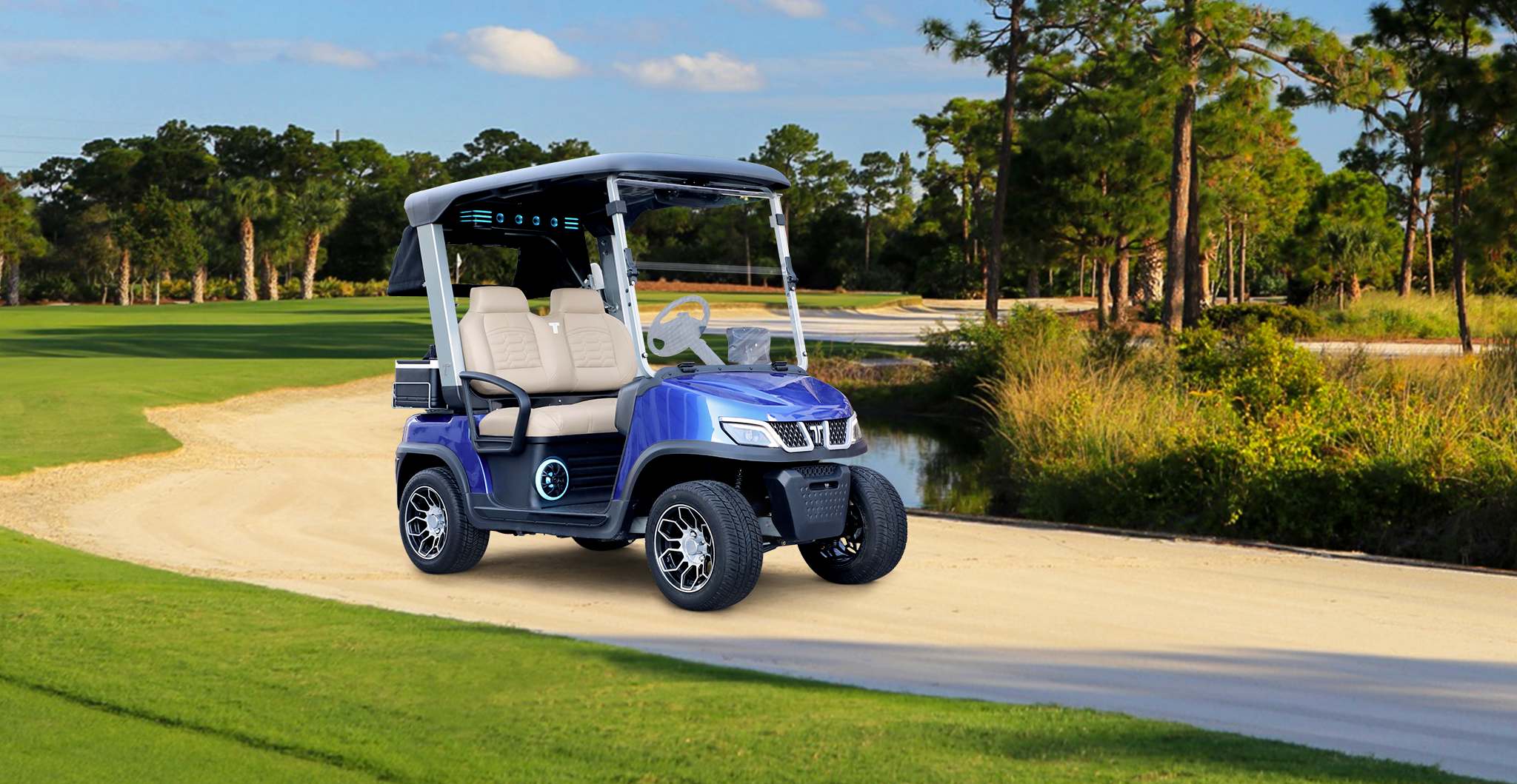
The following perspectives will help you choose the appropriate option.
Cash Flow Pressure vs. Long-Term Asset Stagnation
Leasing: Reduced Initial Financial Pressure
The biggest advantage of leasing is reducing one-time capital expenditure (CapEx).
No need to pay for the entire fleet purchase upfront.
Better cash flow management.
Suitable for newly built courses or short-term expansion projects.
For newly operational courses, funds are often prioritized for turf maintenance, clubhouse construction, and marketing. Leasing can alleviate initial financial pressure.
However, it should be noted that long-term accumulated leasing costs may exceed the one-time purchase cost.
Buying: Formation of Fixed Assets
Buying a fleet is a capital investment:
carts are recorded as fixed assets on financial statements.
Long-term usage costs are more controllable.
No contract period restrictions.
For mature golf courses with stable operations and healthy cash flow, buying is often more economically viable in the long run.
A True Comparison of Total Cost of Ownership (TCO)
Many managers only look at “monthly rental fees” or “purchase unit prices,” but what they should really focus on is:
Total Cost of Ownership
Includes:
Purchase cost or lease fee
Battery replacement cost
Routine maintenance cost
Downtime loss cost
Labor management cost
When using lithium-ion battery carts, maintenance costs are significantly lower than those of traditional lead-acid battery carts and gasoline carts.
In this case, the cost advantage of the buying model is more pronounced.
However, if traditional battery systems are used, leasing may transfer the risk of battery aging to the supplier.
Risks of Technological Iteration
Golf carts are undergoing rapid technological upgrades:
Popularization of lithium battery platforms
Intelligent GPS management systems
In-cart large-screen interaction
Data-driven operation functions
If there are concerns about rapid technological updates, leasing allows for more frequent fleet changes and reduces the risk of carts becoming obsolete.
Purchasing is more suitable for courses with mature technology or stable standardized configuration needs.
Operational Flexibility and Scale Adjustment Capabilities
Leasing Advantages:
Quantity can be adjusted according to peak and off-peak seasons
Flexible upgrades or replacements of cart models
Complete upgrades are possible after the contract expires
Purchasing Advantages:
Complete autonomy in cart use
Free modification and system additions
More stable long-term operational planning
For resort or tourist-oriented courses with significant seasonal fluctuations, leasing offers greater flexibility.
Membership-based private courses are more suitable for stable purchasing.
Asset Management and Brand Image
More and more high-end courses are beginning to emphasize the standardization of their fleets and brand visual presentation.
The procurement model is more advantageous for:
Unified cart color and logo customization
Customized interior and exclusive configurations
Building a strong golf course image asset
Leasing carts are often highly standardized, with limited customization options.
For golf courses that prioritize a high-end member experience, the fleet itself has become part of the brand image.
The Importance of Supplier Support Capabilities
Whether leasing or purchasing, the key is:
Does the supplier have long-term service capabilities?
Including:
Do they provide rapid spare parts support?
Do they have a regional technical service team?
Do they have a modular maintenance system?
Do they support future digital upgrades?
If the supplier’s support system is mature, the risks of the procurement model will be significantly reduced.
Recommendations for Different Types of Golf Courses
| Golf Course Type | Solution |
| Newly Built Courses | Leasing Preferred |
| Rapid Expansion Phase | Leasing and Procurement |
| Mature Membership-Based Courses | Procurement is Better |
| High-End Resort Courses | Procurement (High Customization) |
| Seasonal Tourist Courses | Leasing is More Flexible |
It is worth noting that more and more courses are adopting a “hybrid solution”:
Directly procuring the main fleet
Leasing special models or supplementary fleets
This ensures asset stability while retaining some flexibility.
Choosing the Right Solution
The fundamental difference between leasing and purchasing isn’t about which is cheaper, but rather which option better suits your current operational stage and long-term strategy.
If the golf course prioritizes cash flow security and flexibility in technological upgrades, leasing is more attractive.
If you’re aiming for long-term cost optimization and brand asset accumulation, purchasing is more advantageous.
Before making a decision, it’s recommended to conduct a comprehensive calculation over a 5-year operating cycle, rather than just looking at the current year’s budget.
Post time: Mar-04-2026


