

In recent years, the golf industry has been undergoing a quiet but rapid transformation: courses are upgrading on a large scale from lead-acid battery golf carts to lithium battery golf carts.
From Southeast Asia to the Middle East and Europe, more and more courses are realizing that lithium batteries are not just “more advanced batteries”; they are changing how courses operate, the efficiency of cart dispatching, and the overall maintenance cost structure.
However, not all courses are ready for this upgrade.
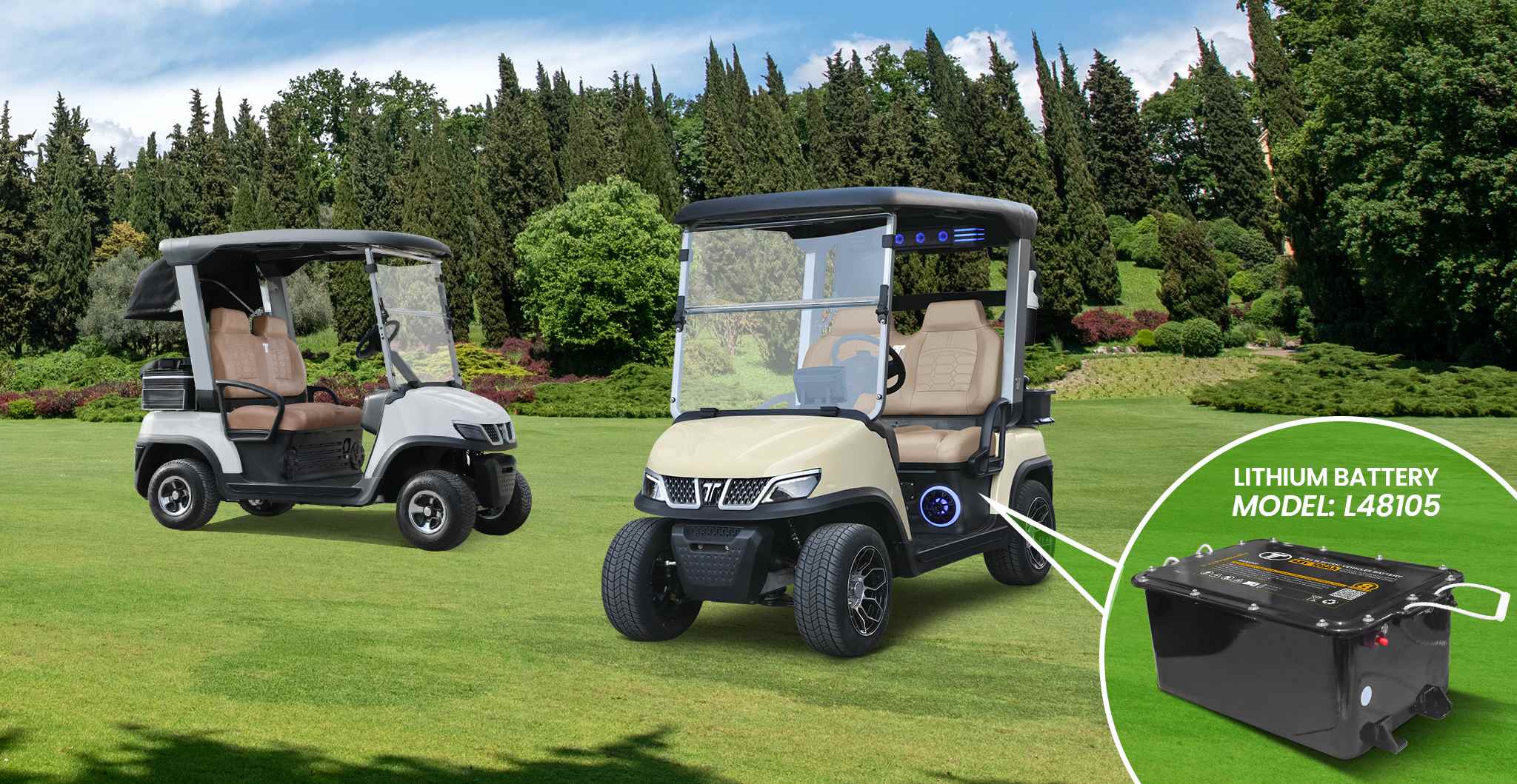
The lithium battery era brings not only technological changes but also a complete overhaul of facilities, management, concepts, and maintenance systems.
Therefore, Tara has compiled a “Lithium Battery Era Readiness Self-Assessment Checklist” for course managers. This checklist allows you to quickly determine whether your course is ready for the upgrade, whether you can truly benefit from a lithium battery fleet, and avoid common usage pitfalls.
I. Does Your Course Really Need to Upgrade to Lithium Batteries? — Three Questions for Self-Assessment
Before considering lithium batteries, ask yourself these three questions:
1. Does your course experience problems with insufficient power during peak periods or chaotic temporary charging?
Lead-acid batteries have fixed charging cycles and take a long time, easily leading to situations where they “can’t charge in time” or “can’t be deployed” during peak hours.
Lithium-ion batteries, on the other hand, support charging and use anytime, significantly improving dispatch efficiency during peak periods.
2. Are the annual maintenance costs of your fleet continuously increasing?
Lead-acid batteries require water replenishment, cleaning, battery room ventilation, and frequent maintenance, while lithium-ion batteries require almost zero maintenance and don’t need replacement for 5-8 years.
If you find that maintenance costs and labor costs are increasing year by year, a lithium-ion battery fleet can significantly reduce your burden.
3. Have members provided significant feedback on the fleet experience?
Stronger power, more stable range, and greater comfort are important aspects of a course’s rating.
If you want to upgrade the overall member experience, lithium-ion batteries are the most direct way.
If you answered “yes” to at least two of the above, your course is ready for an upgrade.
II. Is the Infrastructure Ready? —Facility and Site Self-Assessment Checklist
Upgrading to a lithium-ion battery fleet generally doesn’t require large-scale infrastructure modifications, but some conditions still need to be confirmed:
1. Does the charging area have a stable power supply and good ventilation?
Lithium-ion batteries do not release acid mist and do not require the same stringent ventilation requirements as lead-acid batteries, but a safe charging environment is still necessary.
2. Are there sufficient charging ports?
Lithium-ion batteries support fast charging and time-of-use charging; you only need to confirm that the power supply capacity can meet the fleet size.
3. Is there a planned integrated parking/charging area?
The high turnover rate of lithium-ion batteries makes a “one-stop-charge” layout more efficient.
If two of the above three items are met, your infrastructure is sufficient to support a lithium-ion battery fleet.
III. Is the Management Team Ready? —Personnel and Operation Self-Assessment
Even the most advanced golf carts require professional management.
1. Is someone responsible for the unified management of golf cart charging procedures?
While lithium-ion batteries do not need to be fully charged, prolonged deep discharge to below 5% is not recommended.
2. Are you familiar with the basic safety rules for lithium batteries?
For example: avoid punctures, avoid using non-original chargers, and avoid prolonged periods of inactivity.
3. Can you record fleet usage data?
This helps in scheduling rotations, assessing battery health, and optimizing fleet dispatch.
If you have at least one colleague familiar with fleet management, you can easily implement lithium battery fleet operations.
IV. Can Fleet Operations Benefit from Lithium Batteries? —Efficiency and Cost Self-Assessment
The greatest value brought by lithium batteries is the improvement in operational efficiency and long-term costs.
1. Does your fleet have a need to “go out when not fully charged”?
Lithium batteries have no memory effect; “recharging anytime” is their core advantage.
2. Do you want to reduce downtime for maintenance and battery failures?
Lithium batteries are maintenance-free and almost never experience common problems such as leakage, corrosion, and voltage instability.
3. Do you want to reduce complaints about declining cart power?
Lithium batteries provide stable output and will not experience significant power loss in the later stages like lead-acid batteries.
4. Do you want to extend the golf cart’s lifespan?
Lithium-ion batteries can last 5-8 years or more, significantly longer than lead-acid batteries.
If most of the above options apply, your course will significantly benefit from a lithium-ion battery fleet.
V. Have You Evaluated the Long-Term ROI of Replacing Batteries with Lithium Batteries? — The Most Important Self-Assessment
The core of upgrade decisions is not “how much money to spend now,” but “how much money to save in total.”
ROI can be evaluated through the following dimensions:
1. Battery lifespan cost comparison
Lead-acid: Replacement required every 1-2 years
Lithium-ion: No replacement required for 5-8 years
2. Maintenance cost comparison
Lead-acid: Water replenishment, cleaning, corrosion treatment, labor costs
Lithium-ion: maintenance-free
3. Charging efficiency and operational efficiency
Lead-acid: Slow charging, cannot be charged on demand, requires waiting
Lithium-ion: Fast charging, charge anytime, improves cart turnover
4. Value brought by member experience
More stable power, lower failure rate, smoother golf experience—all are key to a course’s reputation.
A simple calculation will show you that lithium batteries aren’t more expensive, but more economical.
VI. Upgrading to Lithium Batteries Is Not a Trend, It’s a Future Trend
Golf courses are entering a new era of electrification, intelligence, and efficiency.
Lithium-ion battery-powered golf courses not only improve operational efficiency but also enhance member experience, reduce long-term costs, and keep the course competitive.
This self-assessment checklist can help you quickly determine—is your course ready for the lithium-ion era?
Post time: Dec-16-2025


