

Golf Karts (a common spelling variant of Golf Carts) primarily refer to electric or fuel-powered light-duty transport vehicles used at golf courses, resorts, and enclosed areas, with electric golf carts being the mainstream choice. In modern golf course operations, they serve not only as transportation for players but also for tasks such as course patrol, reception, and logistical support.
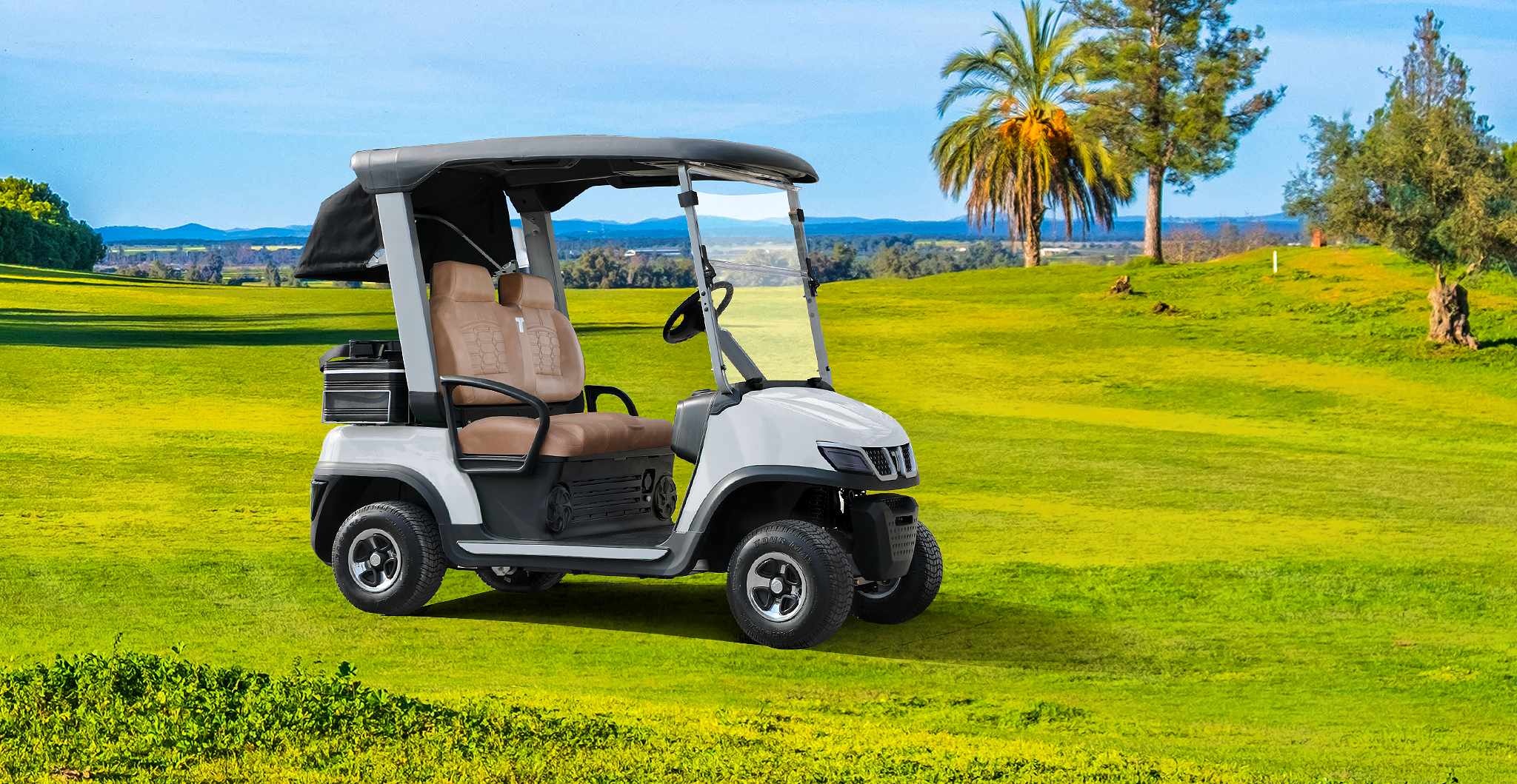
Why Have Golf Karts Become Standard Equipment on Golf Courses?
In professional golf courses, fairways are long and the terrain is varied; walking alone would affect the rhythm and experience of the game. Therefore, golf carts have become an important tool for improving efficiency and comfort.
Core advantages include:
Improved player mobility
Reduced physical exertion
Support for tournament and event organization
Improved overall service experience
With increasing environmental awareness, electric golf carts are gradually replacing traditional gas-powered golf carts, becoming the mainstream choice for golf courses.
Technological Basis of Electric Golf Carts
Current mainstream golf carts use 48V or higher specification battery systems, powered by high-efficiency motors. Common battery types include:
Lead-acid batteries: Lower cost, suitable for moderate-intensity use
Lithium-ion batteries: Lighter, more durable, and charge faster
Advantages of electric systems include:
Low noise operation
Zero emissions
Fewer maintenance requirements
More controllable long-term operating costs
For commercial golf courses, these factors directly impact daily operational efficiency.
The Multiple Roles of Golf Karts
Modern golf courses require not only passenger vehicles but also utility vehicles to support logistics. Although their uses differ, they typically employ similar platform structures for unified management.
Passenger golf karts are primarily used for:
Player transportation
Tourism reception
VIP customer service
Utility vehicles are primarily used for:
Turf maintenance transportation
Equipment handling
Course patrol
When golf karts and utility vehicles are deployed within the same system, the course can effectively reduce maintenance complexity and spare parts inventory costs.
Key Factors Affecting Golf Karts Performance
1. Motor Power
Determines acceleration and climbing performance.
2. Chassis Design
Commercial courses require more durable frames and stable suspension systems.
3. Tire Type
Grass-specific tires reduce wear and tear on the fairway.
4. Controller System
Includes speed limiting, braking response, and safety features.
A well-designed golf kart strikes a balance between safety and efficiency.
FAQs
Q1: Is there a difference between Golf Karts and Golf Carts?
There is no fundamental difference. Golf Karts is a common spelling variant of Golf Carts, and the search intent is essentially the same. It usually refers to vehicles used on golf courses.
Q2: Are electric golf carts more durable than gasoline-powered ones?
Under normal maintenance conditions, electric golf carts have a simpler structure, require less maintenance, and are more stable over the long term.
Q3: What is the top speed of a Golf Karts?
Standard models typically have a top speed of 15–25 mph (approximately 24–40 km/h), depending on the motor specifications and settings.
Q4: Are Utility Vehicles considered Golf Karts?
Utility Vehicles are not entirely equivalent to Golf Karts, but they are often integrated into a complete fleet within a golf course’s operational system.
Application Differences by Region
North American Golf Courses: Emphasis on safety regulations and environmental standards
European Resort Courses: Emphasis on low noise and sustainable operation
Newly Built Courses in Asia: Greater focus on cost control and multi-functional integration
Regardless of regional variations, the core value of Golf Karts remains: improved efficiency, enhanced safety, and a superior experience.
How to Choose the Right Golf Karts for Your Course?
Determine the daily operating frequency
Assess the course’s slope and terrain
Choose the appropriate battery system
Appropriately match Utility Vehicles
Ensure long-term technical support and spare parts supply
Through systematic planning, Golf Karts are not just a means of transportation, but an integral part of the golf course’s operational system.
Long-Term Value Considerations in Business Operations
For golf courses, choosing the right golf carts means striking a balance between comfort, durability, and cost control. Reliable electric golf carts and their accompanying utility vehicles can help courses achieve efficient operation and sustainable development.
Tara focuses on providing professional-grade golf carts and utility vehicles for golf courses, designing them with a business-oriented approach to meet the practical needs of courses of different sizes.
Post time: Feb-26-2026


