

In the modern golf industry, equipment selection is becoming increasingly professional, and “golf caddy carts” are gradually becoming an important tool for players to enhance their personal experience. Although Tara’s core products are electric golf carts and utility vehicles, with the development of the industry, many golf course users compare golf caddy carts with traditional passenger golf carts to find solutions more suitable for individuals or course operations.
This article will explain the application scenarios of golf caddy carts from a professional perspective, their differences from electric golf carts, and why more and more courses are using electric golf carts while also paying attention to the market trend of high-quality electric golf caddy carts and lithium golf trolleys. We will also introduce Tara’s professional positioning in the golf industry chain, providing users with clear product strategy references.
I. The Concept and Usage Scenarios of Golf Caddy Carts
“Golf caddy carts” generally refer to carts used by players to carry their golf bags; they can be traditional hand-pushed carts or electric golf caddy carts. This type of trolley is player-operated and suitable for:
Players who prefer to play on foot
Users who want to maintain a consistent pace
Lightweight needs that don’t require a ride-on vehicle
Individual practice and short-course environments
To cater to different user preferences, remote-controlled golf caddy carts or lithium golf trolleys equipped with motors, lithium batteries, and remote control systems are gradually appearing on the market, thereby reducing physical exertion and improving the player experience.
II. Differences between Golf Caddy Carts and Electric Golf Carts
Although both fall under the category of “mobile golf aids,” their functional positioning is completely different:
1. Differences in Usage
Golf caddy cart: Requires player to operate on foot.
Electric Golf Cart: Player rides in the cart, which is driven by the vehicle.
2. Differences in Carrying Capacity
Golf caddy carts only carry golf bags.
Golf Carts can carry 2-8 people and their equipment.
3. Differences in Applicable Scenarios
Golf caddy carts are suitable for individual, sporty playing styles.
Complete golf carts are more suitable for course operations, player transportation, and commercial services.
4. Technological Complexity
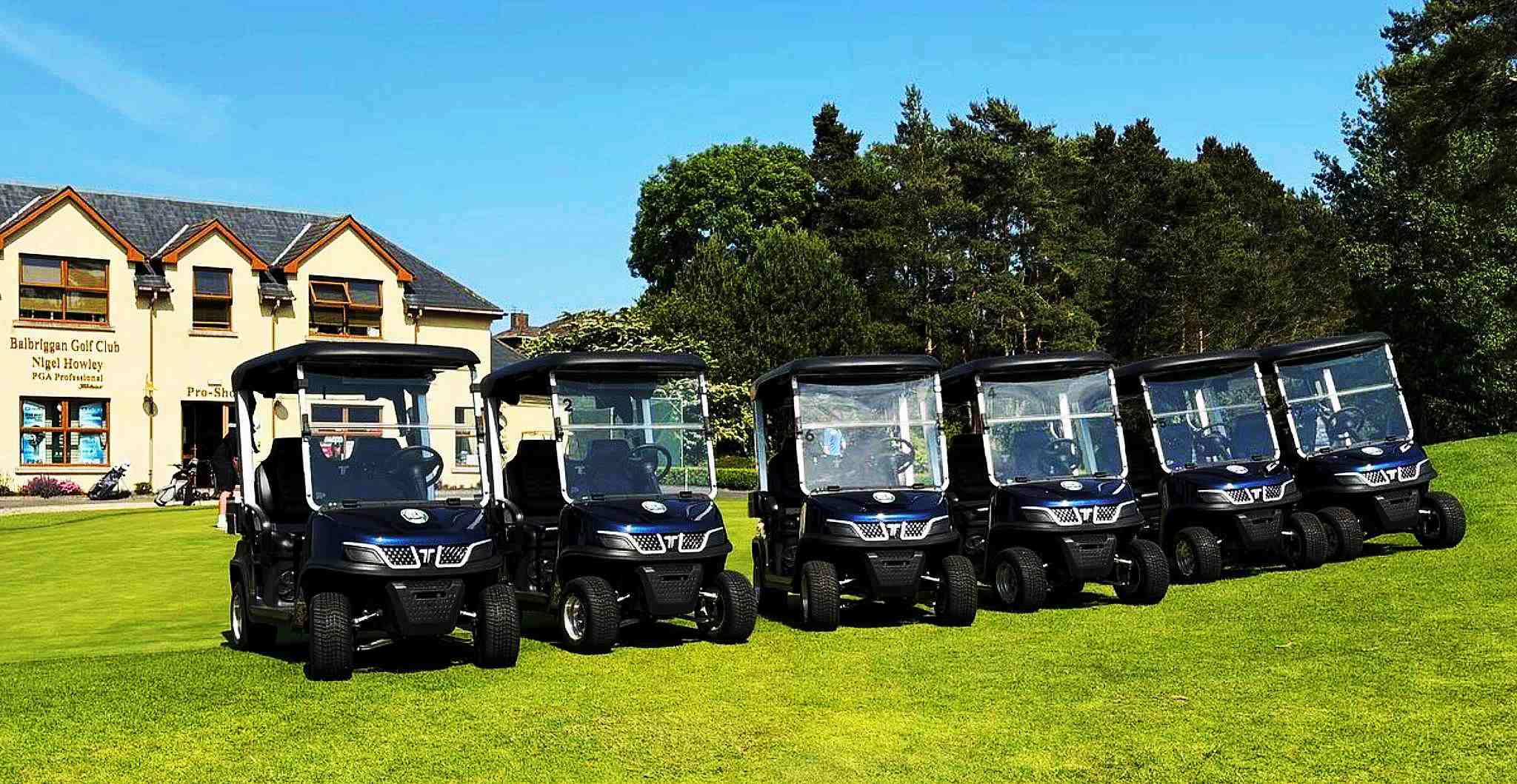
Tara’s main products are electric golf carts, which involve complex processes such as motors, electronic controls, lithium battery systems, and braking structures. Electric golf caddy carts, on the other hand, are more focused on lightweight and portable devices.
Therefore, although “golf caddy cart” and “golf cart” are often confused in searches, they actually belong to different categories.
III. Tara focuses on electric golf carts, not golf caddy carts, but why is it still relevant to industry trends?
While Tara doesn’t manufacture golf caddy carts, our deep involvement in the golf industry chain allows us to continuously monitor development trends in course equipment.
The following reasons ensure a close connection between “golf caddy carts” and Tara’s product portfolio:
1. The Increasing Trend of Electrification in the Industry
From electric golf carts to electric golf caddy carts, electrification has become the industry’s main focus. Users are increasingly accepting of lithium batteries and lightweight power systems, which facilitates future equipment standardization across courses.
2. Many Courses Use Both Products Simultaneously
A common course setup is:
Customers primarily use golf carts
Professional and younger players use golf caddy carts for walking play
As a professional electric vehicle manufacturer, Tara’s solutions complement the overall equipment system of a golf course.
3. The Popularization of Lithium-ion Battery Systems Drives Industry-wide Upgrades
Tara possesses a strong foundation in lithium-ion battery technology, enabling us to:
Improve overall vehicle energy efficiency
Extend driving range
Reduce operating costs
These technological trends will continue to influence the development of lightweight equipment such as lithium-ion golf trolleys.
IV. FAQ
Below are some frequently asked questions related to golf caddy cart searches, along with authoritative explanations.
1. What is the difference between a golf caddy cart and a golf cart?
Answer:
A golf caddy cart is a push or electric trolley used to carry a golf bag, while a golf cart is a ride-on vehicle designed to transport players and equipment. The two belong to different product categories.
2. Is an electric golf caddy cart worth it?
Answer: If players prefer a walking style of play, an electric golf caddy cart can significantly reduce physical exertion while maintaining a walking pace. For individual users, it is a cost-effective equipment option; however, for commercial golf course operations, a full fleet of electric golf carts is more necessary.
3. Do golf courses prefer caddy carts or ride-on carts?
Answer: Most courses use both, but from a business perspective, ride-on electric golf carts (such as those manufactured by Tara) are core equipment for improving course reception, shuttle services, and operational efficiency.
4. Are lithium golf trolleys better than lead-acid ones?
Answer: Lithium-ion golf trolleys are lighter, charge faster, and have a longer lifespan, making them increasingly popular with individual users.
V. Tara Focuses on Professional Electric Golf Carts, Setting Higher Standards for the Industry
While Tara does not manufacture golf caddy carts, as a brand specializing in lithium-ion power, efficient electronic control systems, and complete vehicle manufacturing, we closely monitor golf equipment trends. Regardless of the equipment combination a course uses, Tara’s electric golf carts and utility vehicles help courses improve efficiency, enhance the experience, and reduce operating costs.
For courses seeking to establish a more comprehensive fleet system, Tara offers global service, professional manufacturing advantages, and customized solutions.
Post time: Dec-02-2025


