

In the daily operations of modern golf courses, vehicles are no longer just transportation for players; they are a crucial component of the maintenance, logistics, and service systems. Especially with increasing demands for operational efficiency and sustainability, electric utility vehicles are gradually becoming one of the core pieces of equipment in course management.
Compared to traditional vehicles, electrified and multifunctional utility vehicles are better suited to the complex and diverse usage scenarios of a golf course, providing managers with more stable and controllable operational support.
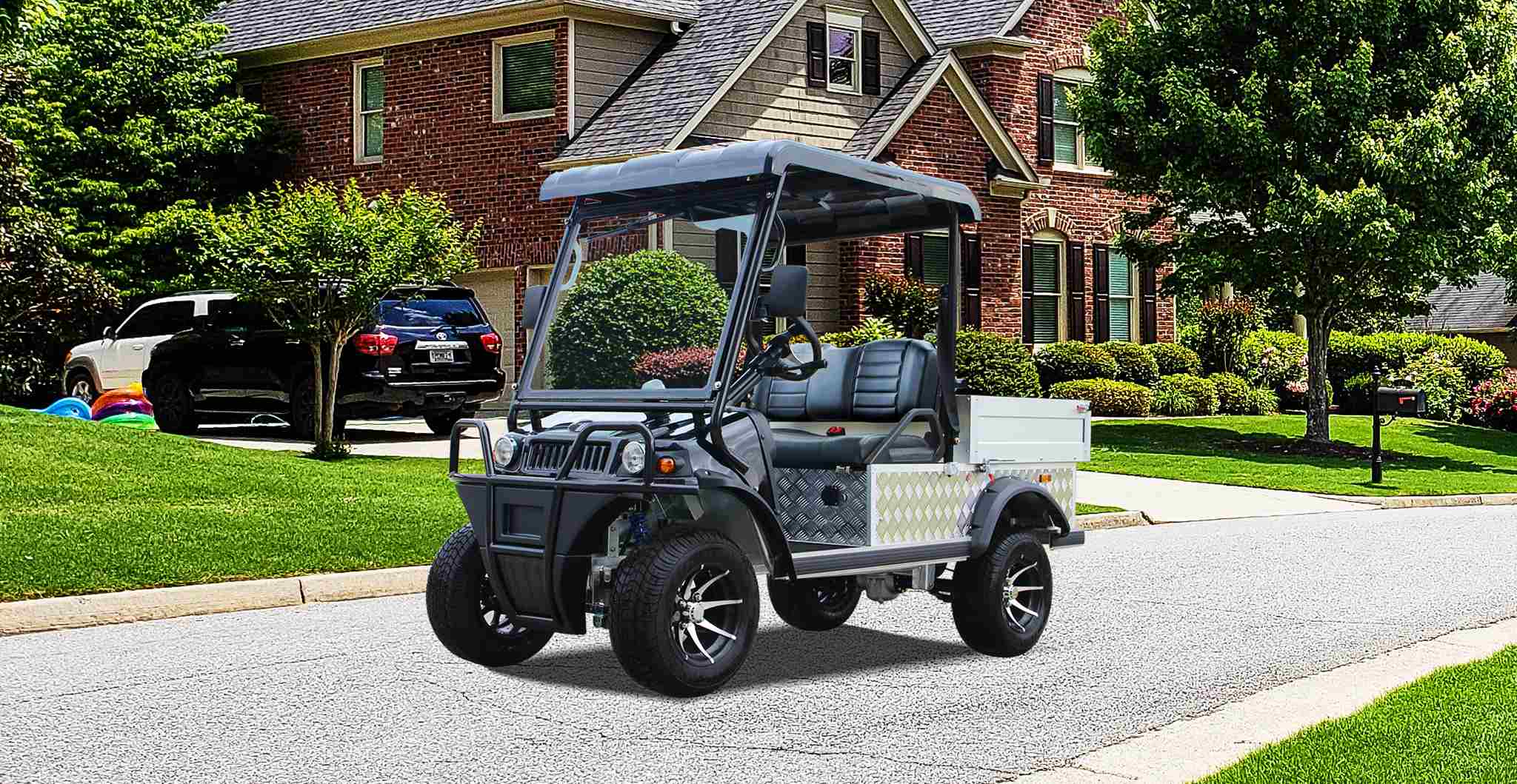
Why Golf Courses Need Electric Utility Carts
The operating environment of a golf course has distinct characteristics: large course area, dispersed work areas, and high requirements for turf protection. This determines that ordinary commuter vehicles are not suitable for direct use.
Electric utility vehicles are typically used for course maintenance, material transportation, garbage collection, and equipment deployment. Compared to gasoline-powered vehicles, electric systems operate more quietly, reducing interference with the player experience and minimizing impact on the turf and the surrounding environment. This is a key reason why more and more golf courses are incorporating electric utility vehicles as standard equipment when updating their fleets.
Differences between Electric Utility Carts and Traditional Utility Vehicles
From a functional perspective, utility vehicles emphasize practicality and load-bearing capacity, while electric utility carts further optimize operation.
The electric drive structure reduces complex mechanical systems, making the vehicle more stable in daily use and easier to maintain. For golf courses requiring high-frequency use, this stability directly impacts overall operational efficiency. When evaluating vehicle options, managers often consider electric utility carts a crucial tool for improving long-term operational quality.
Vehicle Configuration Logic for Multiple Application Scenarios
In actual operation, electric utility carts do not exist in isolation but rather form a vehicle system together with electric golf carts. The former primarily handles operation and maintenance tasks, while the latter serves players and visitors.
For example, during turf maintenance or material transportation, electric utility carts can efficiently complete tasks thanks to their cargo bed design and stable power output. During peak hours, the rational allocation of utility vehicles and golf carts can effectively reduce walking distances and improve overall work efficiency.
The Long-Term Value of Electrification
From an industry perspective, golf courses are gradually transitioning towards lower noise and lower emissions. Electric Utility Carts play a crucial role in this process. They not only help reduce carbon emissions during operation but also align better with the long-term environmental quality plans of high-end courses.
Furthermore, the controllability of energy consumption and maintenance in electric systems allows for clearer budget management for courses. This long-term value is one of the key reasons for the widespread adoption of Electric Utility Carts.
The Impact of Manufacturer Experience on Vehicle Performance
Not all utility vehicles are truly suitable for golf course use. Whether a vehicle’s design considers grass driving, frequent starts and stops, and multi-scenario applications from the outset is key to judging its professionalism.
Tara specializes in providing electric golf carts and utility vehicles for golf courses. Their Electric Utility Carts are designed around the real-world needs of golf courses, emphasizing reliability, durability, and ease of operation to help courses maintain stable performance in long-term operation.
Highly Relevant Questions and Answers
What are electric utility carts used for on a golf course?
Electric utility carts are primarily used for course maintenance, equipment transportation, logistical support, and daily operations.
Are electric utility carts better than gas utility vehicles?
In a golf course environment, electric vehicles offer advantages in noise control, environmental friendliness, and maintenance costs.
Can electric utility carts handle heavy tasks?
Yes, well-designed utility vehicles can meet the daily transportation and maintenance needs of most courses.
Do golf courses need both golf carts and utility carts?
Most courses utilize both electric golf carts and electric utility carts to meet different usage scenarios.
A Rational Choice for Efficient Operations
In summary, electric utility carts are no longer optional equipment but an essential component of modern golf course operations. They play an increasingly crucial role in improving maintenance efficiency, optimizing resource allocation, and enhancing the overall operational experience.
For golf courses that seek long-term stable operation, choosing a partner who truly understands the usage scenarios of the course and has professional manufacturing experience will help Electric Utility Carts realize greater value in actual use.
Post time: Feb-02-2026


