

In the operation and management of a golf course, golf carts are not only a means of transportation for players but also crucial equipment that impacts the overall service experience, operational efficiency, and long-term costs. Therefore, many course managers repeatedly ponder the question: How to determine the Best Golf Cart to Buy?
The market offers a wide variety of golf carts, from electric to gasoline-powered, from two-seaters to multi-seaters, and from basic transportation to multi-functional utility vehicles. While the choices seem abundant, it’s also easier to make the wrong decision. A truly suitable golf cart for a golf course must be based on real-world usage scenarios and long-term operational needs.
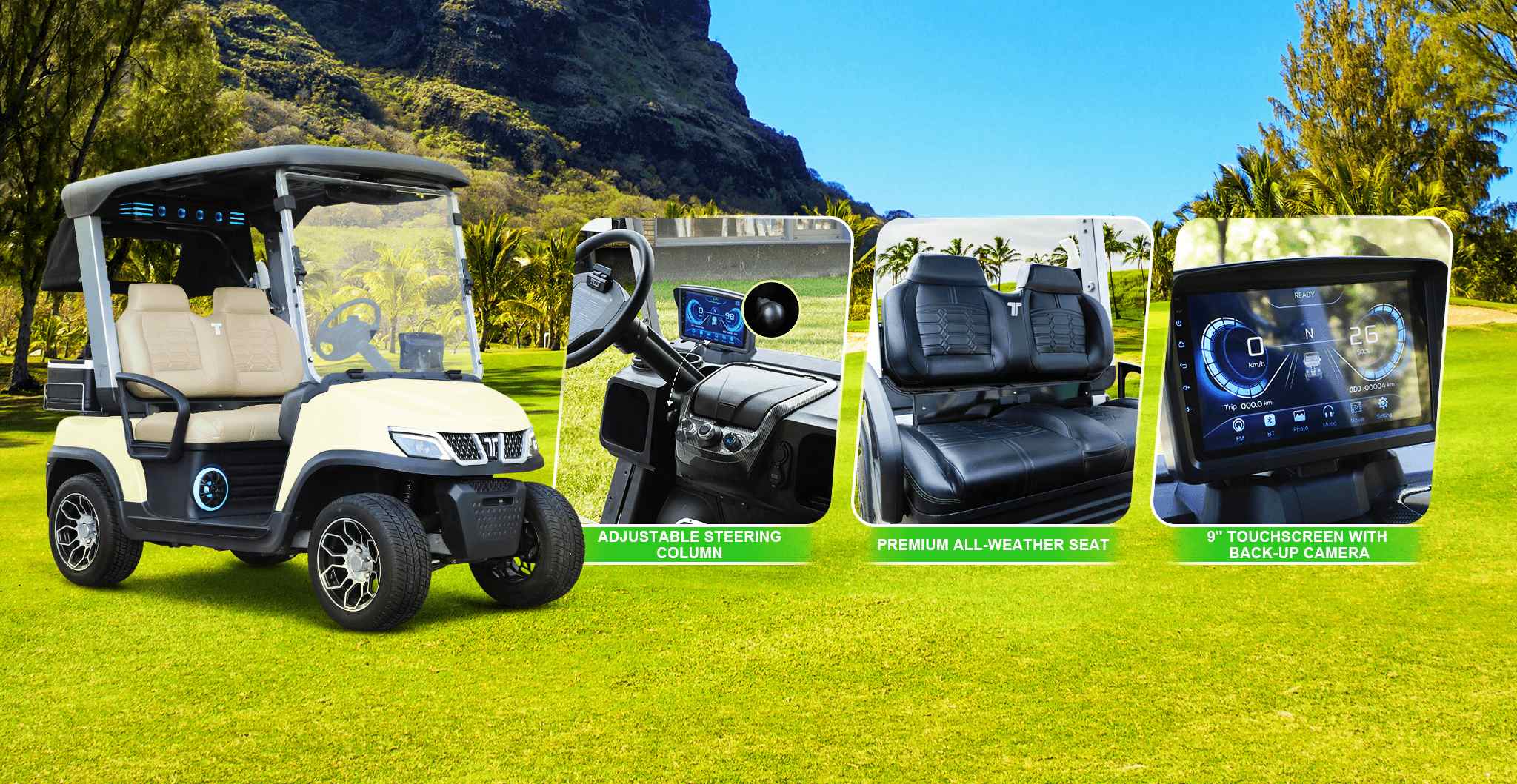
Core Requirements of Golf Courses for Golf Carts
Unlike communities or resorts, golf courses have distinct professional requirements for vehicles. Vehicles typically need to travel frequently across grass, gentle slopes, and fairways, while minimizing damage to the turf. This means that when evaluating the Best Golf Cart to Buy, golf courses focus on more than just price or appearance.
First is stability and maneuverability. Golf course terrain is not perfectly flat, so vehicles need a good suspension system and appropriate tire configuration. Second is quietness and environmental friendliness; electric golf carts are quieter during operation, better meeting the environmental experience requirements of high-end golf courses. Furthermore, the durability and ease of maintenance of the vehicle are also factors that cannot be ignored in long-term operation.
Reasons Why Electric Golf Carts Have Become the Mainstream Choice
With industry development, electric golf carts have gradually replaced traditional gasoline-powered models, becoming the mainstream configuration for golf courses. This change is not accidental but a consensus formed based on long-term usage feedback.
Electric vehicles are virtually silent during operation, helping to maintain the quiet atmosphere expected on a golf course. At the same time, the electric system is relatively simple, reducing the maintenance pressure caused by complex mechanical components. In the long run, electric golf carts are easier to control in terms of energy consumption and maintenance costs, which is a key reason why many golf courses prioritize electric models when evaluating the Best Golf Cart to Buy.
Different Usage Scenarios Require Different Types of Golf Carts
In actual operation, few golf courses use only a single type of vehicle. Usually, a combination of different golf carts and utility vehicles is used depending on the usage scenario.
Vehicles used for player service prioritize comfort and handling experience, such as a reasonable seating layout, smooth steering system, and stable braking performance. Utility vehicles used for operation and maintenance, on the other hand, emphasize load capacity and practicality, such as cargo bed design, tool transport capabilities, and flexibility to adapt to different work scenarios.
Therefore, choosing the “Best Golf Cart To Buy” is not about selecting a single vehicle, but rather a comprehensive assessment of an entire vehicle configuration solution.
Professionalism of Golf Carts from the Manufacturer’s Perspective
When choosing a golf cart, the procurement channel also affects the final user experience. Compared to simply purchasing ready-made models from dealerships, more and more golf courses are focusing on manufacturers with industry experience.
Professional manufacturers optimize their product designs around the operating environment of golf courses. For example, they design the vehicle’s weight distribution for driving on grass and optimize the power output logic for frequent starts and stops. These details often determine whether a vehicle truly meets the “Best Golf Cart To Buy” standard.
Tara specializes in electric golf carts and utility vehicles for golf course use. Their product design is based on real golf course operational needs, emphasizing reliability, durability, and stable performance for long-term use.
Key Factors Affecting Long-Term Costs
When evaluating the “Best Golf Cart To Buy,” the initial purchase price is only one part; more importantly, it’s the total cost of ownership over the entire lifecycle. This includes battery life, parts commonality, maintenance frequency, and future replacement costs.
The battery system of an electric golf cart directly affects the vehicle’s lifespan and stability. A reasonable battery configuration and a mature management system help reduce unexpected failures and operational interruptions. Furthermore, whether the vehicle structure is easy to maintain will show a significant difference in long-term use.
Google Related Questions and Answers
What is the best golf cart to buy for a golf course?
For a golf course, an electric golf cart suitable for long-term, high-frequency use and with stable performance is usually a more rational choice.
Are electric golf carts better than gas carts?
In a golf course environment, electric golf carts have advantages in noise control, environmental friendliness, and maintenance costs.
What vehicles are used besides golf carts on a golf course?
In addition to standard golf carts, many golf courses also use utility vehicles for maintenance, transportation, and daily operational support.
Should golf courses buy carts in bulk?
Bulk purchasing helps standardize vehicle configurations, reduce maintenance complexity, and improve overall operational efficiency.
Rational Judgment for Golf Course Operations
Returning to the original question, there is no one-size-fits-all answer to “Best Golf Cart To Buy.” The truly appropriate choice depends on the size of the golf course, frequency of use, terrain conditions, and long-term operational goals.
Based on industry trends and actual user feedback, electric golf carts and utility vehicles specifically designed for golf courses are becoming the rational choice for more and more courses. By choosing a partner that understands the needs of the golf course and possesses professional manufacturing capabilities, the course can not only improve service quality but also maintain greater stability and control in long-term operations.
Post time: Jan-28-2026


