

With the rapid development of autonomous driving technology in the automotive industry, the concept of “driverless” is gradually extending to the golf industry. Recently, more and more manufacturers have begun exploring the availability of autonomous golf carts in golf course operations.
The question is: Are autonomous golf carts truly on the verge of widespread adoption, or are they still just a concept?
Currently, autonomous golf carts are already in the research and testing phase, but golf courses will not fully automate their carts in the short term.
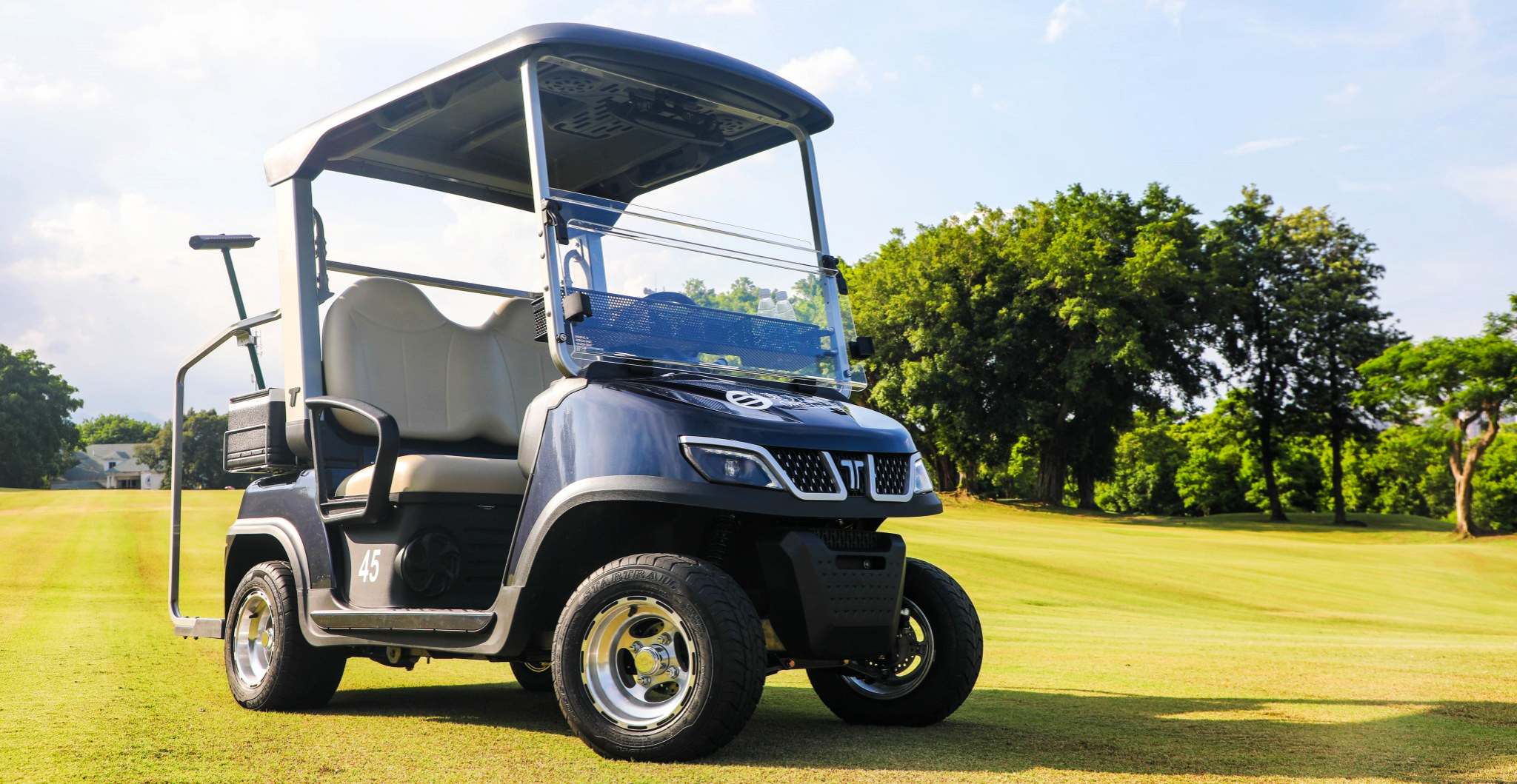
I. The Concept of Autonomous Golf Carts Has Been “Partially Realized”
Currently, the mainstream technologies in the industry include:
Cameras
GPS navigation
Geofencing
Automatic speed limiting and safety control
Remote fleet management
Some systems can already achieve:
Carts traveling along fixed routes
Controlling safe driving speeds
Automatic deceleration or stopping in specific areas
Batch remote monitoring and management
This means that “intelligent golf carts” are becoming increasingly mature, but “driverless golf carts” are still under development.
II. Why are golf courses an ideal scenario for autonomous driving?
Compared to city roads, golf courses are actually an ideal application environment for autonomous driving technology:
Closed or semi-closed environments: No need to deal with complex traffic systems and regulatory restrictions.
Low-speed operation: Golf carts typically travel at low speeds, making safety control easier.
Relatively fixed routes: Clear fairway paths facilitate map modeling and navigation.
In fact, in early autonomous driving tests, golf carts have already successfully operated in scenarios such as campuses and parks.
III. Three Stages of Current Technological Development
From an industry development perspective, autonomous golf carts have roughly gone through three stages:
1. Intelligent Assistance Stage (Gradually Becoming Widespread)
Reversing camera
Geofencing
GPS fleet management
Remote monitoring
2. Semi-Autonomous Driving Stage (Under Development and Testing)
Follow-me automatic driving
Fixed route driving
Automatic parking
Remote dispatch
For example, intelligent golf carts can automatically follow players or move along preset paths.
3. Fully Autonomous Driving Stage (Future Direction)
No driver required
Fully autonomous path decision-making
Complete integration with the golf course system
IV. Why is “Completely Unmanned” Still a Challenge?
Despite rapid technological advancements, the widespread adoption of autonomous golf carts still faces several practical challenges:
1. Safety and Liability Issues
Safety requirements are extremely high in environments with players, caddies, and spectators.
2. Complex Terrain Recognition
Golf courses include:
Bunkers, water hazards, slopes, and slippery turf.
These all place higher demands on autonomous driving systems.
3. Cost and Commercialization
Autonomous driving systems involve:
Sensors, AI computing, and software systems.
In the short term, the cost will remain higher than traditional golf carts.
4. Matching Actual Needs
Based on current market feedback:
Most golf courses need “smarter and easier-to-manage” solutions rather than “fully driverless” ones. Economic practicality takes precedence over technological gimmicks.
V. What is the Real Value for Golf Course Operations?
Compared to “driverless cars,” the true value of automation-related technologies lies in:
1. Improved management efficiency: Real-time positioning, optimized scheduling, and data analysis.
2. Reduced operational risks: Reduced human error, improved safety, and lower accident rates.
3. Optimized user experience: Automatic navigation, intelligent interaction, and personalized services.
4. Laying the foundation for future automation: Even if not fully autonomous now, these technologies are paving the way for future upgrades.
VI. Industry Trends: Automation Precedes Unmanned Operations
From an industry development perspective, a clear trend is emerging:
Smart technology will become widespread first, followed by gradual advancements in autonomous driving.
According to industry reports, autonomous golf carts have entered the pilot phase, primarily used in closed and controlled environments such as campuses and industrial parks.
Meanwhile:
GPS + large-screen systems, remote management, and data-driven operations are becoming standard features in commercial golf courses.
VII. Realistic Assessment for the Next 3-5 Years
Based on current technology and market conditions, a relatively rational assessment can be made:
Short-term (1-3 years):
Intelligent golf carts will become widespread; Semi-automatic functions will gradually increase.
Mid-term (3-5 years):
Pilot programs for driverless carts will be conducted on some closed courses; Automatic dispatching will begin to be implemented.
Long-term (5+ years):
Fully driverless golf carts are expected to be commercialized; Deep integration with golf course systems.
Conclusion
Autonomous golf carts are not a distant future, but they will not completely replace traditional driving modes in the short term.
For golf course managers, a more realistic direction is:
Prioritize intelligent and digital capabilities; Gradually upgrade to automation based on this foundation.
Because what truly determines a golf course’s competitiveness is not “whether it’s driverless,” but whether its fleet is more efficient, safer, and easier to manage.
Post time: Apr-09-2026


